PAIRING UP THE BALANCE WHEEL AND THE HAIRSPRING
This method requires specific equipment and is applied to regulating organs produced in series. It demands a high level of precision in the manufacture of both the balance wheel and the hairspring.
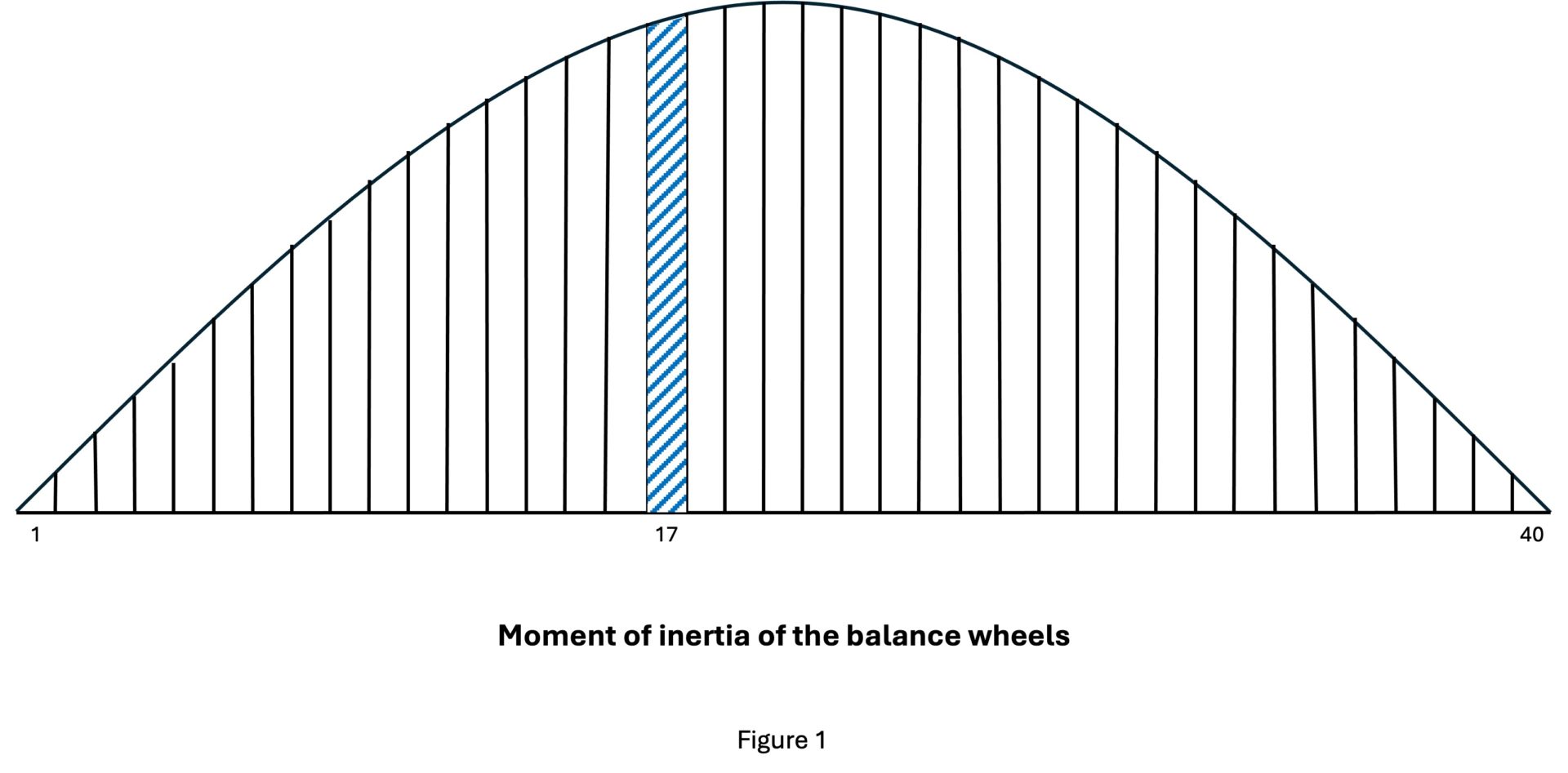
On a dedicated machine, the moment of inertia of all balance wheels from the same production batch is measured with great precision. The machine sorts the balance wheels into different classes (between 20 and 50) according to their deviation from the calculated theoretical moment of inertia (Figure 1).
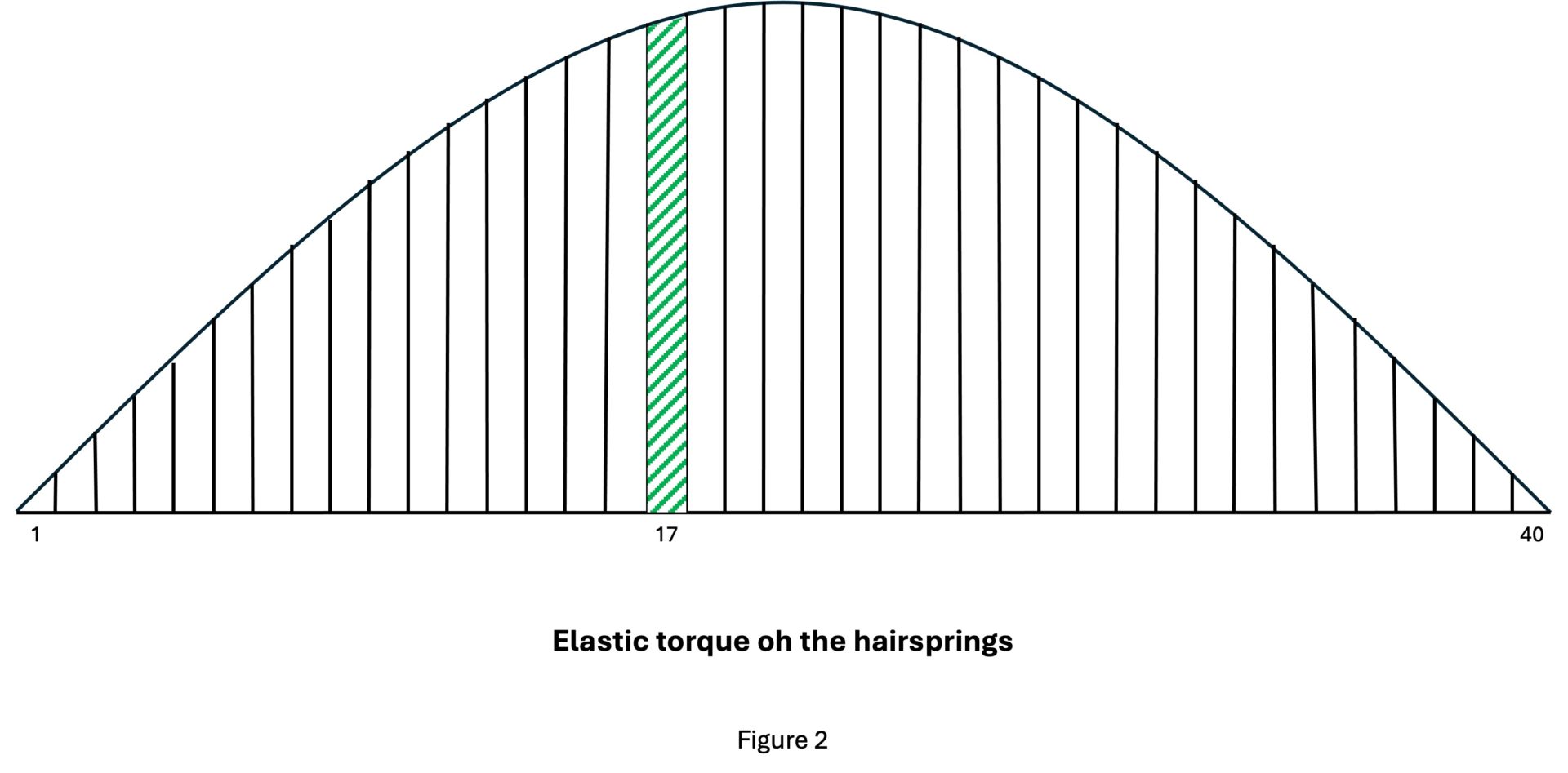
Using the same installation, the elastic torque (stiffness) of the hairsprings from the same batch is then measured. Once again, the machine sorts the hairsprings into different classes (in the same number as those used for the balance wheels) according to their deviation from the calculated theoretical elastic torque (Figure 2).
By pairing a balance wheel and a hairspring sorted into the same class, a regulating organ is obtained whose frequency will require little or no correction once the assembly is completed and operational.