
MENU
1. Table of aluminium’s main properties
| Property | Typical Value | Remarks |
|---|---|---|
| Density | ~2.7 g/cm³ | Low |
| Elastic modulus (E) | ~70 GPa | Low |
| Tensile strength | ~70–500 MPa | Depends on the alloy |
| Hardness (HV) | ~20–150 HV | Low |
| Thermal conductivity | ~200–235 W/m·K | Very High |
| Electrical conductivity | ~30–38 MS/m | High |
| Thermal expansion | ~22–24 ×10⁻⁶ /K | High |
| Melting point | ~660 °C | Pure aluminium |
| Magnetism | No | Non-magnetic |
| Corrosion resistance | Good | Oxide layer |
| Machinability | Good |
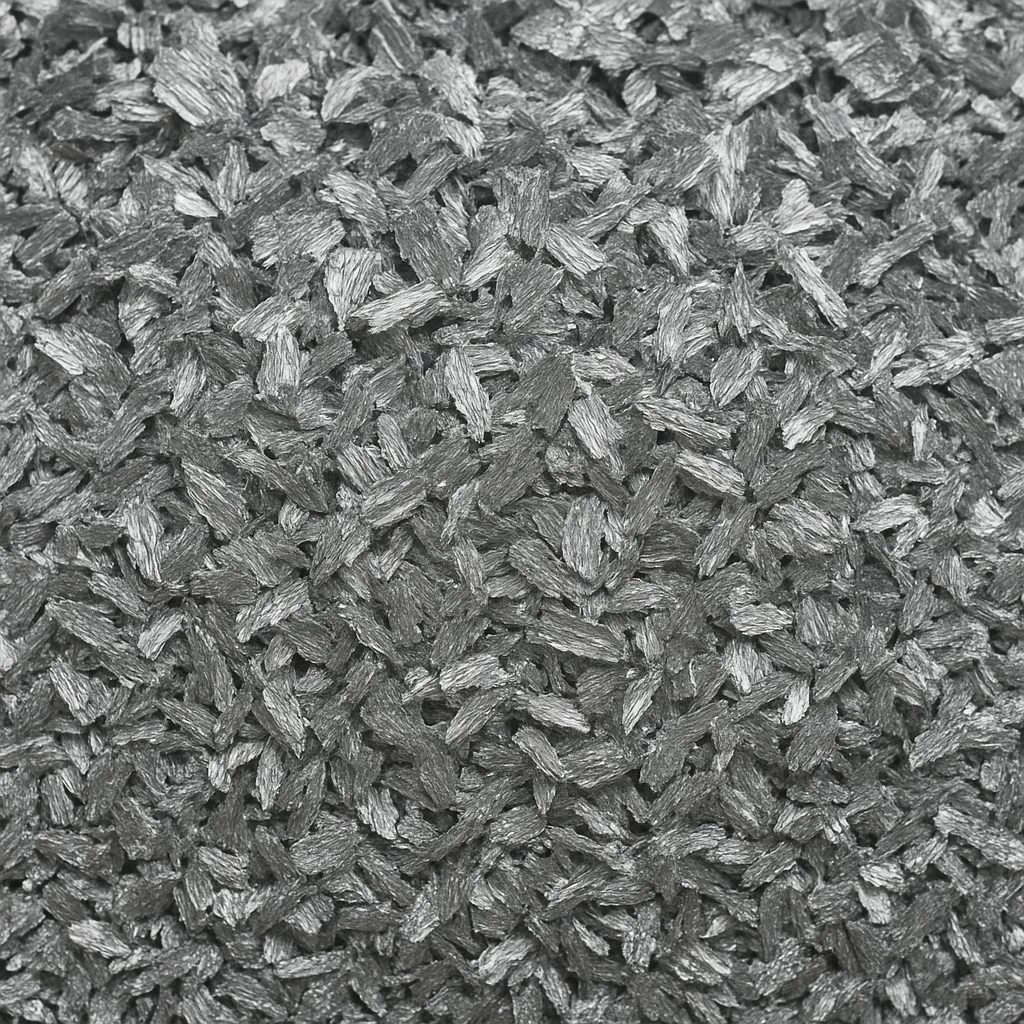
2. General description
Aluminium is a lightweight non-ferrous metal, used in watchmaking for its low density, good machinability and natural resistance to corrosion. Although its use has historically been more limited than that of Brass or Steel, it has seen growing interest in contemporary watchmaking, particularly for components requiring a reduction in mass.
In pure or alloyed form (aluminium, magnesium, silicon, copper), it makes it possible to meet specific requirements, particularly in fast-moving components or structural elements where weight is a determining factor.
3. Types of aluminium used in watchmaking
Pure aluminium
Used only occasionally due to its low mechanical strength.
Characteristics:
- Very light
- Easy to machine
- Low resistance to wear
Aluminium alloys
Alloys are favoured in watchmaking to improve mechanical performance.
Examples:
- Al-Si (aluminium-silicon) → good dimensional stability
- Al-Mg (aluminium-magnesium) → better mechanical resistance
- Al-Cu (duralumin type) → high resistance
Use:
- Lightweight components
- Specific structures
- Experimental or technical parts
Aluminium alloys are classified into different families according to the main added element. For wrought aluminium alloys, these categories are:
(Series 1000: Aluminium at more than 99%, unalloyed)
2000 Series: Main added element: copper (Cu)
3000 Series: Main added element: manganese (Mn)
4000 Series: Main added element: silicon (Si)
5000 Series: Main added element: magnesium (Mg)
6000 Series: Main added element: magnesium (Mg) and silicon (Si)
7000 Series: Main added element: zinc (Zn)
Anodised Aluminium
Anodising is an electrochemical treatment that:
- Strengthens the surface
- Improves corrosion resistance
- Allows a wide range of colours
Use:
4. Surface treatments
Aluminium is often treated to improve its performance:
- Anodising → protection + colouring
- Vapour deposition (PVD, CVD) → colouring, wear resistance
- Polishing / shot blasting (micro bead blasting) → aesthetic finish
This page has been automatically translated from the French reference version using an artificial intelligence tool. Errors or inaccuracies may remain. If you notice any, especially if this is your native language, please feel free to report them to info@horopedia.org. Your contribution helps us improve the quality of the encyclopedia.
Pending their translation, images and videos remain temporarily displayed in French.
Thank you for your understanding.