
DAILY RATE ADJUSTMENT
Many factors influence the proper rate of a watch. Over the course of its life and various events, a watch may tend to gain or lose time. Fortunately, watchmakers have devised different ways to adjust the daily rate of a movement.
Let us recall that if a watch is gaining time, the frequency at which its regulating organ oscillates is too high. Conversely, if it is losing time, its frequency is too low.
Two methods make it possible to correct the frequency of the regulating organ: modifying the active length of the hairspring and modifying the moment of inertia of the balance wheel. The choice of one method, the other, or a combination of both is determined during the design of the movement.
Daily rate adjustment by modifying the active length of the hairspring
To date, this is the more commonly used of the two methods. It consists of modifying the oscillation frequency of the regulating organ by changing the active length of the hairspring. The hairspring is a rectangular-section spring blade wound in the form of an Archimedean spiral. Like a guitar string, the longer its length, the lower its frequency. Conversely, the shorter its length, the higher its frequency.
This method of correction requires the presence of a regulator index. The position of the regulator pins determines the active length of the hairspring. When the regulator pins are moved closer to the stud, the active length of the hairspring increases, the frequency decreases, and the watch runs slow. Conversely, when the regulator pins are moved away from the stud, the active length decreases, the frequency increases, and the watch runs fast (Figure 1).
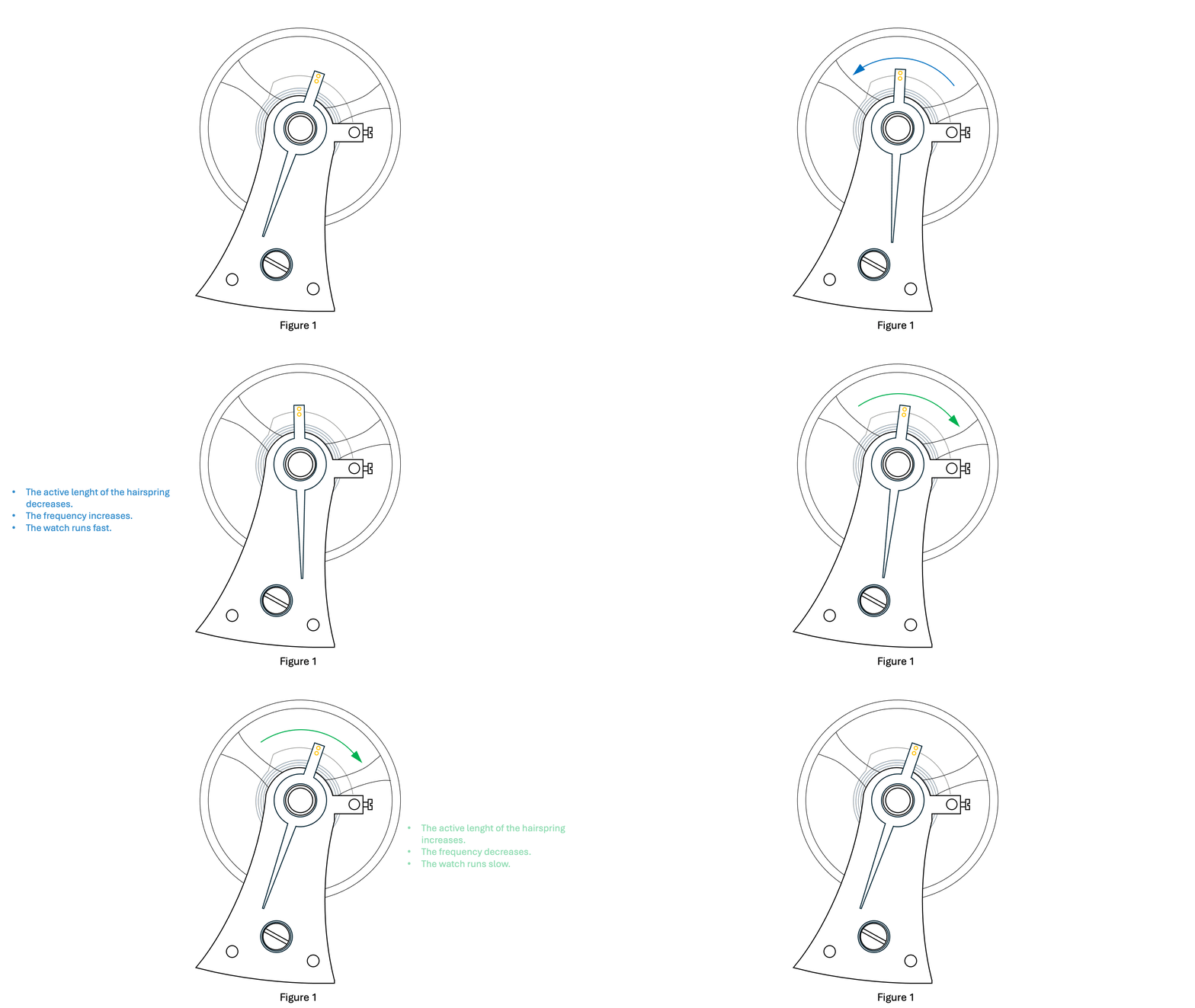
For reference: if a medium-sized wristwatch is losing 10 s/day, the active length of the hairspring must be shortened by approximately 0.02 mm (approximate value for a hairspring 100 mm long at the counting point and a balance wheel 11 mm in diameter oscillating at 28,800 v/h).
Daily rate adjustment by modifying the moment of inertia of the balance wheel
The moment of inertia is the physical quantity that measures a body’s resistance to a change in its rotational speed about an axis.
- The farther the mass is from the axis → the greater the moment of inertia
- The closer the mass is to the axis → the smaller the moment of inertia
- With equal mass, the distribution makes all the difference.
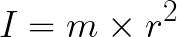
Thus, the moment of inertia of a balance wheel depends on its mass and its radius according to the following formula:
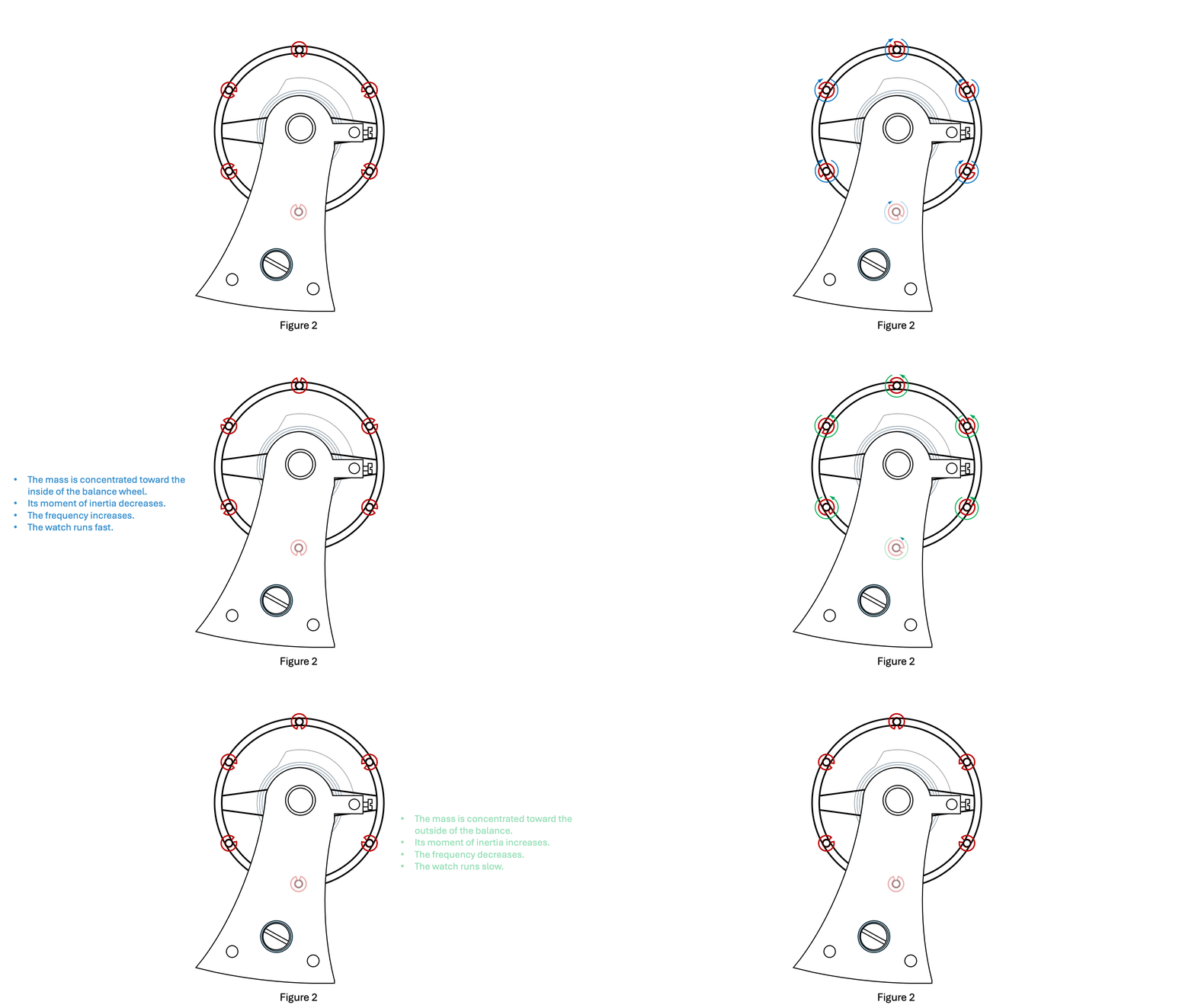
Variable-inertia balance wheels take advantage of this physical law. Screws are placed around the periphery of the balance wheel, or split timing weights (generally made of gold) are fitted to the balance rim. By moving their mass toward the inside of the balance wheel, the moment of inertia decreases and the frequency (rotational speed) increases, causing the watch to gain time. Conversely, by moving the mass of the screws or timing weights toward the outside of the balance wheel, the moment of inertia increases and the frequency decreases, causing the watch to lose time (Figure 2 & Figure 3).
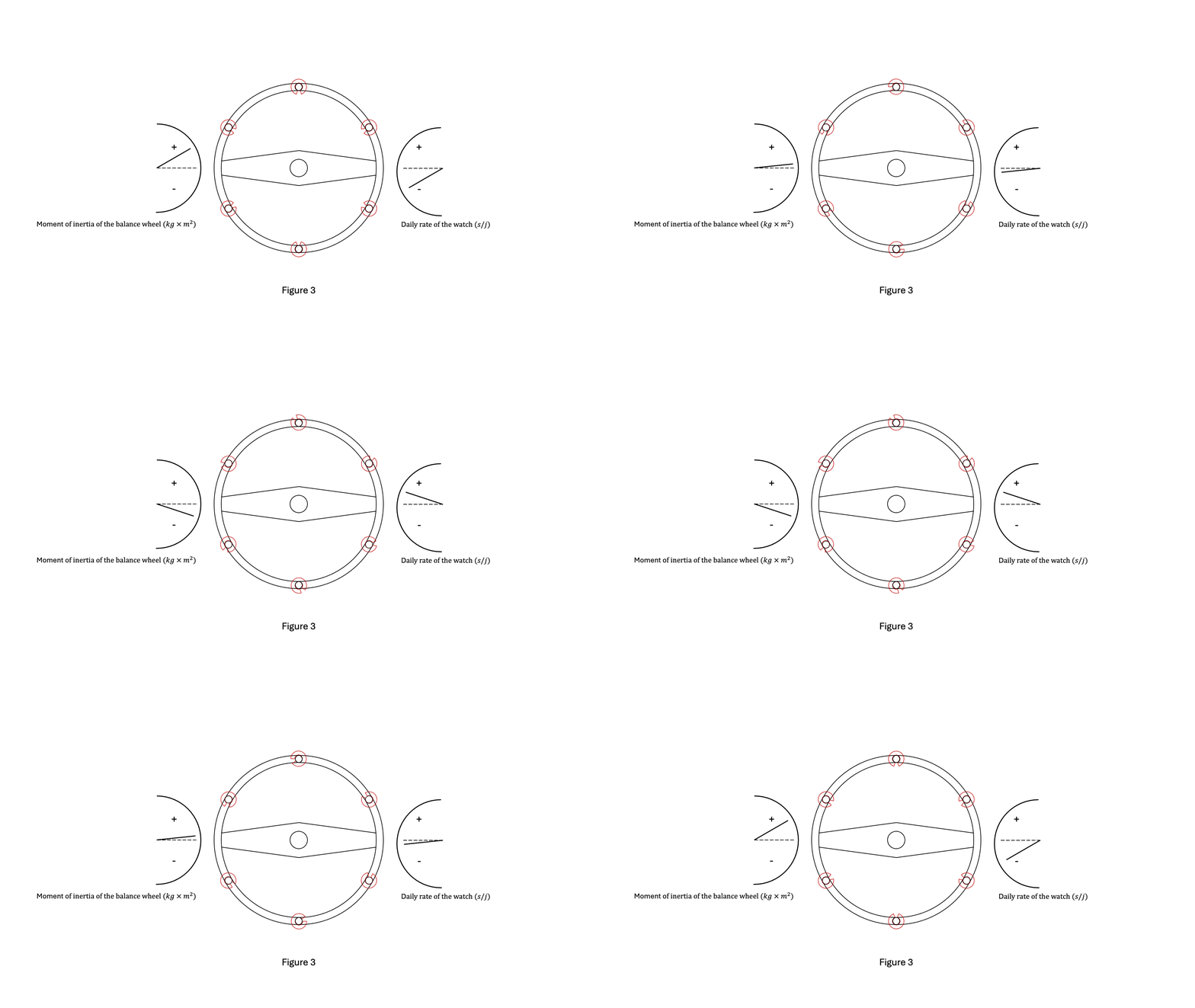
Although, in a wristwatch, the range of adjustment is more limited than when modifying the active length of the hairspring, this solution has the advantage of being less susceptible to disturbance by shocks. Moreover—and above all—it makes it possible to dispense with a regulator index and eliminate the influence of friction between the regulator pins and the hairspring on isochronism.