
WOOD
Table of main properties of wood
| Property | Typical Value | Remarks |
|---|---|---|
| Density | ~0.4–1.2 g/cm³ | Very variable (species dependent) |
| Young’s modulus (E) | ~5–20 GPa | Low to moderate (anisotropic) |
| Tensile strength | ~40–150 MPa | Depends on grain direction |
| Hardness (HV) | Not applicable | Organic material |
| Thermal conductivity | ~0.1–0.3 W/m·K | Very low |
| Electrical conductivity | Very low | Insulating material |
| Thermal expansion | Very low | Strongly affected by humidity |
| Magnetism | No | Non-magnetic |
| Corrosion resistance | Good | Sensitive to moisture and biological degradation |
| Machinability | Easy | Cutting, carving, shaping |
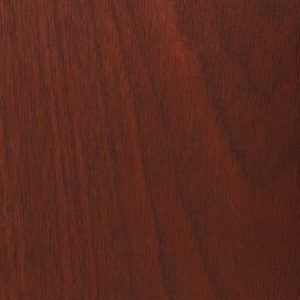
- General description
- Types of wood used in watchmaking
- Watchmaking applications
- Advantages and limitations
Wood is a natural organic material that has been used in watchmaking since its origins, mainly for peripheral applications such as clock cases, tooling, and certain finishing operations. Although its structural use in movements is now nonexistent, it still plays an important role in artisanal processes, particularly for polishing and handling delicate components.
Its flexibility, non-abrasive nature, and ease of machining make it an essential complementary material for certain traditional operations.
Main Properties
Wood exhibits properties that vary depending on the species, but generally:
- Low density (~0.3–1.0 g/cm³)
- Low to moderate Young’s modulus (~5–15 GPa)
- Non-abrasive material (depending on species)
- Good absorption capacity
- Non-magnetic material
- Sensitivity to humidity
- Ease of shaping
These properties explain its preferred use in delicate operations.
1. Wood for Polishing (Major Technical Use)
Certain specific woods are used for highly precise finishing operations:
Boxwood

- Very dense and homogeneous wood
- Fine grain
- Excellent durability
👉 Used for:
- Anglage (beveling)
- Manual polishing
- Supports for abrasive pastes
Elder Pith
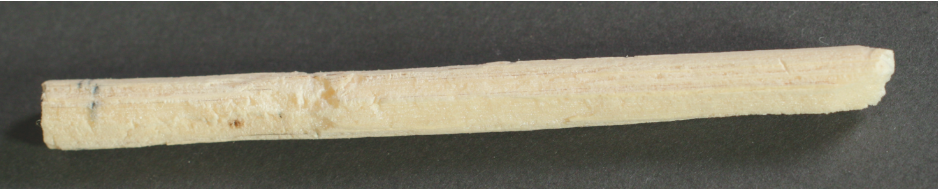
- Very soft and fibrous structure
- Very low abrasiveness
👉 Used for:
- Cleaning pivots
- Very fine polishing
- Removal of impurities
Gentian
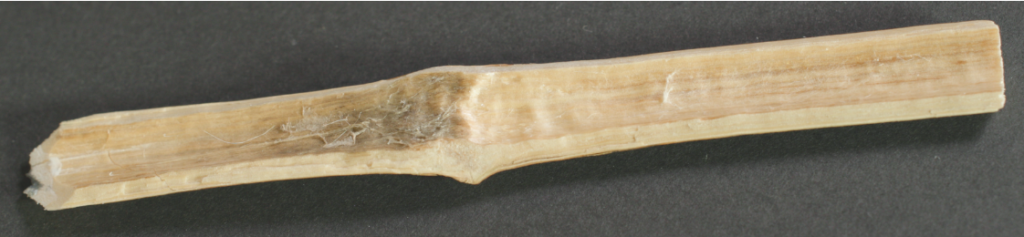
- Fibrous and slightly abrasive material
- Good paste retention capacity
👉 Used for:
- Polishing steel components
- Fine finishing operations
2. Wood for Tooling
Wood is used for the manufacturing of:
- Tool handles
- Workpiece supports
- Holding elements
Hardwoods are generally used (boxwood, beech, and historically ebony).
Advantages:
- Good grip
- Thermal insulation
- Vibration absorption
3. Wood in External Components (Historical Use)
- Clock cases
- Precious woods (oak, walnut, mahogany)
- Manufacturing of clock housings
👉 Both aesthetic and structural function
4. Wood in Contemporary Watchmaking (Anecdotal Use)
- Marquetry dials
- Presentation boxes
Hardwoods with varied colors and tones are generally used.
👉 Rare use, mainly decorative
Advantages
- Soft and non-abrasive material
- Ease of shaping
- Low cost
- Vibration absorption
- Versatility
- Natural material
Limitations
- Sensitivity to humidity
- Rapid wear
- Properties vary depending on species
- Low mechanical strength
- Limited to non-structural applications