
FORGED CARBON
Table of main properties of forged carbone composites
| Property | Typical Value | Remarks |
|---|---|---|
| Density | ~1.4–1.6 g/cm³ | Very low |
| Young’s modulus (E) | ~50–150 GPa | Lower than woven composites, isotropic tendency |
| Tensile strength | ~400–1200 MPa | High |
| Hardness (HV) | Not applicable | Composite material |
| Thermal conductivity | ~5–15 W/m·K | Low |
| Electrical conductivity | Low to moderate | Depends on fiber distribution |
| Thermal expansion | ~0–3 ×10⁻⁶ /K | Very low |
| Melting point | Not applicable | Decomposes at high temperature |
| Magnetism | No | Non-magnetic |
| Corrosion resistance | Excellent | Chemically stable |
| Machinability | Difficult | Abrasive material |
- General description
- Structure and manufacturing
- Specific characteristics
- Watchmaking applications
- Advantages and limitations
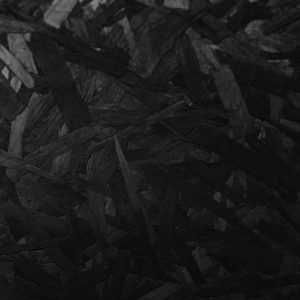
Forged carbon is a composite material made of randomly distributed carbon fiber fragments embedded in a polymer matrix, typically an epoxy resin. Unlike woven fibers, its structure is not organized in a weave but exhibits an apparently isotropic distribution, resulting in a marbled or “flake-like” visual appearance.
Introduced into watchmaking in the early 21st century, this material is particularly valued for its lightness, mechanical strength, and unique aesthetic, with each component displaying a different pattern depending on fiber length and orientation.
Main Properties
Forged carbon exhibits the following characteristics:
- Very low density (~1.4–1.6 g/cm³)
- Good overall mechanical strength
- Quasi-isotropic properties (less directional than woven fibers)
- Excellent fatigue resistance
- Very low thermal expansion coefficient
- Non-magnetic material
- Good corrosion resistance
These properties make it suitable for components requiring both lightness and mechanical homogeneity.
Unlike woven fibers, forged carbon is produced by:
- Cutting carbon fibers into short fragments
- Mixing them with a polymer resin
- Shaping by compression in a mold
- Curing under pressure and temperature
Once the composite is molded and cured, it can be cut (laser, water jet) and machined.
This process allows for:
- Great design freedom
- Good mechanical homogeneity
- Industrial repeatability
Forged carbon is characterized by:
- A random fiber orientation
- Reduced anisotropy
- A unique, random aesthetic
- Improved suitability for complex shaping
Each component displays a unique visual pattern, comparable to a natural material.
Forged carbon is primarily used for:
Advantages
- Very lightweight
- Good mechanical strength
- More homogeneous properties than woven fibers
- Non-magnetic
- Corrosion-resistant
- High design freedom
- Unique aesthetic (each piece is different)
Limitations
- Lower mechanical strength than continuous fibers
- Sensitivity to localized impacts
- Difficult to repair
- Potential aging of the polymer matrix
- Abrasive machining for tools