
DETENT ESCAPEMENT
Your content goes here. Edit or remove this text inline or in the module Content settings. You can also style every aspect of this content in the module Design settings and even apply custom CSS to this text in the module Advanced settings.
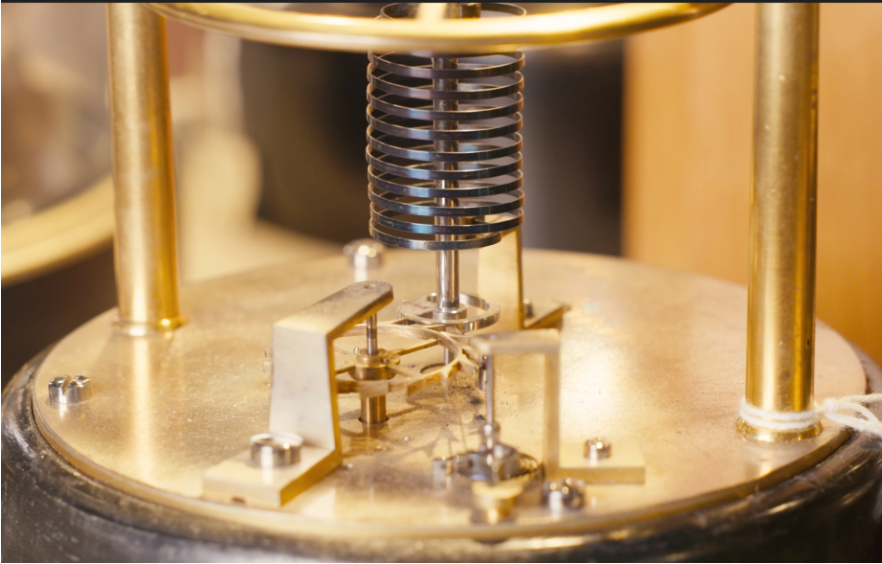
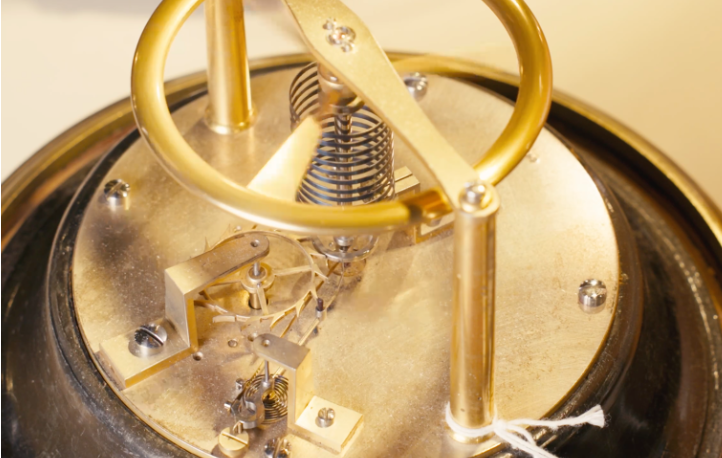
Model of a detent escapement with a cylindrical hairspring
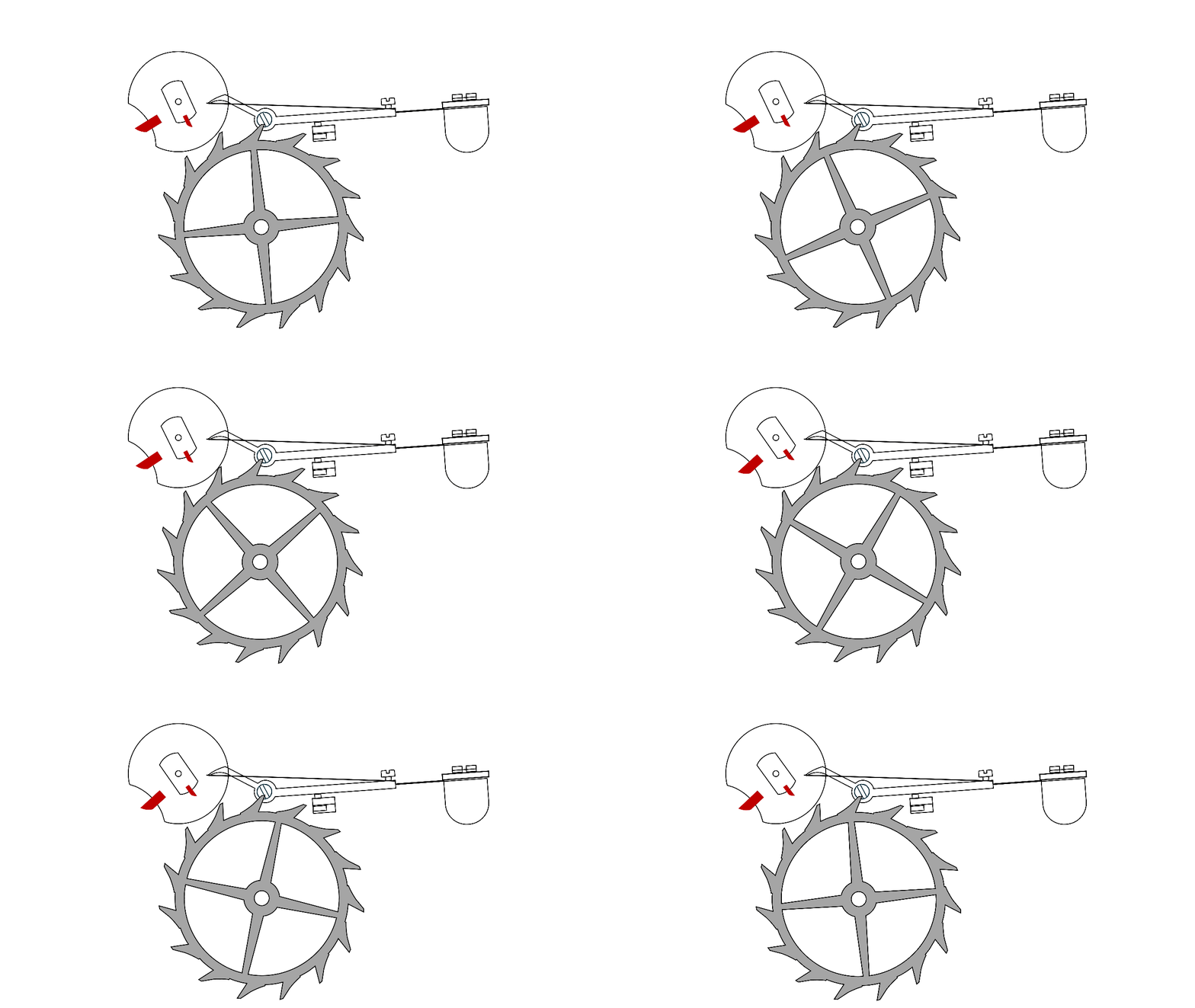
Detent escapement (2.5 Hz)
Speed 1:4
The invention of the detent escapement is attributed to Pierre Le Roy around 1748. During the 18th century, its development was refined by Thomas Earnshaw and John Arnold. These watchmakers were driven by the pursuit of precision dictated by the demands of maritime navigation, at a time when the accurate determination of longitude was a critical strategic advantage.
The detent escapement quickly became the preferred choice for marine chronometers due to its minimal interference with the balance. Used until the early 20th century, it is now rare in contemporary watchmaking, although some modern artisans still employ it in exceptional timepieces.
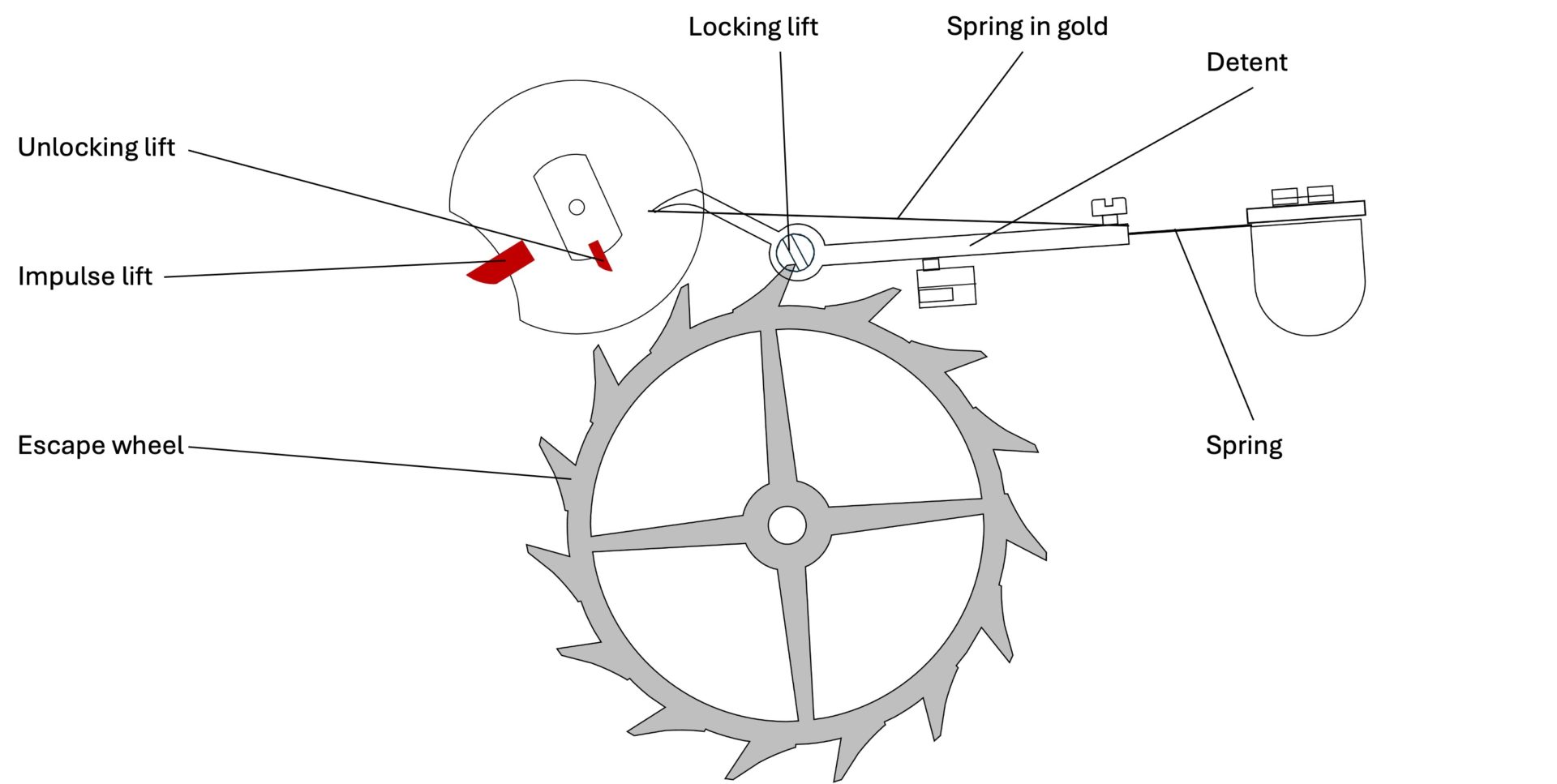
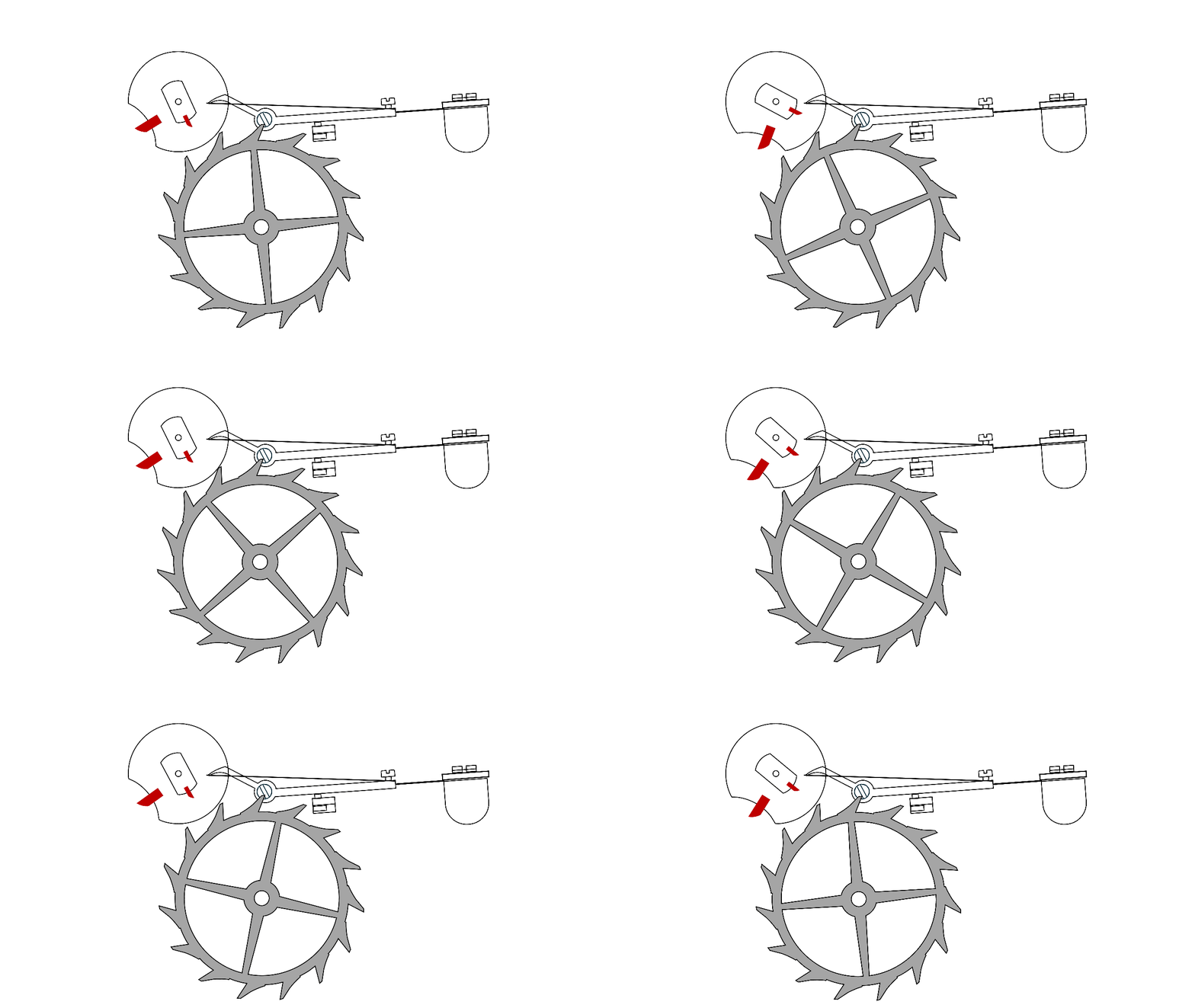
Figure 1
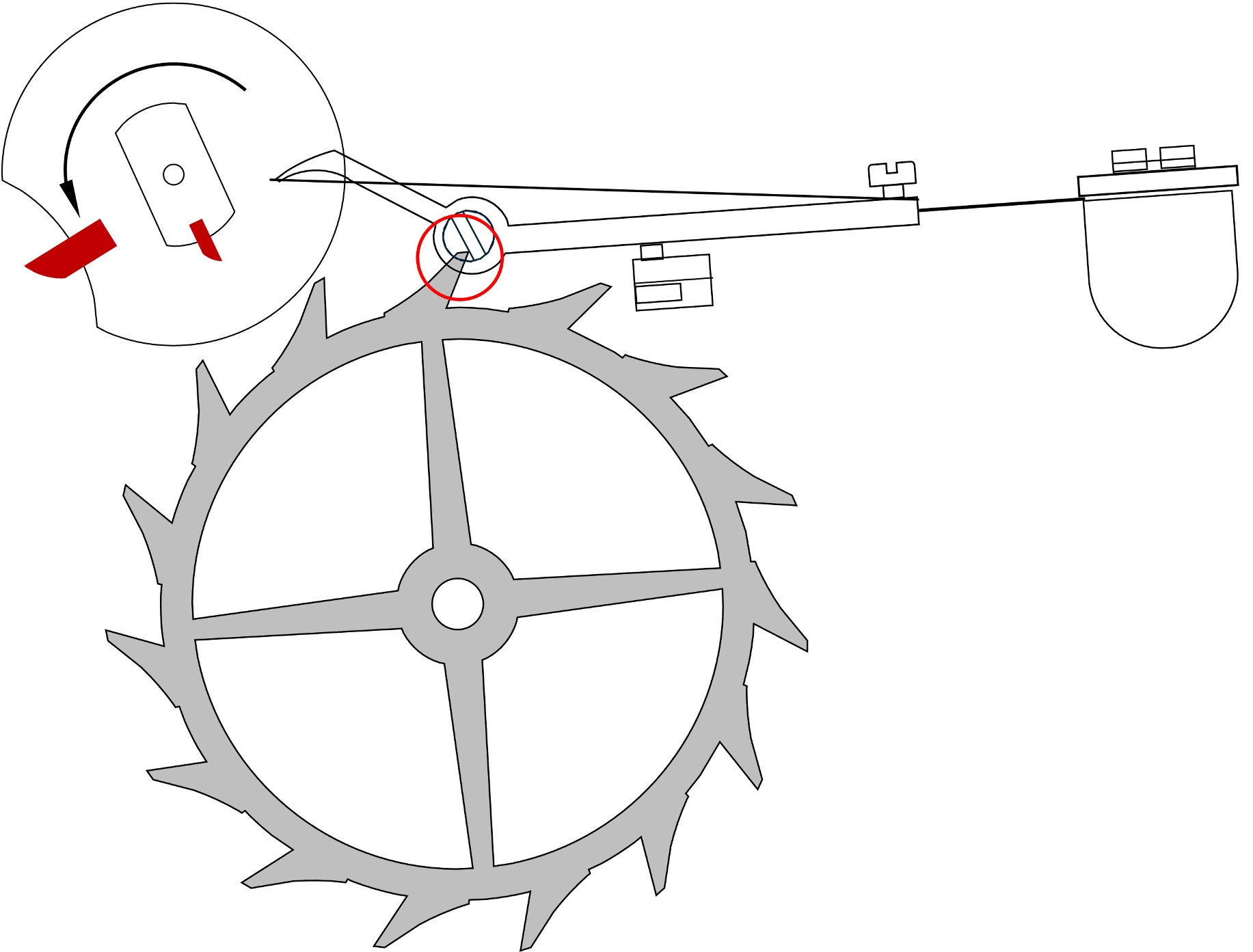
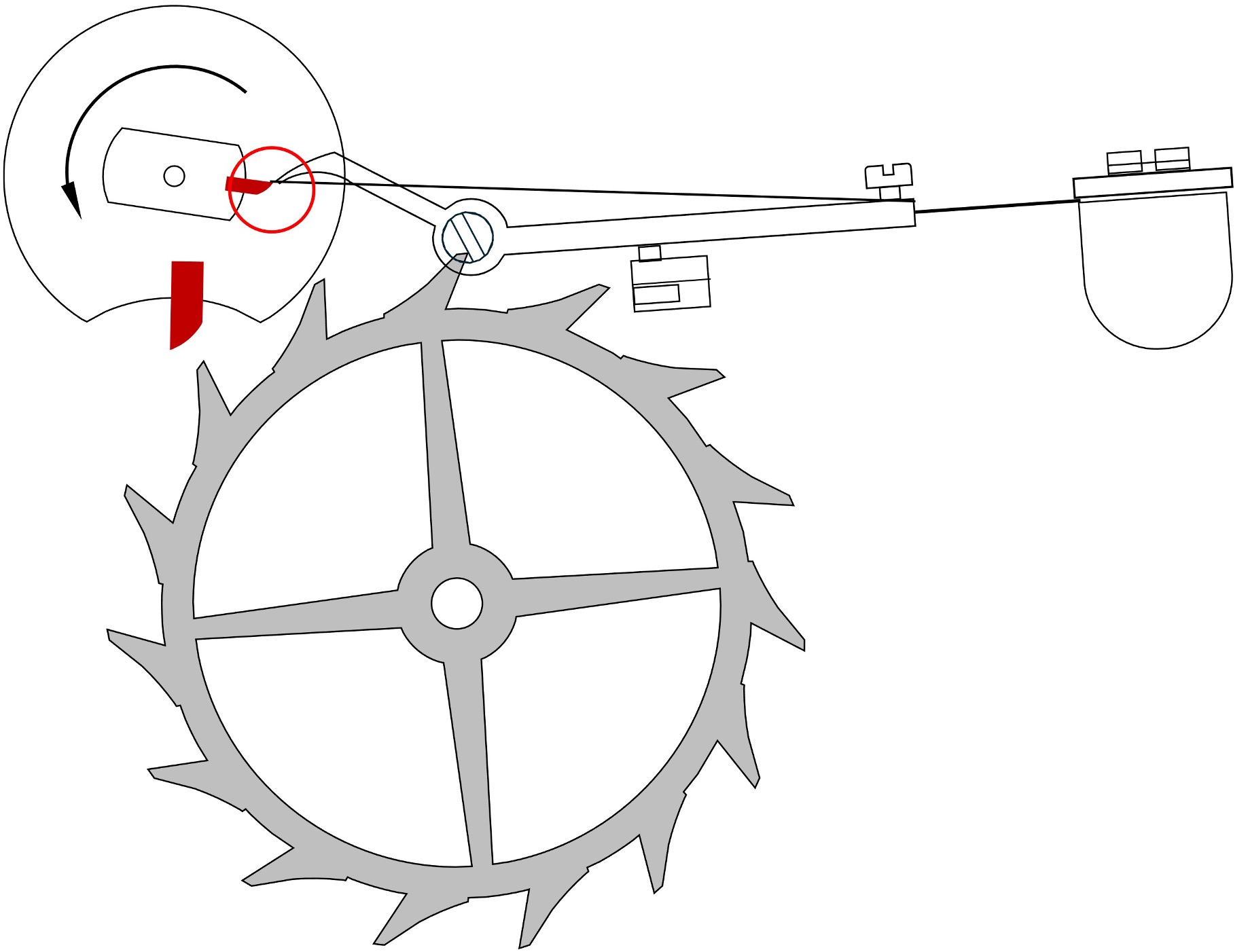
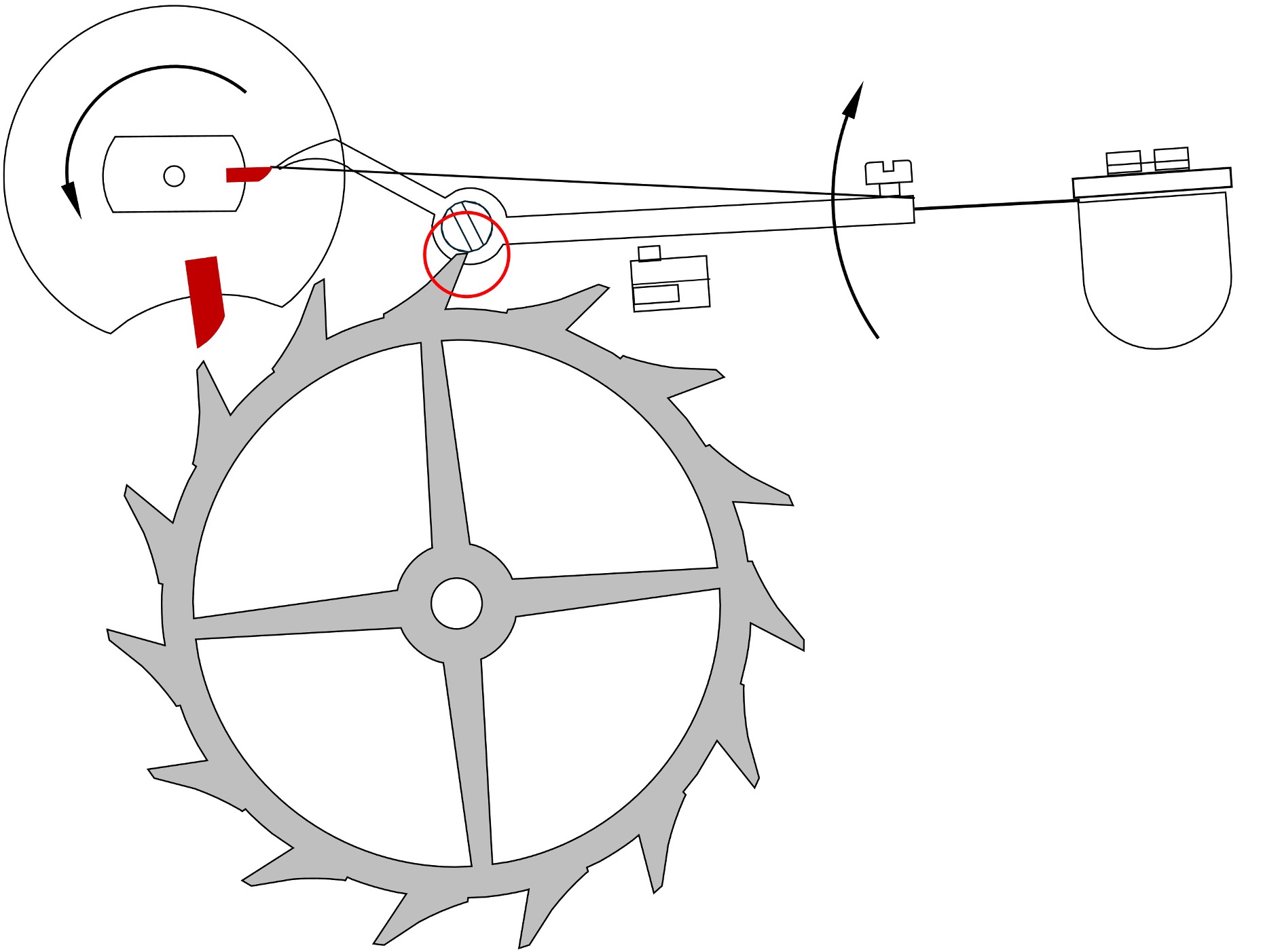
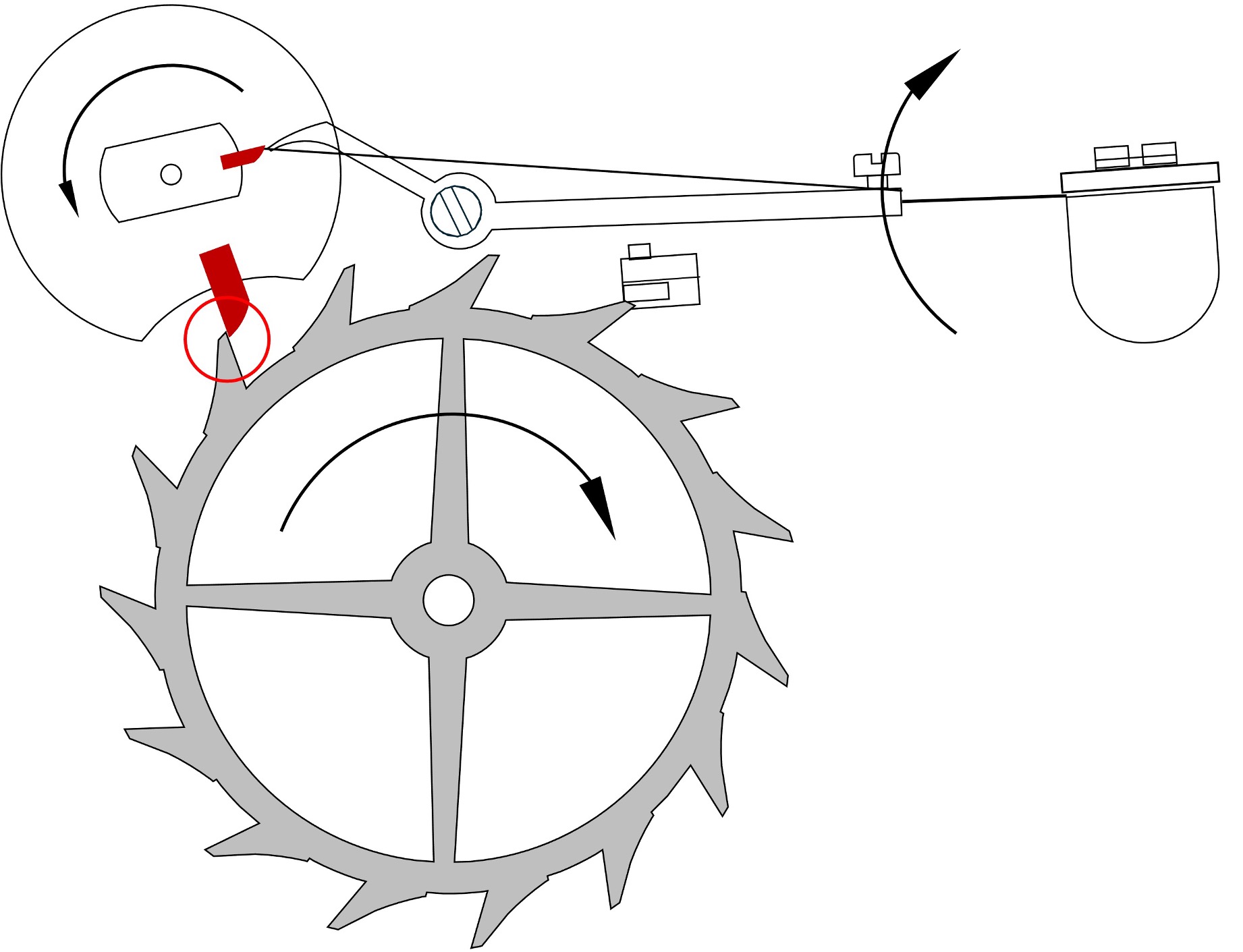
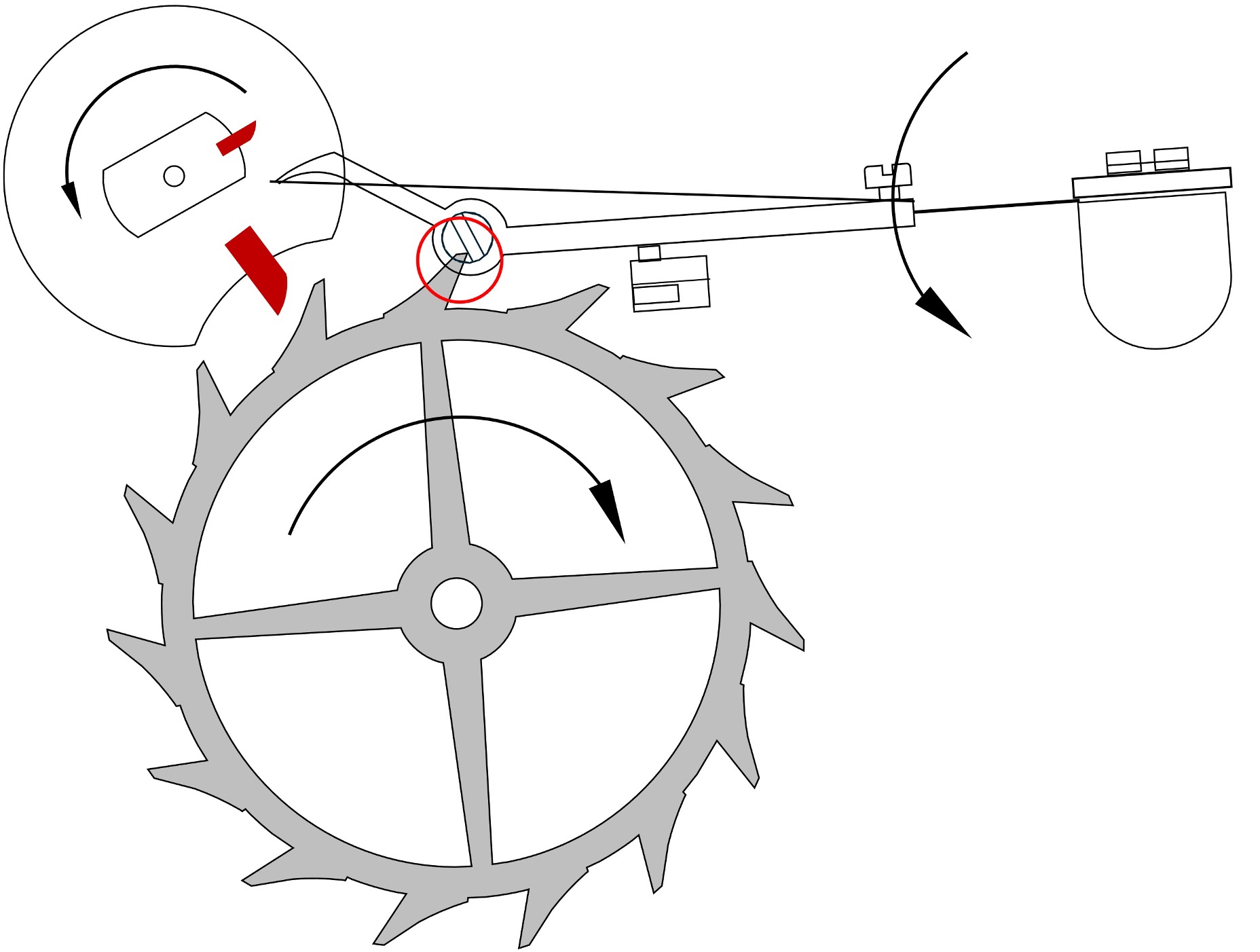
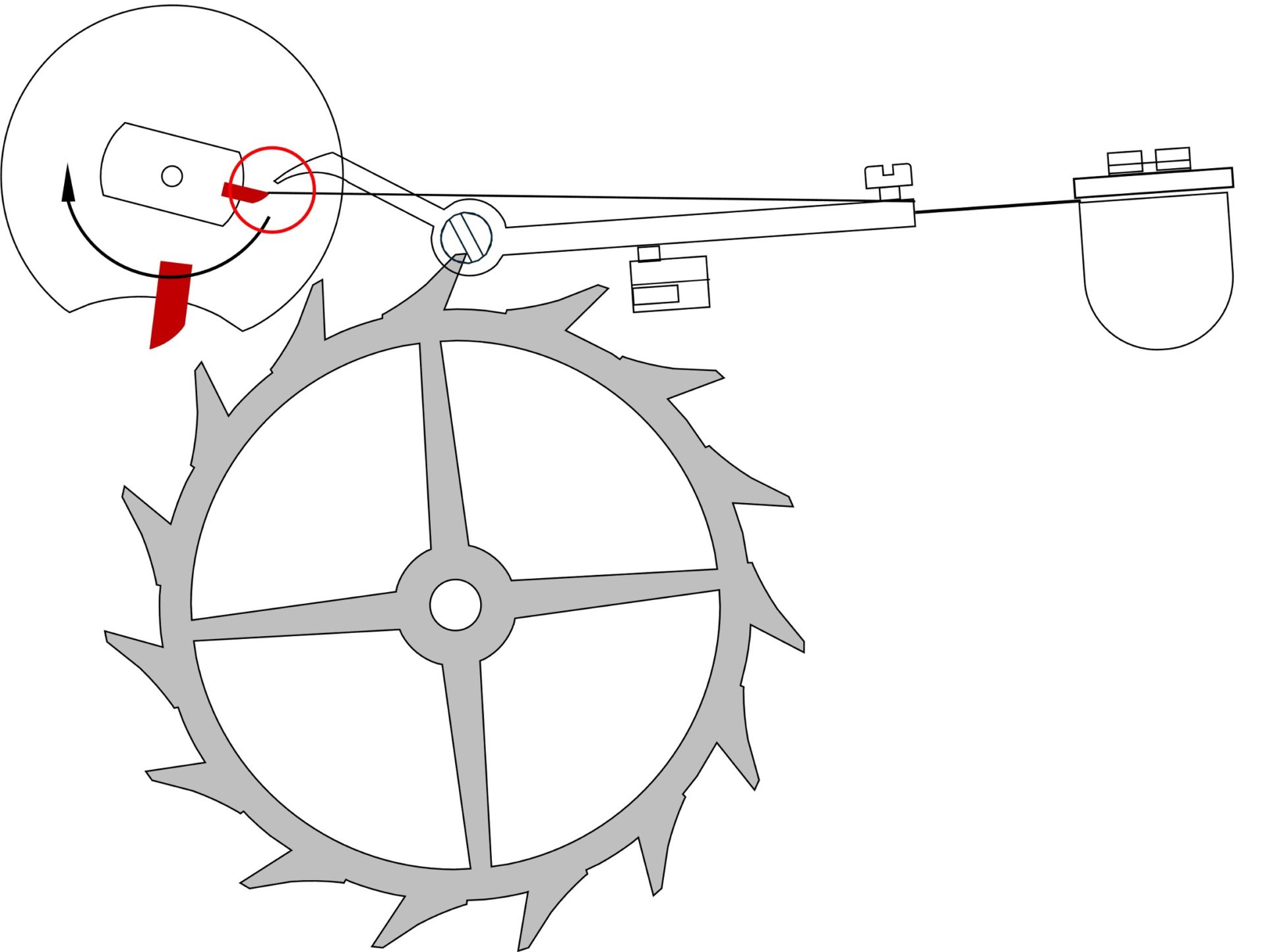
The detent escapement was the first free escapement to be developed. By isolating the escape wheel during its locking phase, the balance wheel can perform its supplementary arc without any contact or friction with the escapement. It is a single-beat escapement, as only one impulse per oscillation is transmitted to the balance wheel.
The escape wheel generally has 15 teeth and is made of gold, or sometimes brass or nickel silver.
The detent serves to lock the escape wheel. It is made of steel and fitted with a fine spring that allows the escape wheel to unlock. This spring is made of gold in order to offer as little resistance as possible during the unlocking lift—and therefore to the balance wheel —during the silent beat.
There are two types of detent construction: the spring detent, in which a thinned section acts as the spring (as described here), and the pivoted detent, which is mounted on a pivoted axis and held against its banking by a spring.
Advantages
-
High chronometric precision: The complete absence of friction during the supplementary arc of the balance wheel promotes excellent isochronism.
-
Direct impulse: Energy is transmitted more efficiently than with a Swiss lever escapement.
-
Unhindered balance motion: The balance oscillates freely through most of its cycle, reducing mechanical disturbances.
Disadvantages
-
Extremely shock-sensitive: a fall or jolt may cause the unexpected overbanking or jump of the mechanism, making the escapement unreliable during active wear.
-
Complex to manufacture and regulate: assembly and fine adjustment require rare expertise, limiting its use to very high-end or experimental timepieces.
-
Poor adaptability to wristwatches: due to its sensitivity, it is unsuitable for everyday wristwatches and remains reserved for fixed instruments (such as marine chronometers) or collector’s pieces.