
SURFACE ROUGHNESS TESTER
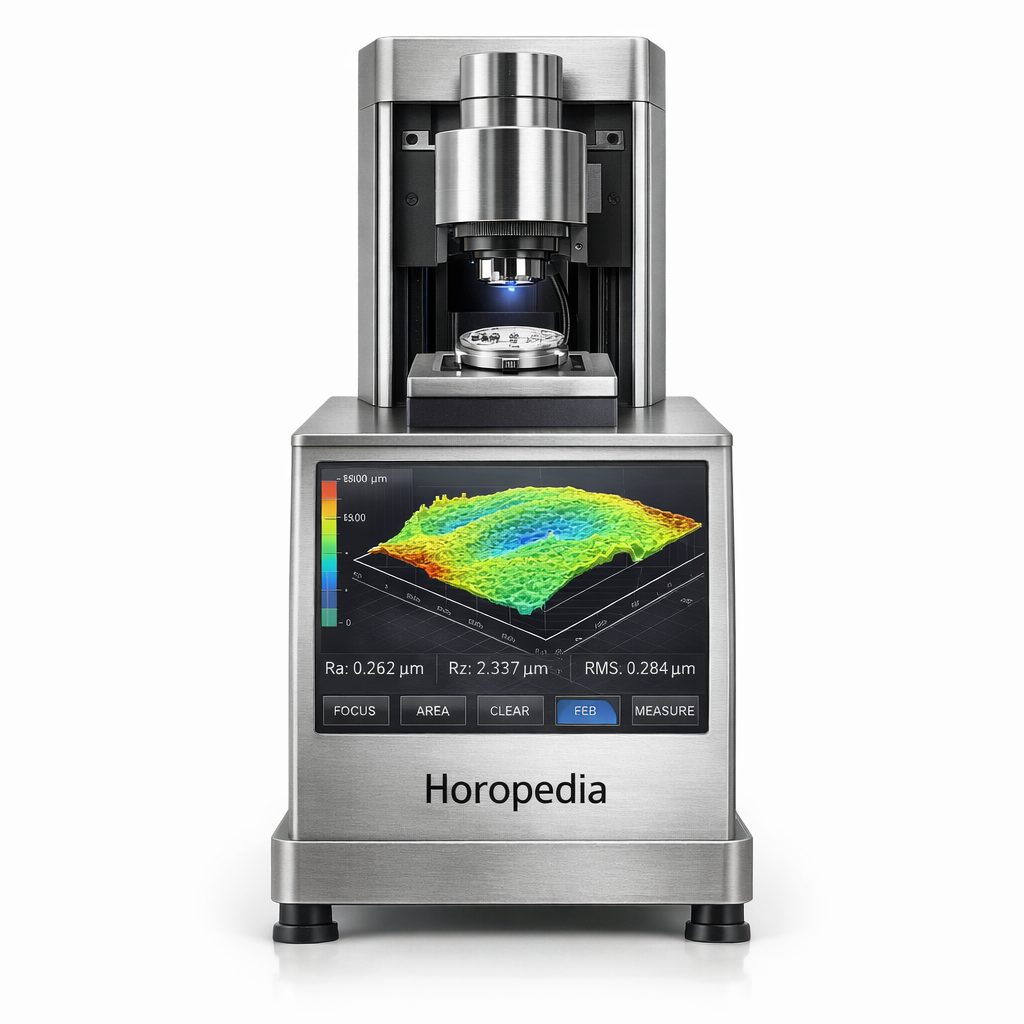
What is a roughness tester?
A roughness tester is a measuring device used to assess the roughness of surfaces. This instrument plays a major role in quality control and manufacturing of parts, as surface texture directly affects mechanical performance (friction), resistance to wear, and corrosion.
Principles and importance of roughness
Roughness refers to the microscopic irregularities present on a surface, resulting from machining, polishing, or wear processes. In watchmaking, where components often have close contact, roughness affects:
- Friction between moving parts.
- Distribution of lubricants.
- Resistance to corrosion and fatigue.
Strict control optimizes these factors, ensuring smooth and durable functioning of mechanisms.
Applications in watchmaking
-
Control of pivots and bearing surfaces
The pivots of shafts rotate in bearings usually made of synthetic ruby. Inappropriate roughness can cause excessive friction or premature wear. The roughness tester measures the texture of these surfaces to guarantee an ideal surface finish, allowing smooth movement with minimal resistance. -
Evaluation of gear teeth and pinion surfaces
The teeth of wheels and the flanks of pinions must have precise and uniform finishing. The measured roughness helps avoid seizing or energy losses, thus contributing to the reliability of the gear train. -
Control of contact surfaces on polished parts
Some parts, such as levers, springs, or pallets, benefit from specific polishing to limit friction, fatigue, or micro-cracks. The roughness tester ensures the polishing meets required quality standards.
How it works
The roughness tester generally operates by moving a very fine stylus or an optical sensor across the surface to be analyzed. This sensor follows microscopic reliefs and transmits these variations to an electronic measuring system, which translates the data into quantifiable roughness parameters (for example, Ra, Rz, etc.). These parameters indicate the exact condition of the inspected surface.
Importance in watchmaking quality
The degree of roughness directly affects:
- The accuracy and reliability of the movement.
- Energy consumption by reducing internal friction.
- Longevity of components by minimizing wear and fatigue.
Thus, a roughness tester becomes an essential instrument for watchmakers aiming for mechanical and aesthetic excellence, especially in high-precision watches.