
MOVEMENT OLDERS
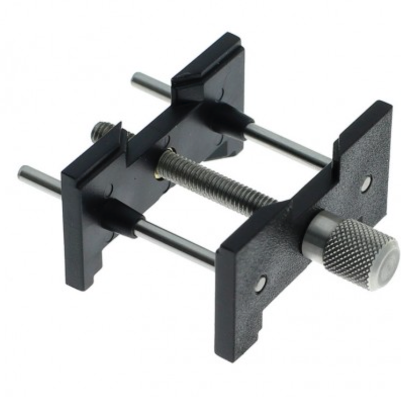
Screw type movement older
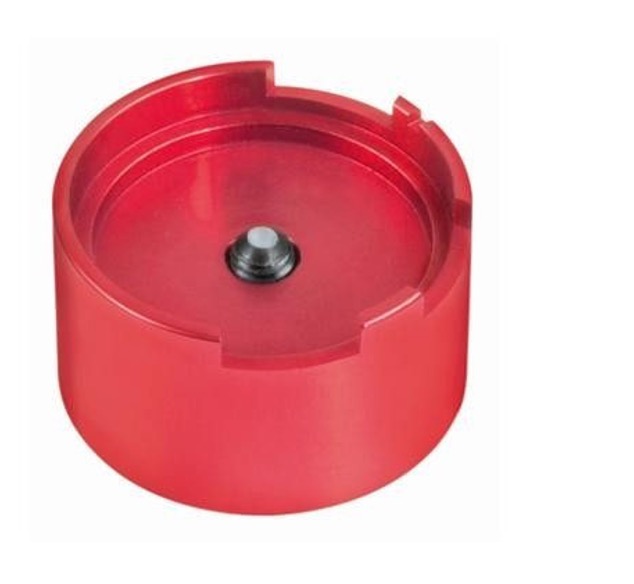
Calibre-specific movement holder for hand fitting
WHAT ARE MOVEMENT HOLDERS USED FOR?
Movement holders designate the workbench supports used to immobilise a movement during assembly, disassembly, adjustment and service operations. Their function is to offer the watchmaker a stable support, at working height, which frees both hands for the use of tools and which presents the part in a position favourable to observation under a loupe or microscope, without the movement bearing on its other face. The diversity of calibres handled and of operations carried out at the workbench has given rise to a family of distinct instruments.
The movement holder most commonly found on the workbench takes the form of a short cylinder, of synthetic material — Delrin being the most widespread — or of light metal, the upper face of which receives the movement by its outer edge. Two main variants coexist: fixed-diameter movement holders, in which the calibre is set into a bore cut to its dimensions, and adjustable-clamping movement holders, whose movable jaws, controlled by a screw, grip the movement around its periphery. The former, more rigid, are preferred for precision operations where no deformation is admissible; the latter, more versatile, cover a wide range of diameters with a single tool. The choice of a soft material — Delrin in particular — avoids any marking of the mainplate and preserves the lateral finish of the movement.
The contact surfaces must remain clean, free from dust, residual oil or chips that would mark the part; Delrin models can be cleaned simply with alcohol or a soft brush.