
MICROMETER AND DIAL GAUGE
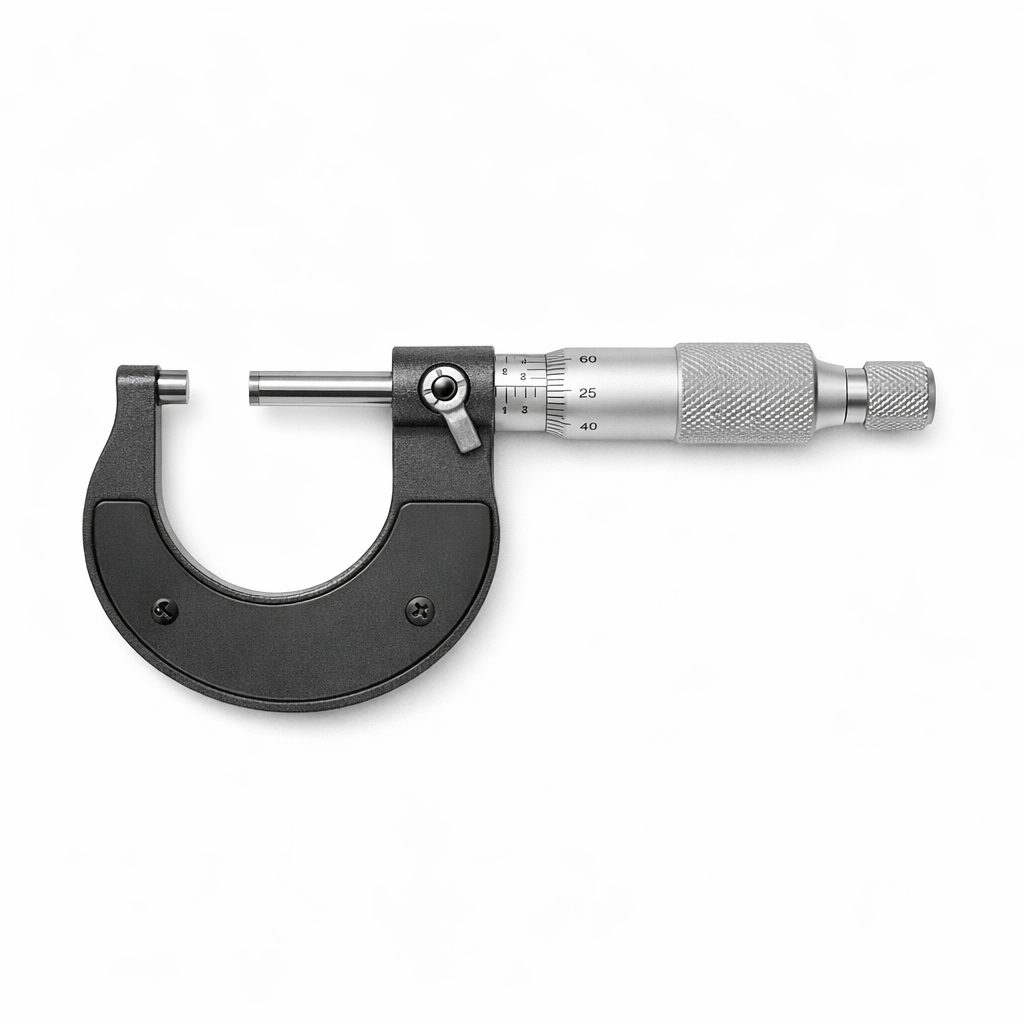
Micrometer with micrometer screw and vernier scale
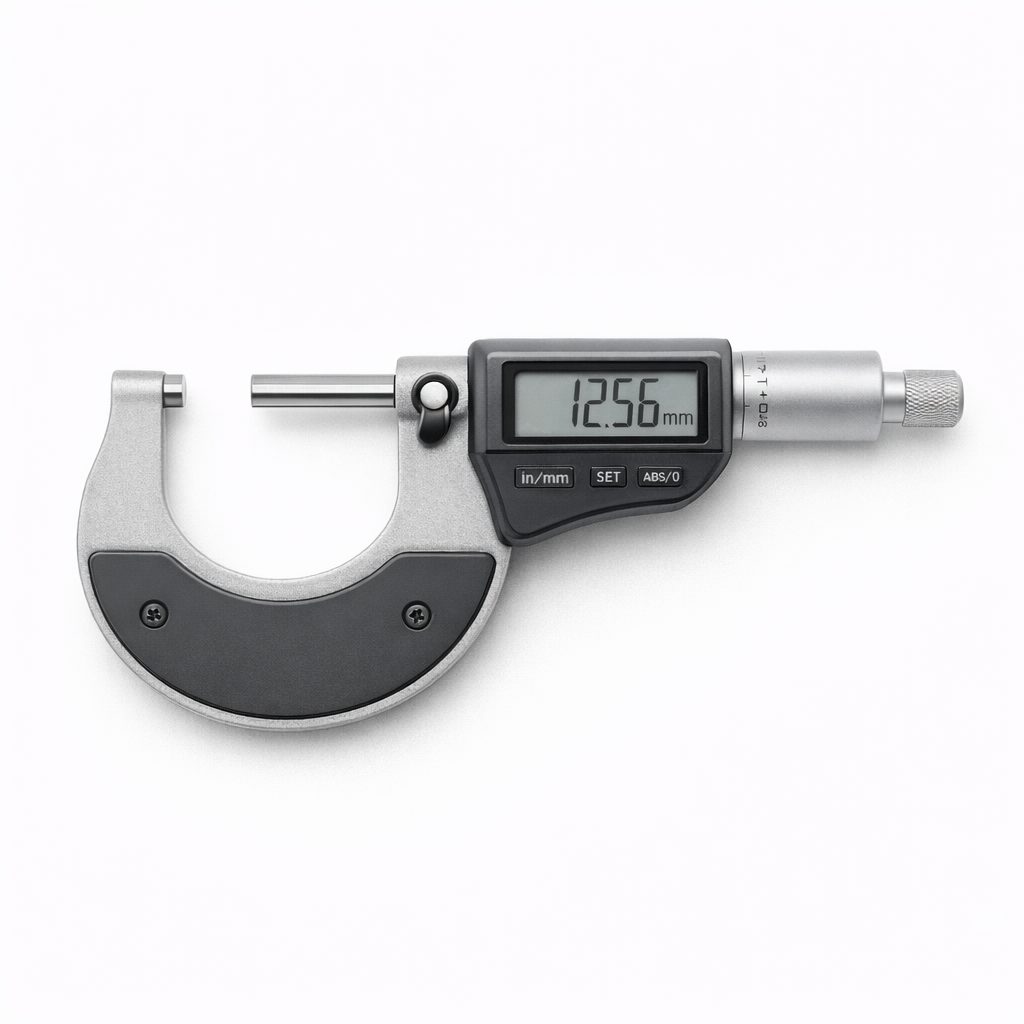
Micrometer with micrometer screw and digital dial
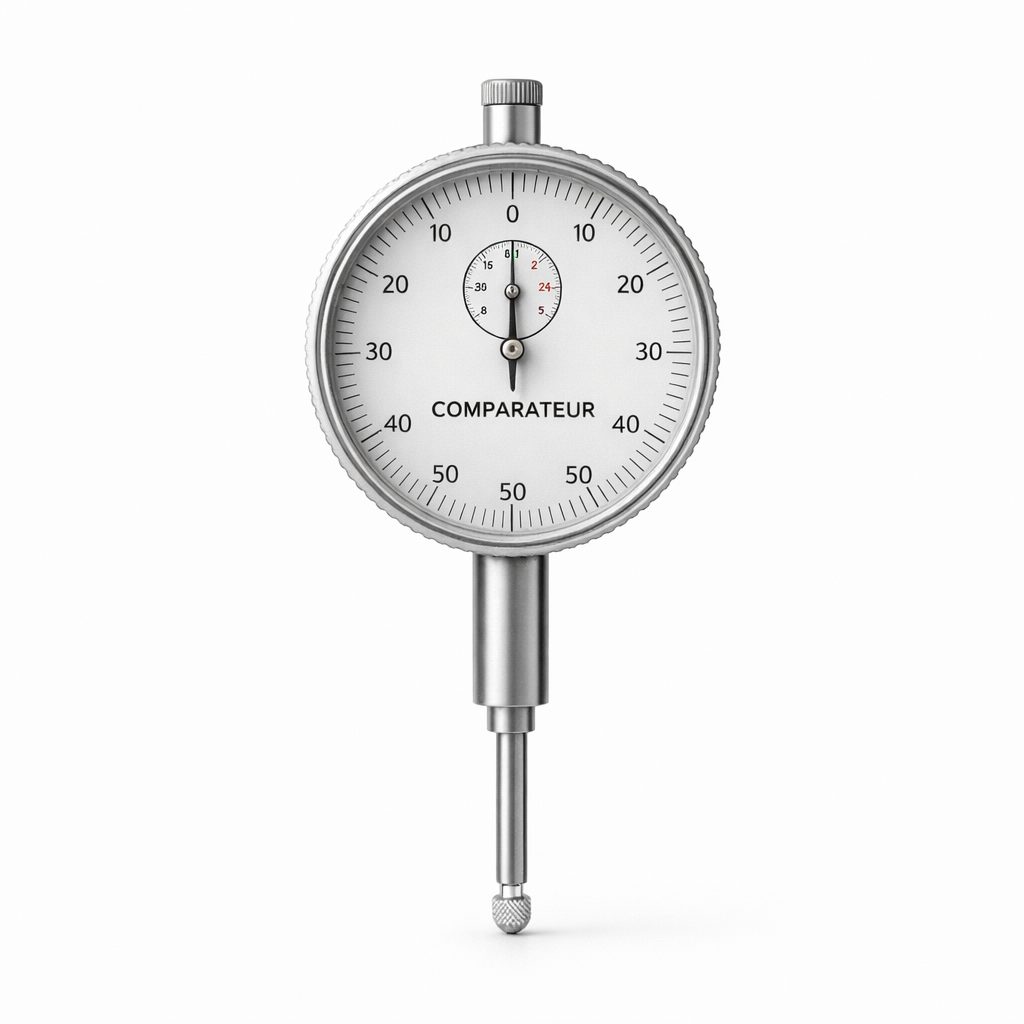
Analog dial gauge
What are the micrometer and the dial gauge used for?
The micrometer is a very high-precision measuring instrument used in watchmaking to check the dimensions of components and even tools, beyond the capabilities of traditional instruments like rulers or calipers. Generally, the micrometer is used to measure a single dimension (a size), whereas the dial indicator measures the distance between two surfaces, detects concentricity defects, or assesses the flatness of a surface.
Function and use
The micrometer allows measuring thicknesses, diameters, or depths with precision down to the micron (one-thousandth of a millimeter). In watchmaking, these ultra-precise measurements are essential to ensure the dimensional accuracy of parts such as pivots, shafts, plates, or springs.
Characteristics
- Material: Made of hardened steel or special alloys, the micrometer offers high robustness and dimensional stability needed for reliable measurements.
- Graduations: It usually includes a micrometer screw that advances or retracts a moving spindle with fine graduations, typically to the hundredth or even thousandth of a millimeter. The dial gauge consists of a sliding rod with a spring that enables detecting and measuring concentricity defects.
- Design: Compact and ergonomic, the micrometer has a fixed anvil and a movable spindle that progressively close to clamp the part without deforming it. The dial gauge is firmly fixed to a base (usually a steel stand) attached to a machine or the component being measured. A probe takes a reference measurement on one surface and measures the distance to another surface.
- Variations: Depending on the type of measurement, there are micrometers for internal, external, or depth measurements.
Importance in watchmaking
The micrometer and dial gauge are fundamental tools for quality control in precision watchmaking and for machine adjustments. They ensure compliance with the extremely tight dimensional tolerances specific to watch mechanisms, thereby guaranteeing the reliability, durability, and accuracy of timepieces. Used alongside the caliper and metal ruler, they form a cornerstone of measuring instruments in the watchmaker’s workshop.