
MENU
1. History
The cylinder escapement was invented in 1725 by Georges Graham, who drew inspiration from the “pig’s trough” escapement of his master Thomas Tompion and improved its performance. The cylinder escapement established itself as the most popular escapement from 1750 onward. It replaced verge escapements by offering better regulation quality.
Despite its qualities, the efficiency of the cylinder escapement is mediocre and it continued to undergo developments for 150 years. It was thus Abraham-Louis Breguet who achieved the best results by combining an escape wheel in hardened steel with the cylinder lips in ruby / jewel. From the mid-19th century onward, the cylinder escapement gradually disappeared in favor of the Swiss lever escapement, which would replace it definitively.
2. Description
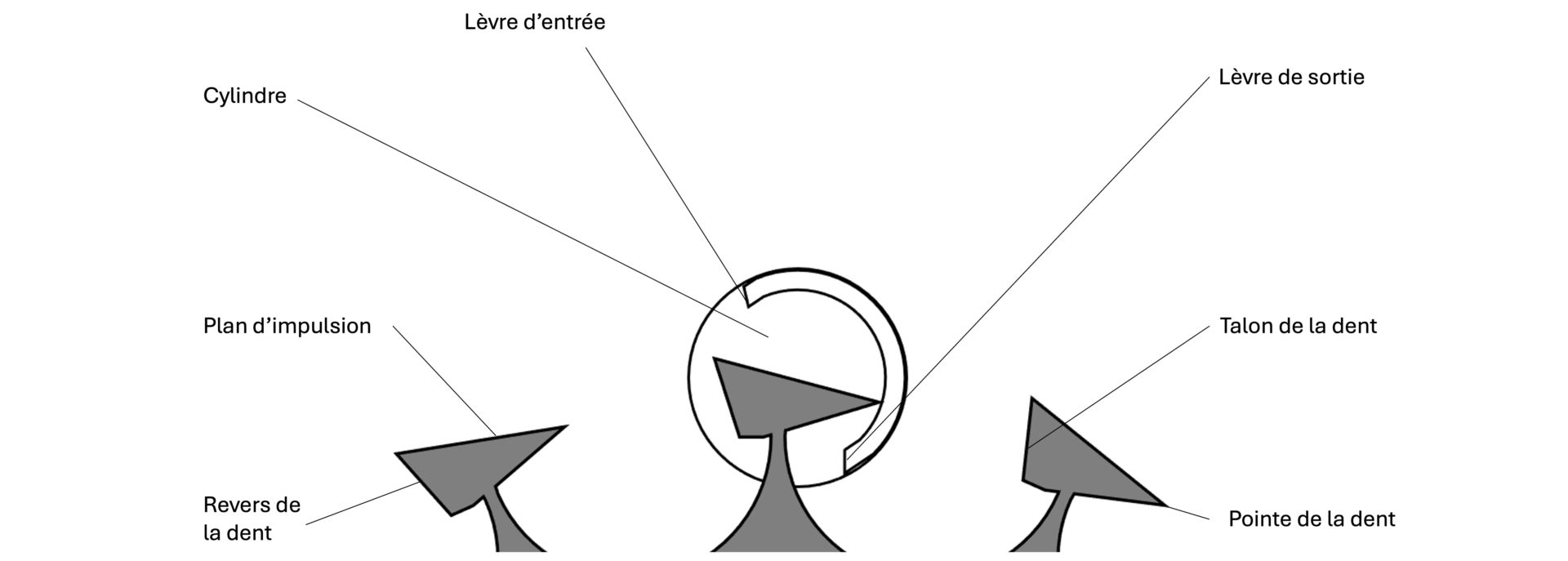
Figure 1
Click on the thumbnail to enlarge it
This is a frictional rest escapement. The numerous frictions induced by its operation give it poor efficiency (large energy losses); nevertheless, when manufactured with precision and presenting good finishing, it allows good chronometric results to be obtained. The Amplitude of the Oscillation of the Balance can reach 150°, which allows for better regulation than a verge escapement and easily allows the Fusee to be removed.
The escapement consists of two elements: the escape wheel and the cylinder. The cylinder is an integral part of the Balance staff, of which it forms the central part. The cylinder is hollowed out by a notch whose two vertical edges, called the lips, successively receive the Impulse of a tooth of the escape wheel.
The impulse is transmitted to the cylinder directly by the escape wheel, whose tooth exteriors form the impulse plane. The teeth of the escape wheel lie on a plane higher than that of the wheel’s main plate. The escape wheel usually has 15 teeth, with only very rare exceptions having 13.
3. Operation
The operation of the cylinder escapement can be divided into five phases that unfold unchangingly according to the same cycle with each Oscillation of the Regulating organ. These five phases are:
- Outer rest
- Outer Impulse
- Inner drop (impact) and rest
- Inner Impulse
- Outer drop (impact) and rest
Let’s detail below the action of each component during each of the five phases:
1. Outer rest
During this phase, the tip of the tooth rests and rubs against the outside of the cylinder while the balance performs its supplementary arc (Figure 2).
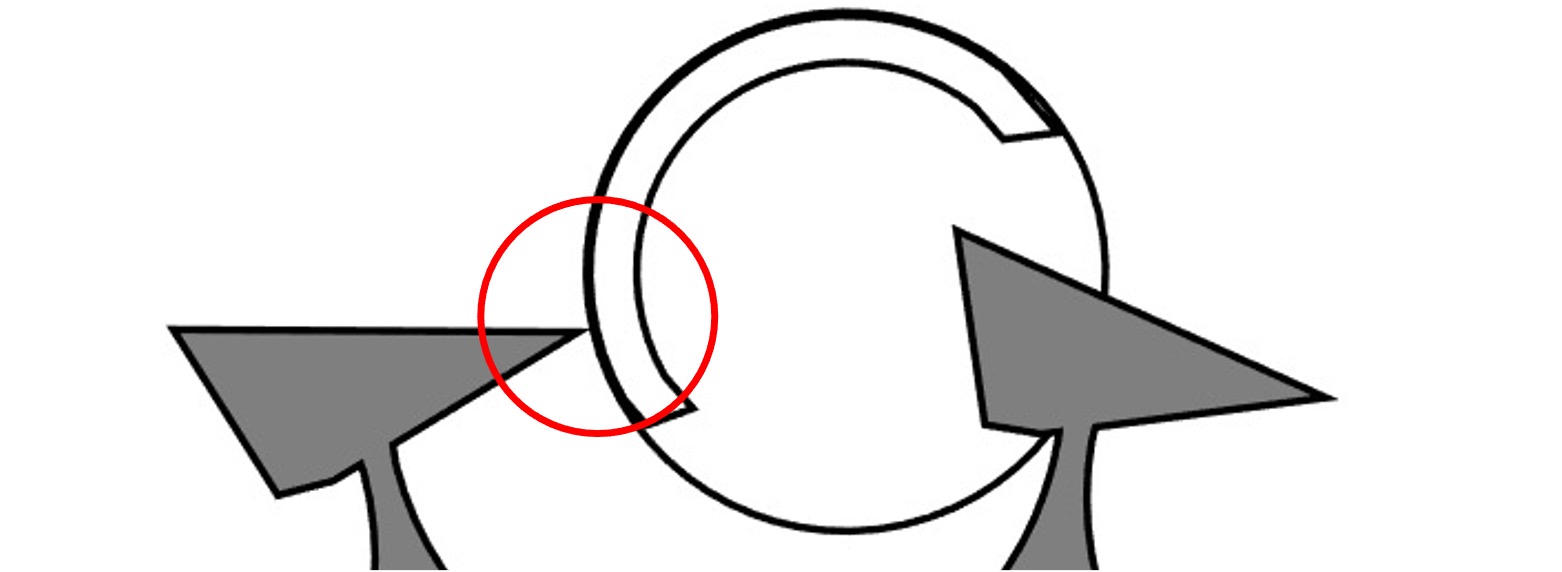
Figure 2
Click on the thumbnail to enlarge
2. The outer Impulse
The tip of the tooth comes into contact with the impulse plane of the entry lip of the cylinder. This is the beginning of the outer Impulse (Figure 3).
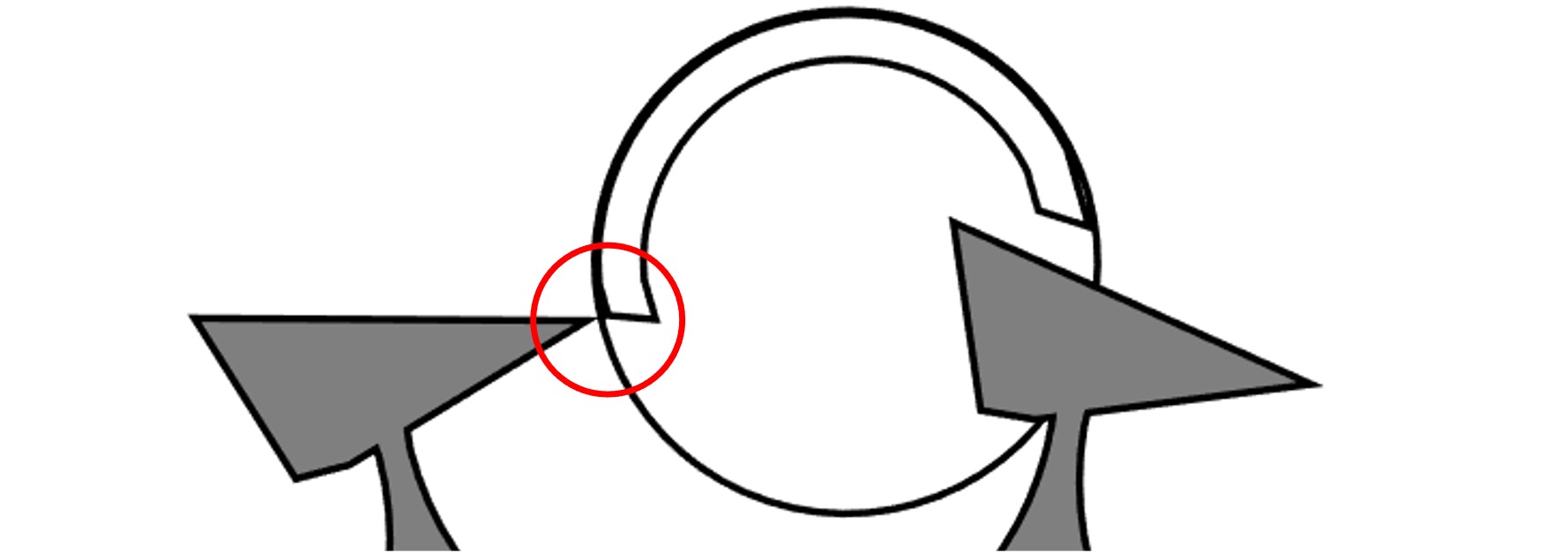
Figure 3
Click on the thumbnail to enlarge
The tip of the entry lip comes into contact with the impulse plane of the tooth (Figure 4).
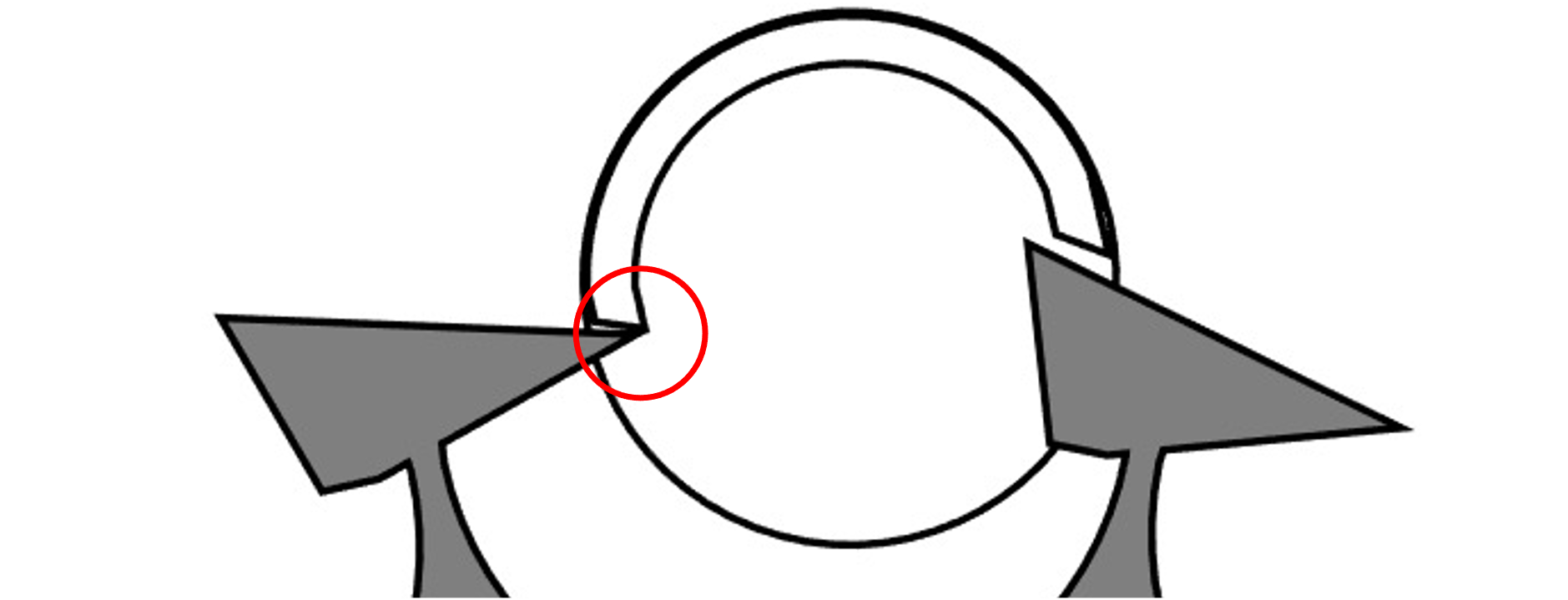
Figure 4
Click on the thumbnail to enlarge
3. The inner drop and rest
Once the outer impulse is finished, the tooth leaves the impulse plane of the entry lip (Figure 5) and drops against the inner wall of the cylinder in the rest position (Figure 6). The balance then performs its supplementary arc.
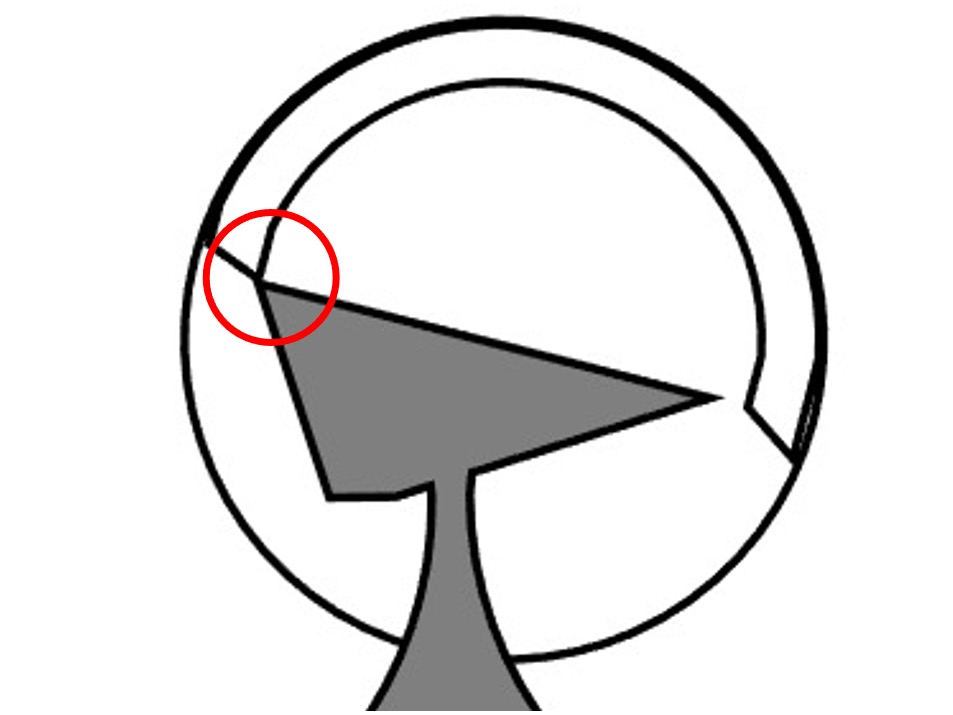
Figure 5
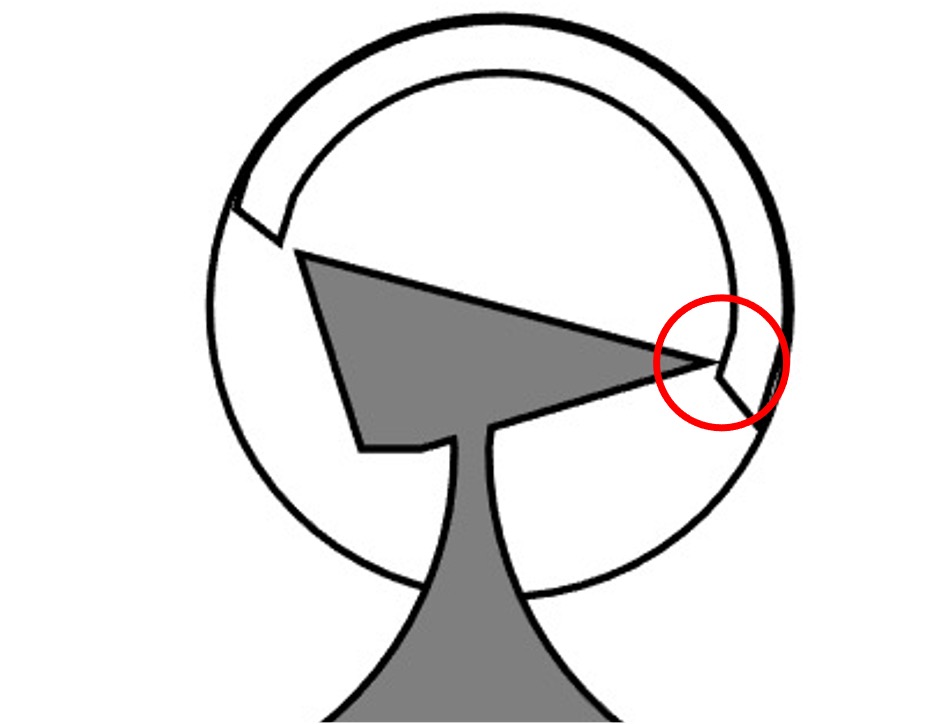
Figure 6
Click on the thumbnails to enlarge
4. The inner impulse
The tip of the tooth comes into contact with the impulse plane of the cylinder’s exit lip. This is the beginning of the inner Impulse (Figure 7).
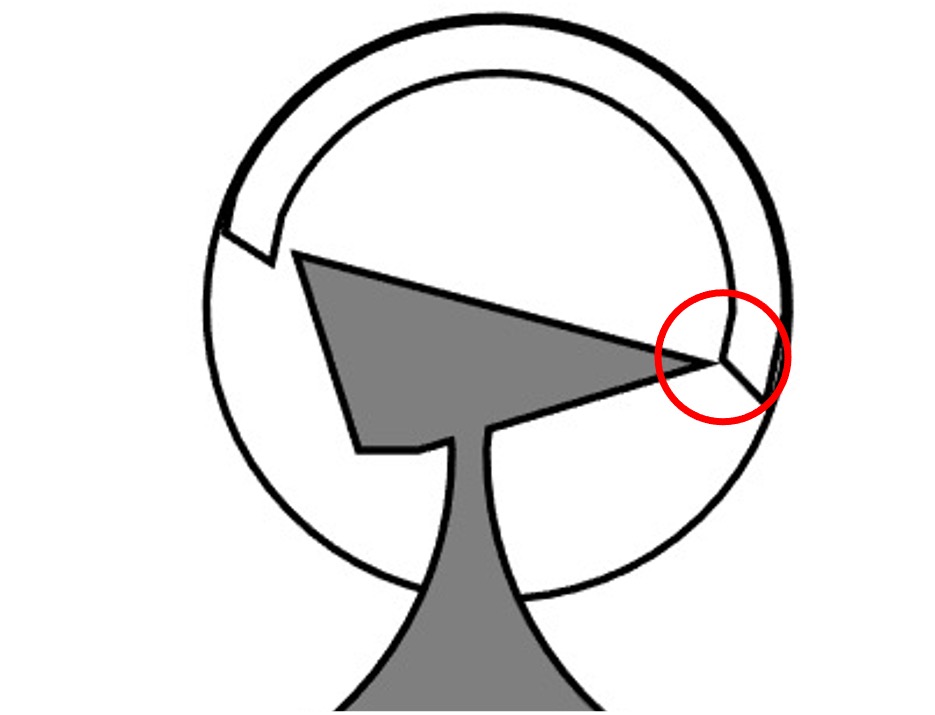
Figure 7
Click on the thumbnail to enlarge it
The tip of the exit lip comes into contact with the impulse plane of the tooth (Figure 8).
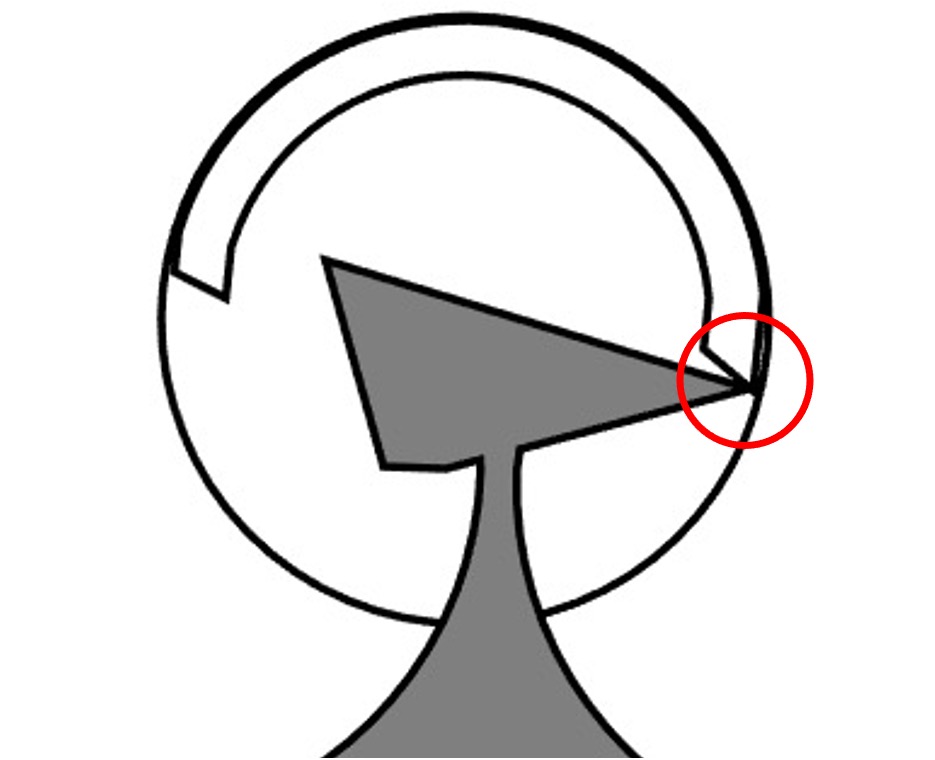
Figure 8
Click on the thumbnail to enlarge it
5. Outer drop (impact) and outer rest
The tooth leaves the impulse plane of the exit lip (Figure 9) and falls onto the outer wall of the cylinder in the resting position (Figure 10).
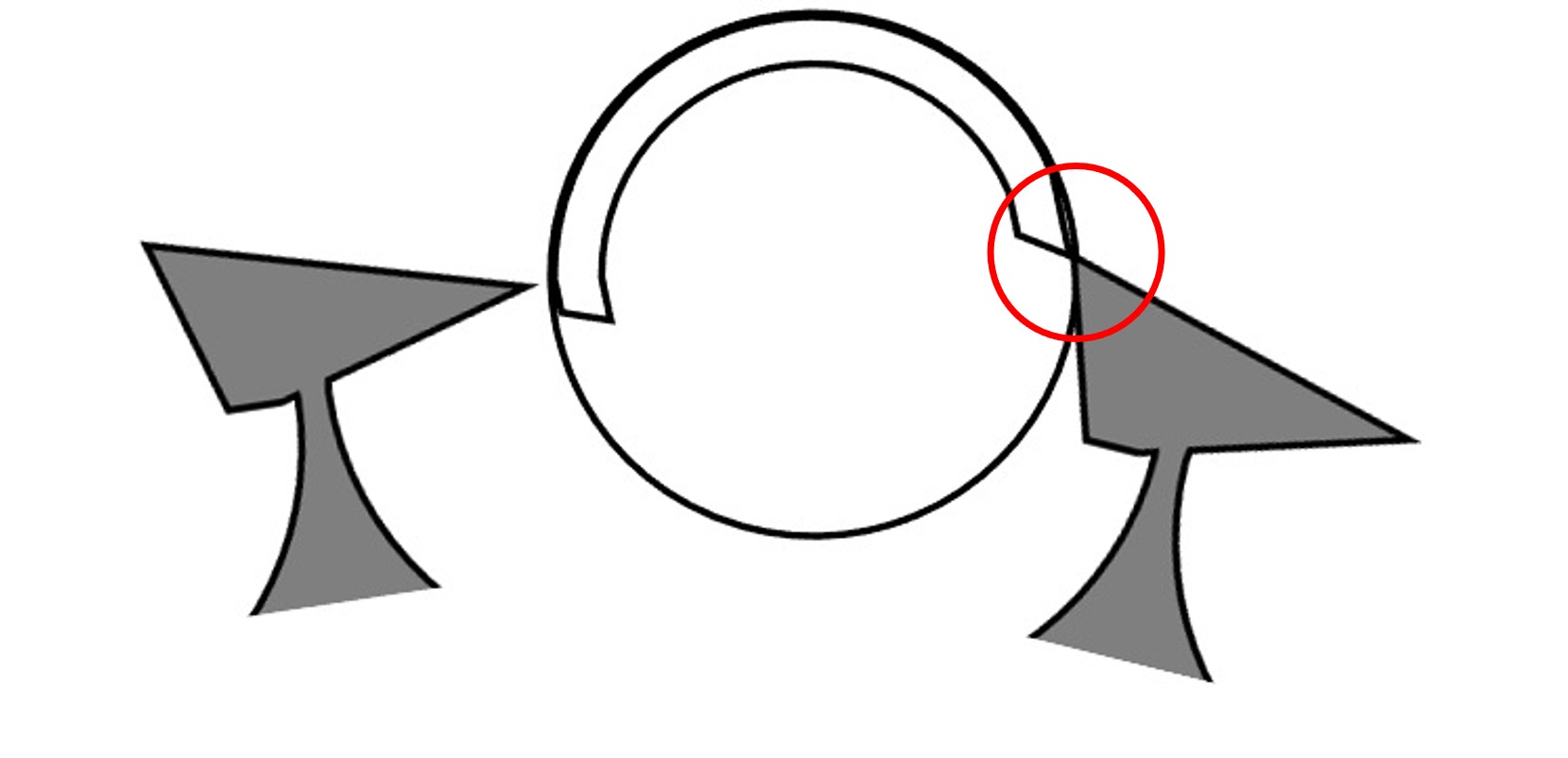
Figure 9
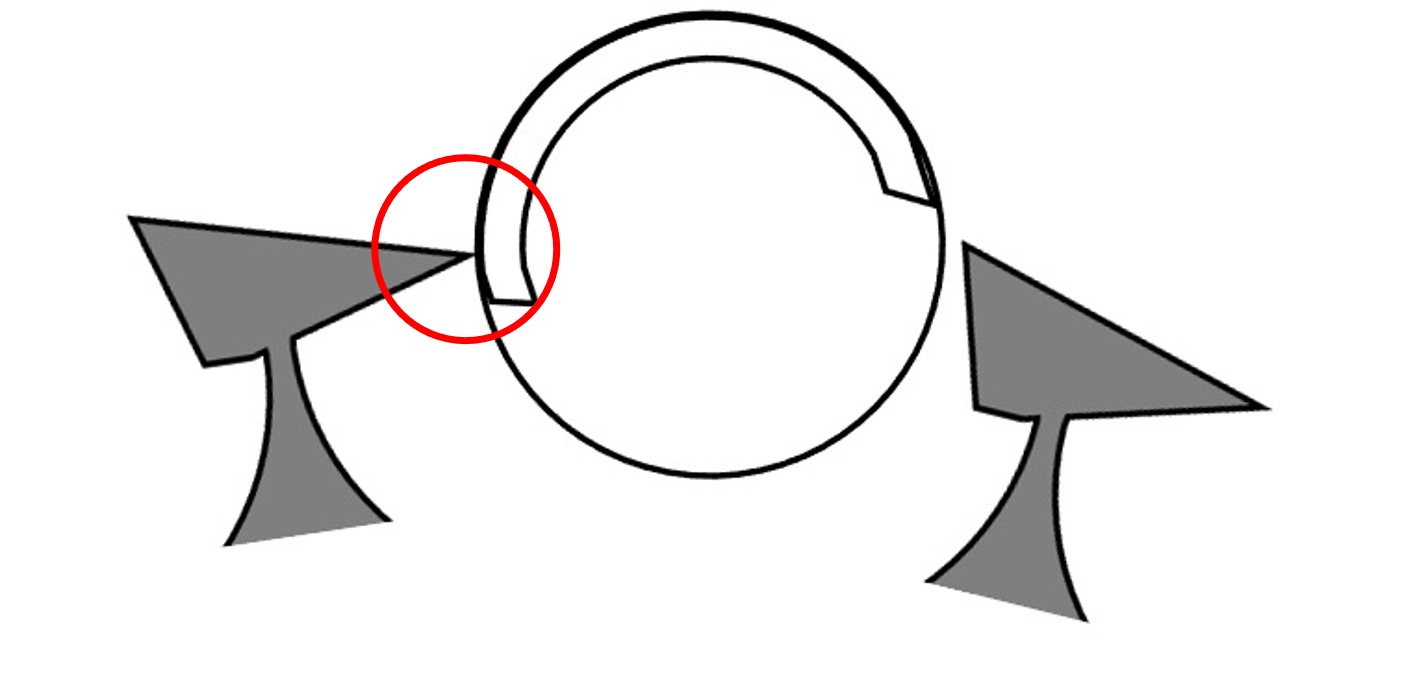
Figure 10
Click on the thumbnails to enlarge them
Note:
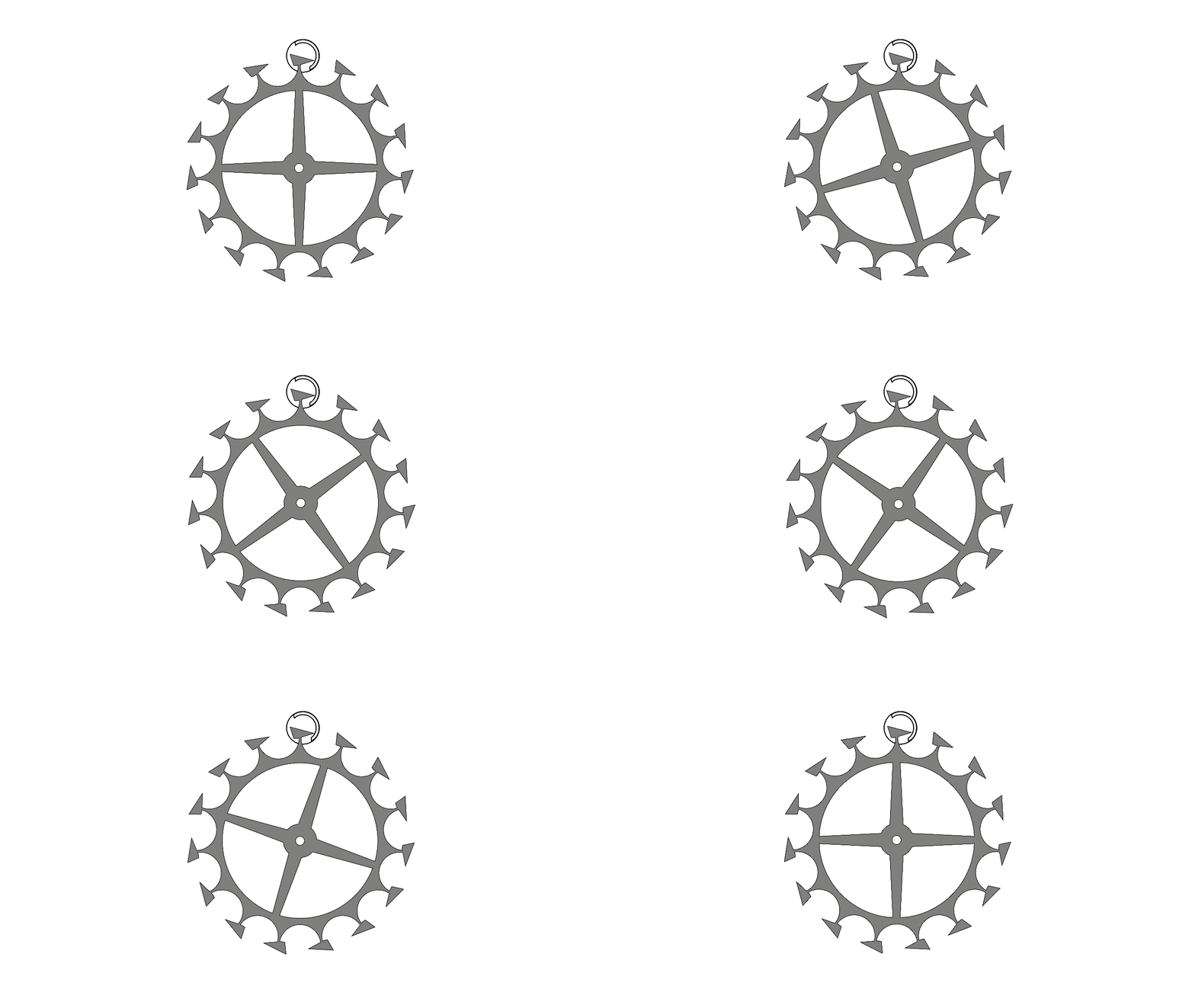
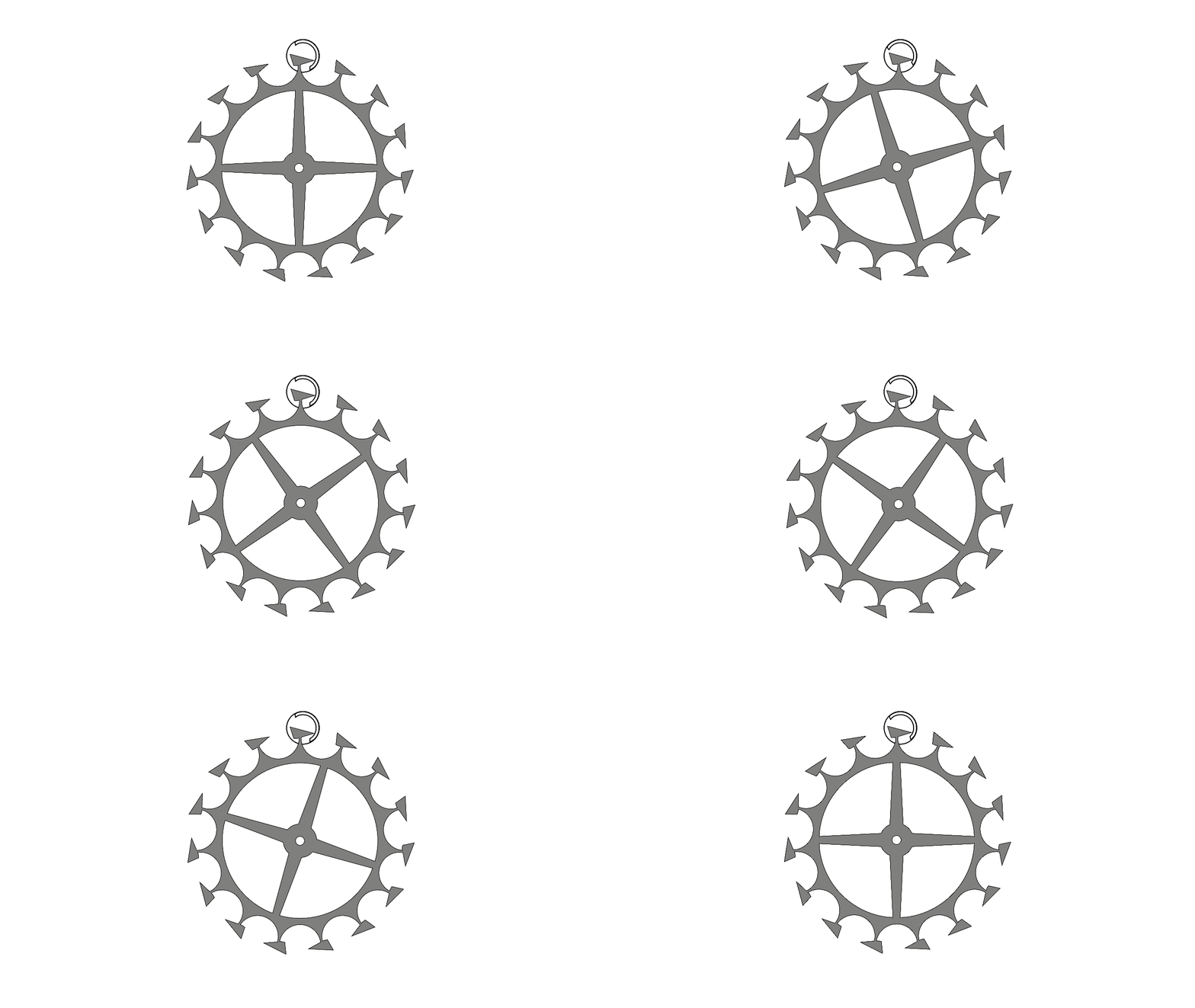
For a complete view of how the Cylinder escapement works, please refer to the two animations at the top of this page.
4. Advantages and disadvantages
Advantages
The Amplitude obtained with a cylinder escapement (about 150°) is greater than that of the verge escapement and allows for better timekeeping.
Although it is mediocre, the efficiency of the Cylinder escapement is better than that of verge escapements.
Drawbacks
The teeth are in permanent contact with the cylinder, generating numerous frictions that impair efficiency and require exemplary cleanliness and Lubrication, and consequently, frequent maintenance.
The Cylinder escapement requires great precision in the manufacturing of these components, a good choice of Materials, and carefully finished surfaces.
This page was automatically translated from the French reference version using an artificial intelligence tool. Errors or inaccuracies may remain. If you notice any, especially if this is your native language, please feel free to report them to info@horopedia.org. Your contribution helps us improve the quality of the encyclopedia.
While awaiting their translation, images and videos remain temporarily displayed in French.
Thank you for your understanding.