
PAIRING THE BALANCE AND THE HAIRSPRING (BALANCE SPRING)
This method requires specific equipment and applies to regulating organs produced in series. It requires great precision in the manufacture of the balance and that of the hairspring (balance spring).
On a dedicated machine, the moment of inertia of all the balances in the same series is measured with great precision. The machine sorts the balances into different classes (from 20 to 50) according to their dispersion relative to the calculated theoretical moment of inertia (Figure 1).
On the same setup, we then measure the elastic moment (torque) of the hairsprings from the same series. Here again, the machine sorts the hairsprings into different classes (the same number as those used for the balances) according to their dispersion relative to the calculated theoretical elastic moment (Figure 2).
Thus, by pairing a balance and a hairspring sorted into the same class, we obtain a regulating organ with a frequency that will require little or no correction once the assembly is fully assembled and functional.
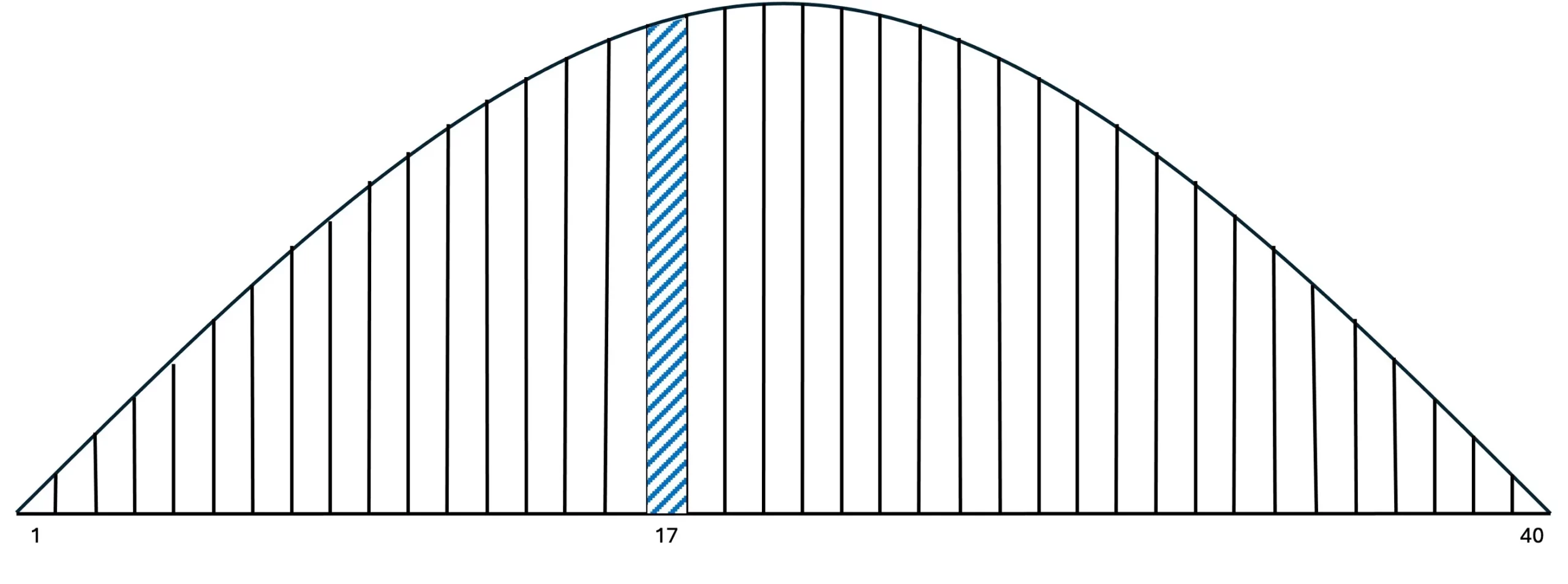
Figure 1
Classification of the balance’s moment of inertia (here class 17)
Click on the thumbnail to enlarge it
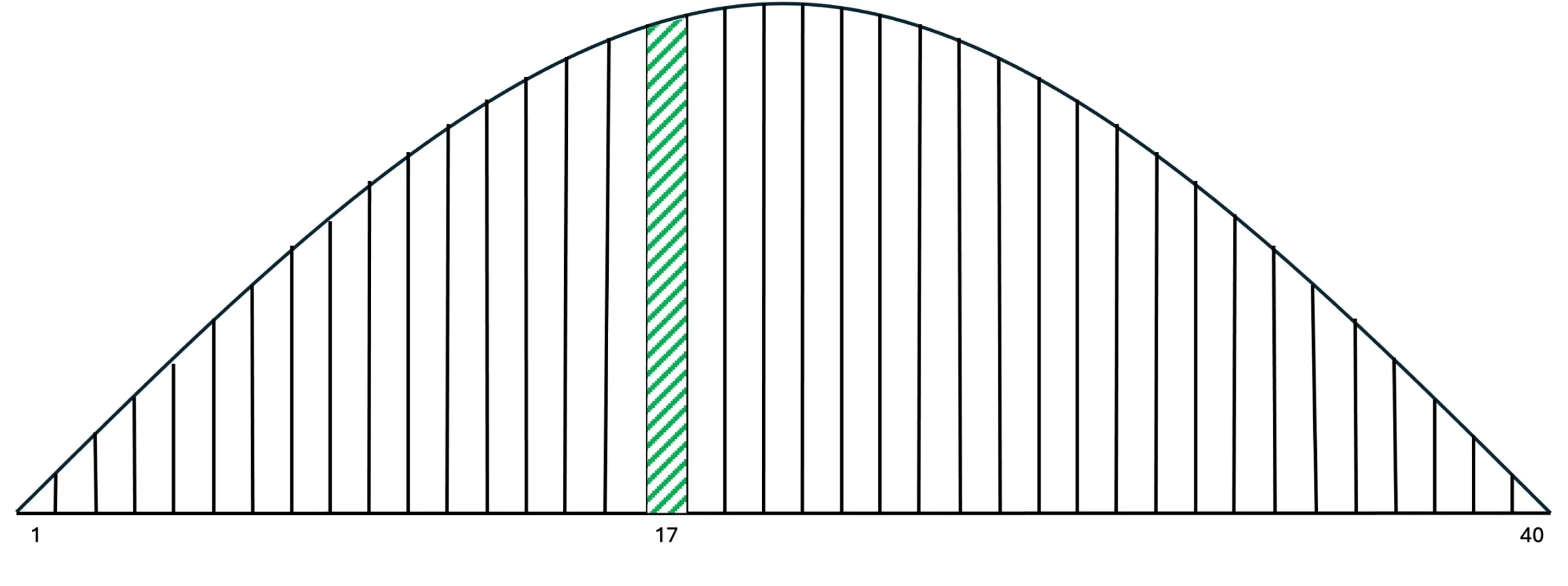
Figure 2
Classification of the elastic moment (torque) of the hairspring (balance spring) (here class 17)
Click on the thumbnail to enlarge it
This page was automatically translated from the reference French version using an artificial intelligence tool. Errors or inaccuracies may remain. If you notice any, especially if this is your native language, please feel free to report them to info@horopedia.org. Your contribution helps us improve the quality of the encyclopedia.
Until they are translated, images and videos will temporarily remain displayed in French.
Thank you for your understanding.