
SILICON
Table of the main properties of silicon
| Property | Typical value | Remarks |
|---|---|---|
| Mass density | ~2.33 g/cm³ | Very light |
| Elasticity modulus (E) | ~130–190 GPa | Depends on orientation |
| Tensile strength | ~150–300 MPa | Brittle (sudden failure) |
| Hardness (HV) | ~700–1000 HV | High |
| Thermal conductivity | ~120–150 W/m·K | Good |
| Electrical conductivity | Semiconductor | Variable |
| Expansion coefficient | ~2.5 ×10⁻⁶ /K | Very low |
| Magnetism | No | Non-magnetic |
| Corrosion resistance | Excellent | Very stable |
| Machinability | Not machinable | Microfabrication only |
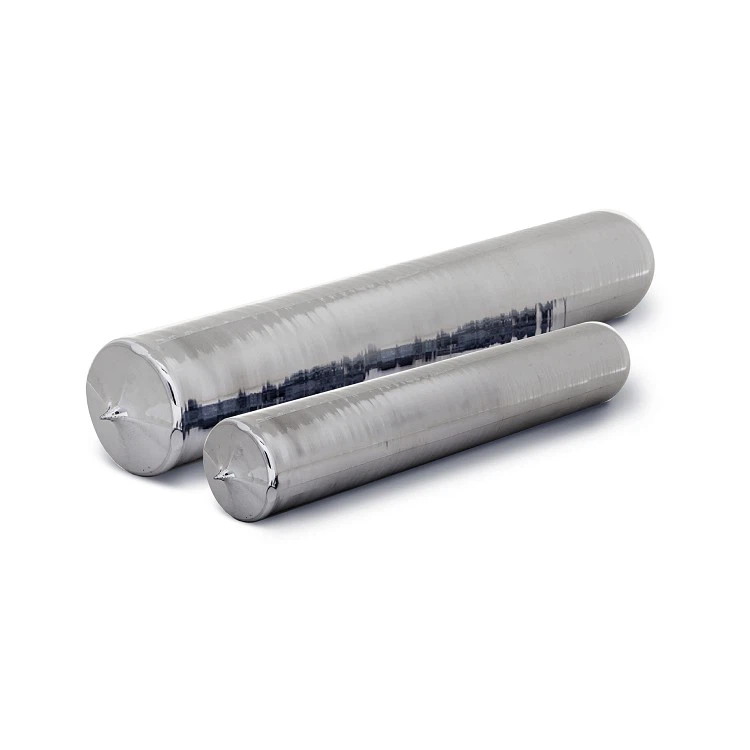
Silicon belongs to the metalloid family. It is a semiconductor material derived from the microelectronics industry, introduced into watchmaking in the early 2000s. It is now widely used for the manufacture of critical components, particularly in the Regulating organ (balance springs) and in the Escapement.
Its shaping relies on microfabrication processes, notably DRIE (Deep Reactive Ion Etching) engraving, which enables extremely precise and reproducible geometries to be achieved. Silicon stands out above all for its exceptional physical properties, particularly suited to the demands of modern watchmaking.
Structure & Behaviour
The silicon used in watchmaking is monocrystalline, which gives it:
- A high level of homogeneity
- An absence of internal defects
- Directional mechanical properties (anisotropy)
Unlike Metals, silicon is:
- brittle (fragile)
- non-ductile
- insensitive to plastic deformation
It therefore cannot be deformed or reworked after manufacturing.
Watchmaking Applications
Silicon is mainly used for:
Its properties allow for:
- a reduction in friction
- an increased frequency stability
- an elimination of lubrication
- an insensitivity to magnetic fields
Surface treatments
Silicon’s surface can be modified to improve certain properties:
- Thermal oxidation → formation of a SiO₂ layer
- Coatings (e.g.: Vapour deposition, nitrides)
- Passivation → improved stability
These treatments notably make it possible to:
- reduce friction
- improve resistance
- stabilise performance
Advantages & Limitations
Advantages
- Non-magnetic
- Very lightweight
- Very thermally stable
- High manufacturing precision
- Absence of lubrication
- Wear resistance
- Allows for unprecedented and complex component profiles
- Enables high precision and unlimited repeatability
- Reduced production costs
Limitations
- Fragility (brittleness)
- No possible deformation
- Impossibility of traditional retouching or Regulation / Adjustment, Escapement-making (finishing))
- Dependence on advanced and costly industrial processes
- Impossibility of repair
This page has been automatically translated from the French reference version using an artificial intelligence tool. Errors or inaccuracies may remain. If you notice any, especially if this is your native language, please feel free to report them to info@horopedia.org. Your contribution helps us improve the quality of the encyclopedia.
Until they are translated, images and videos remain temporarily displayed in French.
Thank you for your understanding.