
MENU
1. General description
The balance of a watch and the hairspring (balance spring) constitute its regulating organ. The balance is a flywheel composed of an annular mass called the felloe (rim base) held by arms (generally two or three) (Figure 3). In order to guarantee the best accuracy of the watch and consume a minimum of energy, the balance will ideally have the greatest possible moment of inertia and the smallest possible mass.
Figure 1
Exploded view of the balance-hairspring (balance spring) assembly
Click on the animation to enlarge it
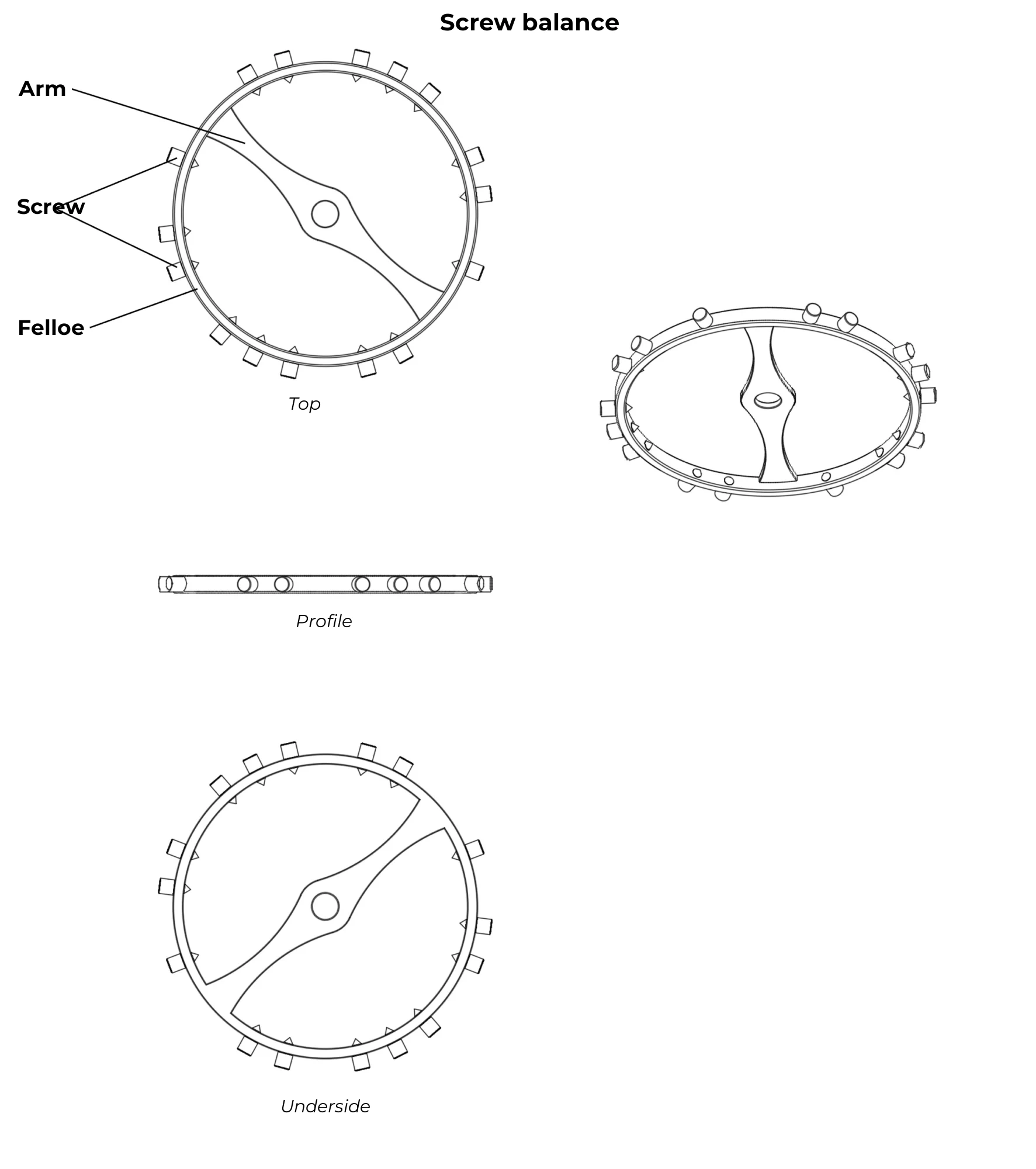
Figure 2
Diagram of a balance with screws
Click on the thumbnail to enlarge it
2. Moment of inertia
Formulas:
(depending on the balance)
l = moment of inertia of the balance (kg × m²)
m= mass of the balance (kg)
r= radius of gyration of the balance (m)
(depending on the hairspring)
c= stiffness (spring rate) of the hairspring (N×m/rad)
f= frequency (Hz)


3. Annular balances
There are many types of balances and designs. Nowadays, balances can be divided into two major categories. Annular balances make up the most important one. They are generally made of copper-beryllium, bronze-beryllium or Glucydur (same types of alloys). They have a very good ratio between their mass and their moment of inertia as well as an excellent coefficient of thermal expansion. Annular balances can have two or three arms (Figure 3).
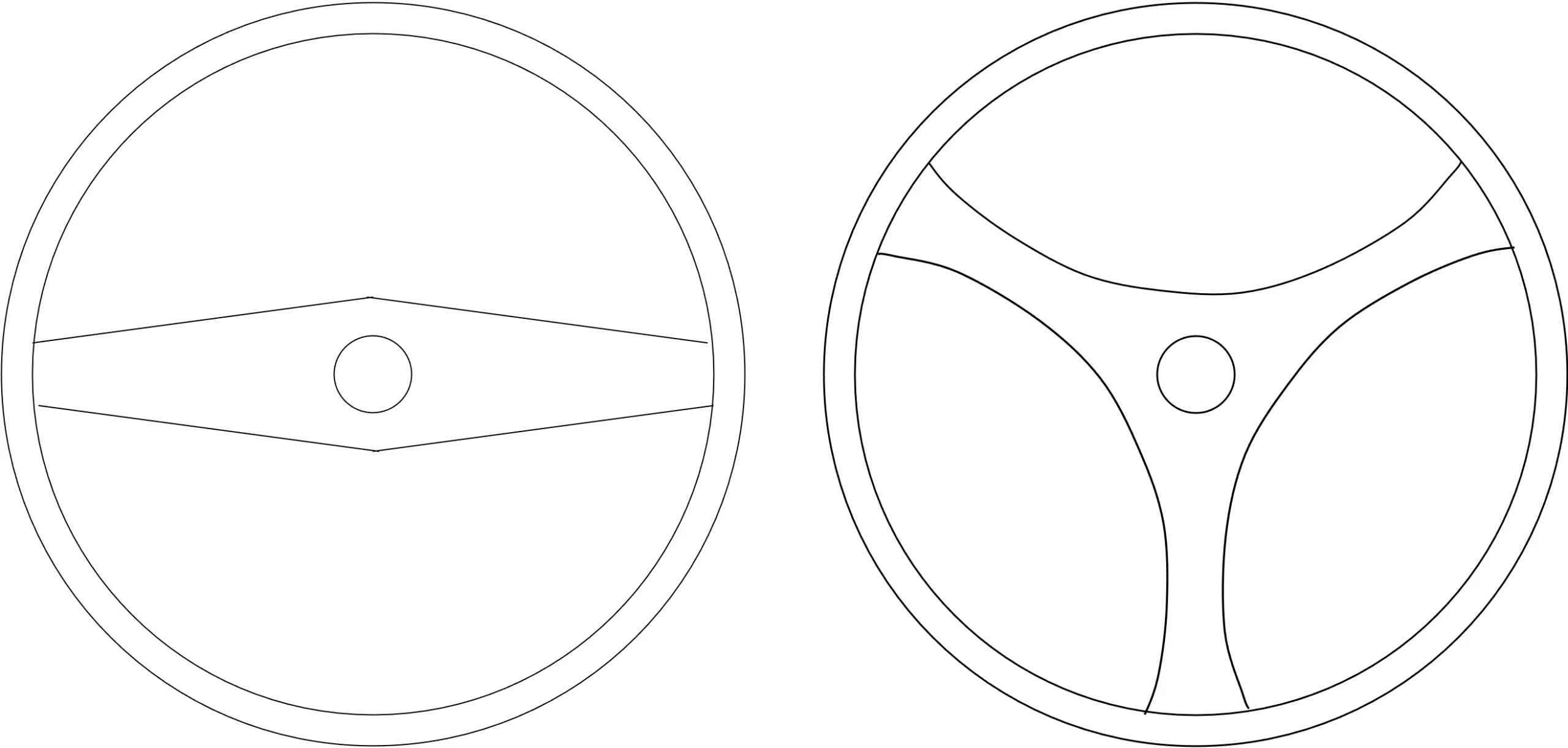
Figure 3
Two- and three-arm annular balances
Click on the thumbnail to enlarge it
The correction of the daily rate of movements equipped with annular balances is generally done by modifying the active length of the hairspring (balance spring) and therefore requires the presence of a regulator. As for their poising (static or dynamic / see regulation/adjustment) it is generally done by carrying out one (or more) milling operation(s) under the balance’s felloe (rim base) (see regulation/adjustment).
4. Variable inertia balances
As their name suggests, the moment of inertia of such balances can be corrected by the watchmaker during the initial setting in motion of the movement or during overhauls (servicing). This type of balance is more expensive and complicated to produce than annular balances, but offers greater flexibility and precision of regulation/adjustment. They are found today in most high-quality watches. Although a large number of designs and constructions exist, two main categories of variable inertia balances can be distinguished today.
Screw balances
This is the oldest and most traditional construction of variable inertia balances. The circumference of the felloe (rim base) has a variable number of screws (generally between 16 and 18). The screws are arranged in pairs (positioned at 180° from each other around the circumference of the felloe (rim base)) (Figure 4). The poising (static and dynamic) of such balances is generally done by slightly milling the head of the screw where the imbalance is located (cf. regulation/adjustment). To modify the moment of inertia of the balance, thin washers are inserted or removed between the screw(s) and the felloe (rim base) of the balance. This allows the poising of the balance to be corrected while also modifying its moment of inertia, thereby acting on the frequency of the regulating organ. The frequency and the daily rate of watches equipped with such balances can therefore be corrected exclusively by modifying the moment of inertia of the balance, without absolutely requiring the presence of a regulator (correction of the daily rate by modifying the active length of the hairspring).
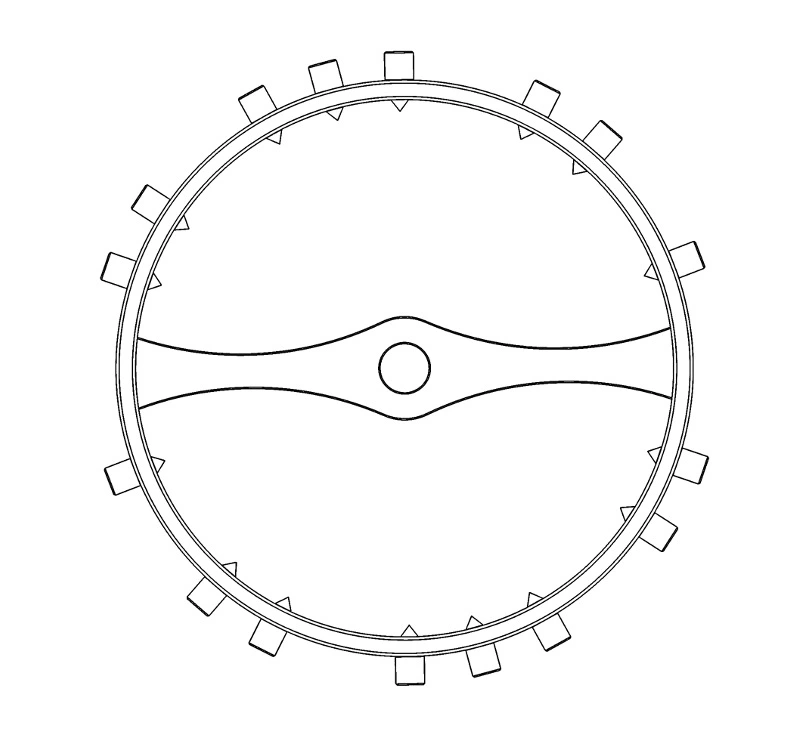
Figure 4
Variable inertia balance with screws
Click on the thumbnail to enlarge
Balances “with weights” or ferrules
Appeared more recently, this type of balance offers the same advantages as screw balances while providing better aerodynamics to the balance and simplifying its adjustment. Weights (split masses) are arranged on the felloe (rim base) of the balance, being pressed (tight fit) onto a tenon (figure 5).
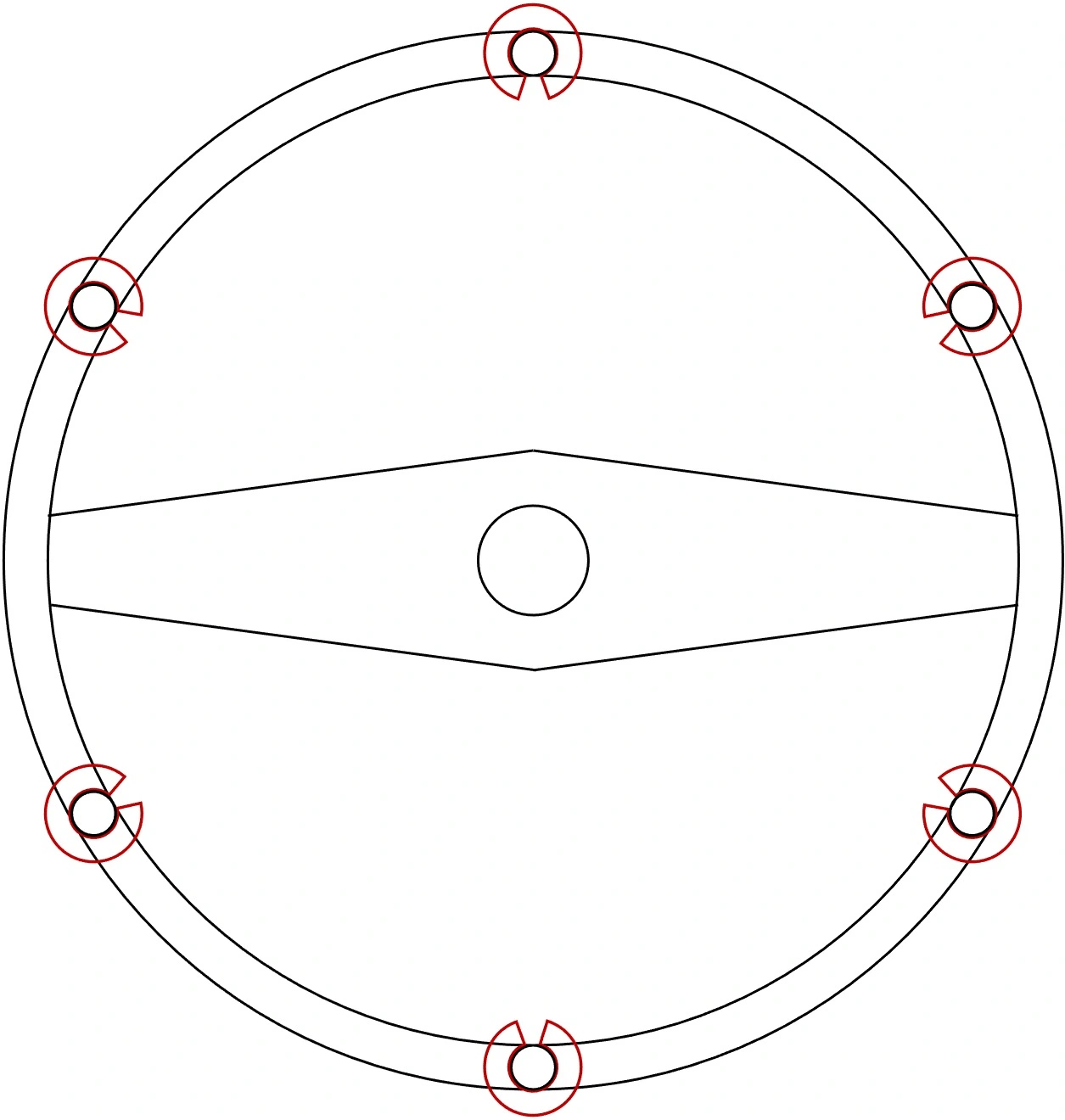
Figure 5
Variable inertia balance with weights
Click on the thumbnail to enlarge it
It is therefore easily possible to rotate one or more weights around their respective axes. It is thus possible to carry out the static and dynamic poising of the balance (cf. regulation/adjustment), but also to modify its moment of inertia and therefore the frequency of the regulating organ. (thus by moving the slots of the ferrules (weights) toward the inside of the balance, its moment of inertia is increased, the frequency decreases and this causes delay.) And conversely, if the slots of the ferrules are moved outward, the moment of inertia of the balance is decreased, the frequency increases and this causes advance (Figure 6).
Figure 6
Effect of variations in the moment of inertia on the daily rate
Click on the animation to enlarge it
5. History
A contemporary of Galileo with whom he shared certain subjects of study (astronomy, pendulum), Christian Huygens, a Dutch mathematician, astronomer and physicist, discovered in December 1659 the theory of isochronism of the cycloid. According to this theory, the period of a pendulum is constant, regardless of its amplitude, when the end of the pendulum moves along a cycloidal plane. This theory is the one that still governs, to this day, all calculations related to the regulation and precision of clocks and watches.
Huygens is also known for being the first (one of the first?) to have combined a flat hairspring (balance spring) to an annular balance. An invention that would lead to the development of travel pendulums (notably marine chronometers), and then watches. Although many attempts and research efforts have since been made to devise more efficient mechanical oscillators (precision, frequency, etc.), Huygens’ invention remains unrivaled to this day.
Watchmakers quickly understood that two of the factors most disrupting a watch’s precision are: gravity and temperature differences. Abraham-Louis Breguet thus invented the tourbillon in 1801 to compensate for the effects of gravity.
To combat expansion caused by temperature changes, watchmakers devised split bimetallic balances. Since the expansion of the first metal was mechanically opposed to that of the second metal, this resulted in thermal compensation while minimizing the change in the balance’s moment of inertia. This type of balance would disappear during the 20th century following the invention in 1907 by Charles-Édouard Guillaume of the Invar alloy. This alloy of iron and nickel has an extremely low coefficient of thermal expansion. It found numerous fields of application (metrology, cryogenics, horology, etc.) and even contributed to the invention of television, which earned Guillaume the Nobel Prize in Physics in 1920. Balances made from this alloy of iron (64%) and nickel (36%) are subject to such negligible thermal influence that they would revert to a monometallic composition and an annular shape. From the beginning of the 21st century, new materials appear and are sometimes found in the composition of balances.
The inertia of a balance should, as much as possible, be located at its periphery, while its center should be as light as possible. Balances (for example) made of titanium (non-magnetic, robust, light, and with low expansion) are therefore sometimes found bearing gold masses on their felloe (rim base).
Many other combinations of materials have thus been tried with this same objective.
6. Artisanal manufacture of a balance
Two components make up the balance: its inertia flywheel and its axis. The axis is made of steel and can easily be made on a watchmaker’s lathe and a manual pivoting lathe. The manufacturing of the balance, on the other hand, is more delicate due to the precision it requires. However, a balance can be handcrafted through various turning and milling operations, even though nowadays most independent craftsmen prefer to use the industrial automatic lathe solution, which is also well suited to small series or unique pieces.
7. Industrial production of a balance
At the industrial level, the balance flywheel and its axis are generally machined using an automatic lathe. In addition to the turning operations inherent to these two components, milling of the arms can also be carried out on the same machine. This way, all turning and milling operations will be perfectly concentric and the balance will be better poised. The methods chosen for finishing, decoration, assembly and poising operations are then selected according to the watch’s range (hand polishing or drum polishing, hand or machine rolling, etc.).
8. Philippe Dufour and Julien Tixier talk to you about the balance (video)
This page has been automatically translated from the reference French version using an artificial intelligence tool. Errors or inaccuracies may remain. If you notice any, especially if this is your native language, please feel free to report them to info@horopedia.org. Your contribution helps us improve the quality of the encyclopedia.
While awaiting their translation, images and videos remain temporarily displayed in French.
Thank you for your understanding.