
THE MOVEMENT
The movement consists of all the components intended to display the time and all the information of a watch (complications) for which it also ensures the accuracy. Today, we distinguish two families of movements: mechanical movements and electronic movements. These two families are themselves divided into several categories.
Whatever the type of construction of a movement (mechanical or electronic), its components are grouped into different sets called organs.
The motor organ (power source), the counting and transmission mechanism, the distribution mechanism (escapement) and the regulating organ are thus the main organs of a mechanical movement.
Figure 1: Exploded view of a manual-winding mechanical movement – 18 lignes / 40 mm – 21’600 A/h
THE MAIN PLATE
The main plate is a plate that generally occupies the entire surface of the movement. It is the frame that supports most of the movement’s components (various organs, wheels, springs, bridges, etc.).
THE BRIDGES
Bridges are shaped components, generally machined from the same material as the main plate. As structural elements, together with the main plate they form the movement frame (cage). Positioned and fixed to the main plate, they hold the moving components in place while allowing them the freedom (shake/play) to pivot freely around their axis. The number of bridges in a movement varies depending on the construction. Generally, a bridge is named after the mechanism or component it secures (Barrel – Barrel bridge).
THE BARREL DRUM
The barrel drum is one of the four components that make up the barrel, which is the motor organ (power source) of a mechanical watch. It is a hollow cylinder made of brass or german silver inside which the mainspring sits.
THE BARREL COVER / LID
It is one of the four components of the barrel, which is itself the motor organ (power source) of a mechanical watch. As its name suggests, it allows closing the barrel drum to which it clips, thus protecting the mainspring from dust.
THE BARREL ARBOR
The barrel arbor belongs to the motor organ (power source) and forms the axis of the barrel. Most of the time, it pivots between the main plate and the bridge of the barrel. Being closest to the energy source, the barrel arbor is the axis of a watch subjected to the greatest forces (torque).
THE MAINSPRING
It is the major component of the barrel, the motor organ (power source) of the watch. It is a long blade of steel with a rectangular cross-section, coiled in a spiral around the barrel arbor, inside the barrel drum.
THE THIRD WHEEL
The third wheel (sometimes called small third wheel) is an intermediate wheel allowing the correct gear ratios to be obtained across the entire kinematic chain of the going train.
THE FOURTH WHEEL (SECONDS WHEEL)
The fourth wheel (seconds wheel) sometimes carries the seconds hand and therefore rotates, in that case, 60 times faster than the center wheel in order to complete one full rotation in exactly one minute.
THE ESCAPE WHEEL
The escape wheel, sometimes called the lever wheel, is placed between the seconds wheel and the pallets (lever). It consists of a pinion and a wheel plate whose particular toothing transmits regular impulses to the pallets (lever). Traditionally, the escape wheel and pinion are made of steel. In some cases, the escape wheel can be made of gold or silicon.
THE PALLETS (LEVER)
In the movement’s kinematic chain, the pallets (lever) are positioned between the escape wheel and the balance. It is one of the components of the escapement. Generally made of steel, the pallets (lever) hold the ruby pallet stones. Its role is to retain the energy from the barrel and to periodically release it in order to transmit regular impulses to the balance and thus maintain its oscillations.
THE DOUBLE ROLLER
Although it is attached to the balance staff (the regulating organ), the double roller belongs to the Swiss lever escapement, the distribution mechanism that regulates the transmission of energy from the counting and transmission mechanism (the finishing train) to the regulating organ (balance-hairspring).
THE BALANCE
Combined with the hairspring (balance spring), the balance constitutes the regulating organ of the watch. It is a metal ring oscillating around its own axis. The precision of the watch depends on the regularity of its oscillations (period).
THE BALANCE STAFF
It is a pivoted axis in steel that carries all the components of the regulating organ to which it belongs as well as the last component of the distribution mechanism which is the double roller. The balance is riveted onto it on the upper part. Above it, a cylindrical fitting receives the collet which is pressed into it and ensures the connection between the balance staff and the hairspring (balance spring). Finally, the double roller is pressed onto the lower part of the axis.
THE HAIRSPRING
The hairspring (balance spring) is a spring that is inseparable from the balance on the axis to which it is fixed. As the guarantor of the watch’s precision, it maintains the regularity of the oscillations of the balance. Its essential role and the complexity of its manufacture make it the most sensitive and demanding component to produce.
THE COLLET
Across all mechanical movements, the collet is the connecting element between the hairspring (balance spring) and the balance staff. It is one of the components of the regulating organ and it plays an essential role in regulation / timing operations.
THE STUD (HAIRSPRING STUD)
It is the element that connects the hairspring (balance spring) to the balance cock. Usually made of brass, the stud takes different forms depending on the construction.
THE MOTION WORK
Its role is to distribute hours and minutes information to their respective hands and to allow their correction by the hand-setting mechanism.
THE WINDING MECHANISM
Its role is to transmit the energy from the rotations of the crown to the motor organ (power source) in charge of storing it and gradually redistributing it to the movement.
THE HAND-SETTING MECHANISM
When the winding stem is pulled out (in the hand-setting position), it allows, through the rotations of the crown, the hands to be driven via the motion work and thus adjust the displayed time.
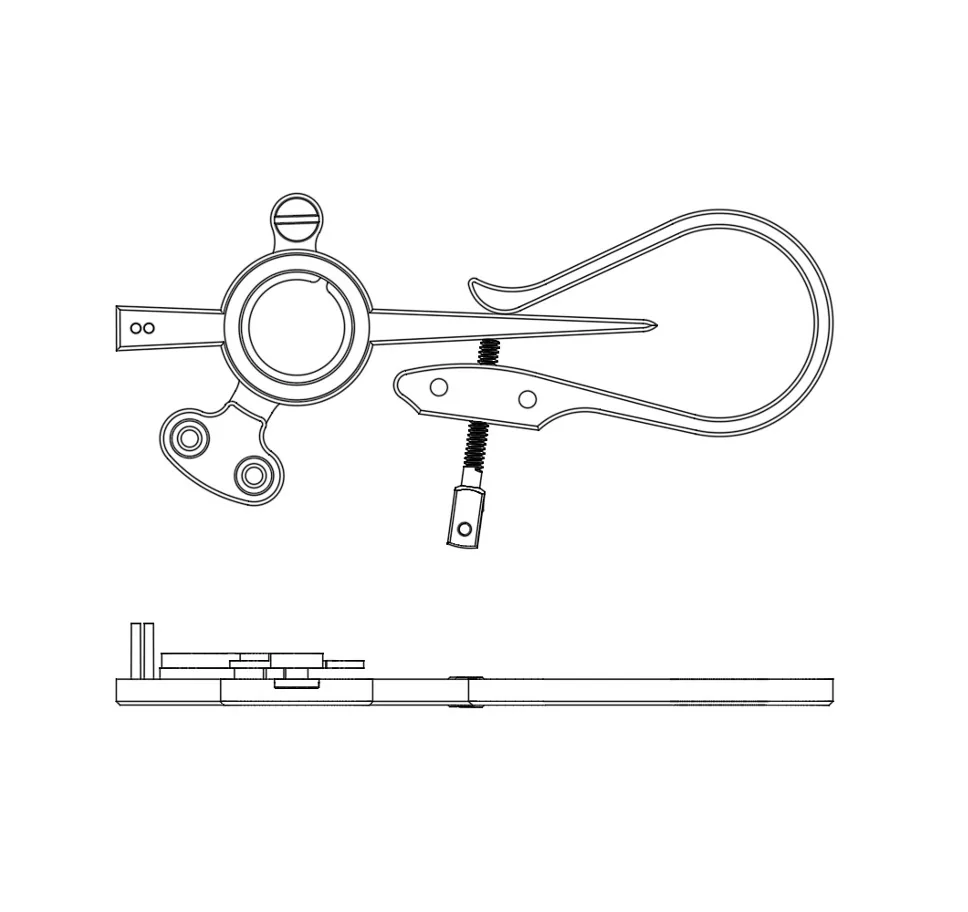
THE REGULATOR ASSEMBLY
The regulator assembly gathers all the components peripheral to the regulating organ (balance-hairspring) and which allow its regulation / timing.
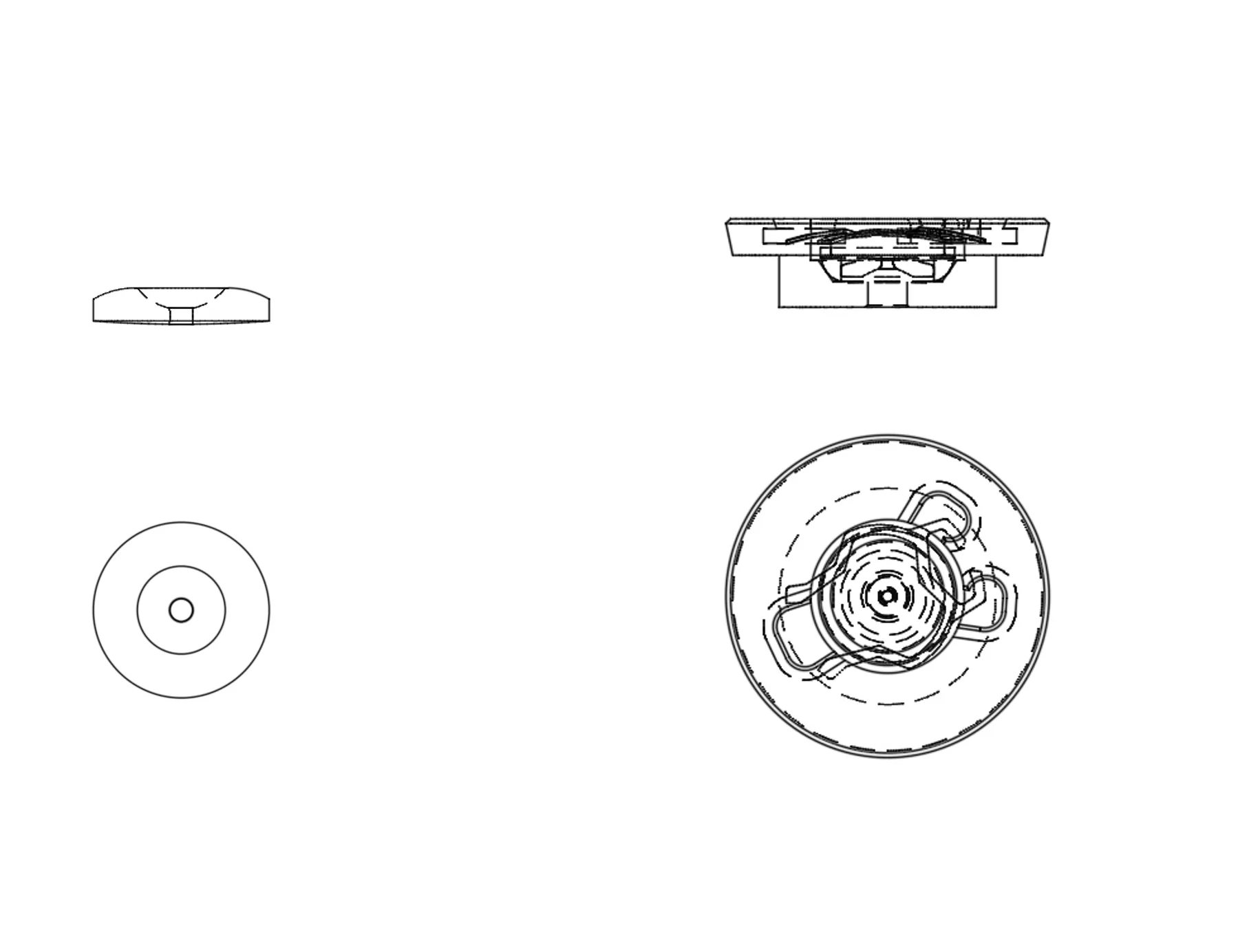
BEARINGS (simple jewels, systems with counter pivots & shock absorbers)
Jewels are used as bearings for the pivots of the various wheels of a movement. They allow the wheels to pivot freely (generally between the main plate and a bridge) by optimizing the friction coefficients and limiting the wear of the pivots. Formerly in natural ruby / jewel, watch jewels are now made of synthetic corundum. Shock absorbers are dampers placed at the bearings of certain movement components. They minimize the risk of pivot breakage in the event of a shock. Shock absorbers are mainly used for the bearings of the balance. Indeed, the balance has a very high inertia (weight) and pivot diameters often less than 0.15 mm.
This page has been automatically translated from the reference French version using an artificial intelligence tool. Errors or inaccuracies may remain. If you notice any, especially if this is your native language, please feel free to report them to info@horopedia.org. Your contribution helps us improve the quality of the encyclopedia.
Pending their translation, images and videos remain temporarily displayed in French.
Thank you for your understanding.