
SIMPLE BEARINGS
1. General description
Most of the wheels of a Movement require simple bearings (see figure 1). These have a single jewel (synthetic corundum) per pivot. The jewel is pierced by a perfectly calibrated hole, inside which the pivot is engaged. A circular recess, concentric with the jewel’s bore, holds the Oil needed for the Lubrication of the bearing (oil sink) (figure 2).
The jewel of a simple bearing is generally driven directly into the Main plate or in a Bridge. More rarely, in high-quality watchmaking, the jewels are set in a Chaton (jewel setting), usually made of gold. In such cases, the chaton fits into a cylindrical fitting in the main plate or bridge it is intended for, before being fixed there by screws (generally 3).
Most simple bearings used in worn horology (wristwatches or pocket watches) are made of synthetic corundum (Ruby / Jewel); however, wheels with large-diameter pivots subjected to strong torques (Barrel, Center wheel) can sometimes pivot in metal bearings (bronze-beryllium alloy bushings). Given the dimensions and torques specific to horology, the combination of work-hardened steel pivots and ruby bearings helps minimize friction.
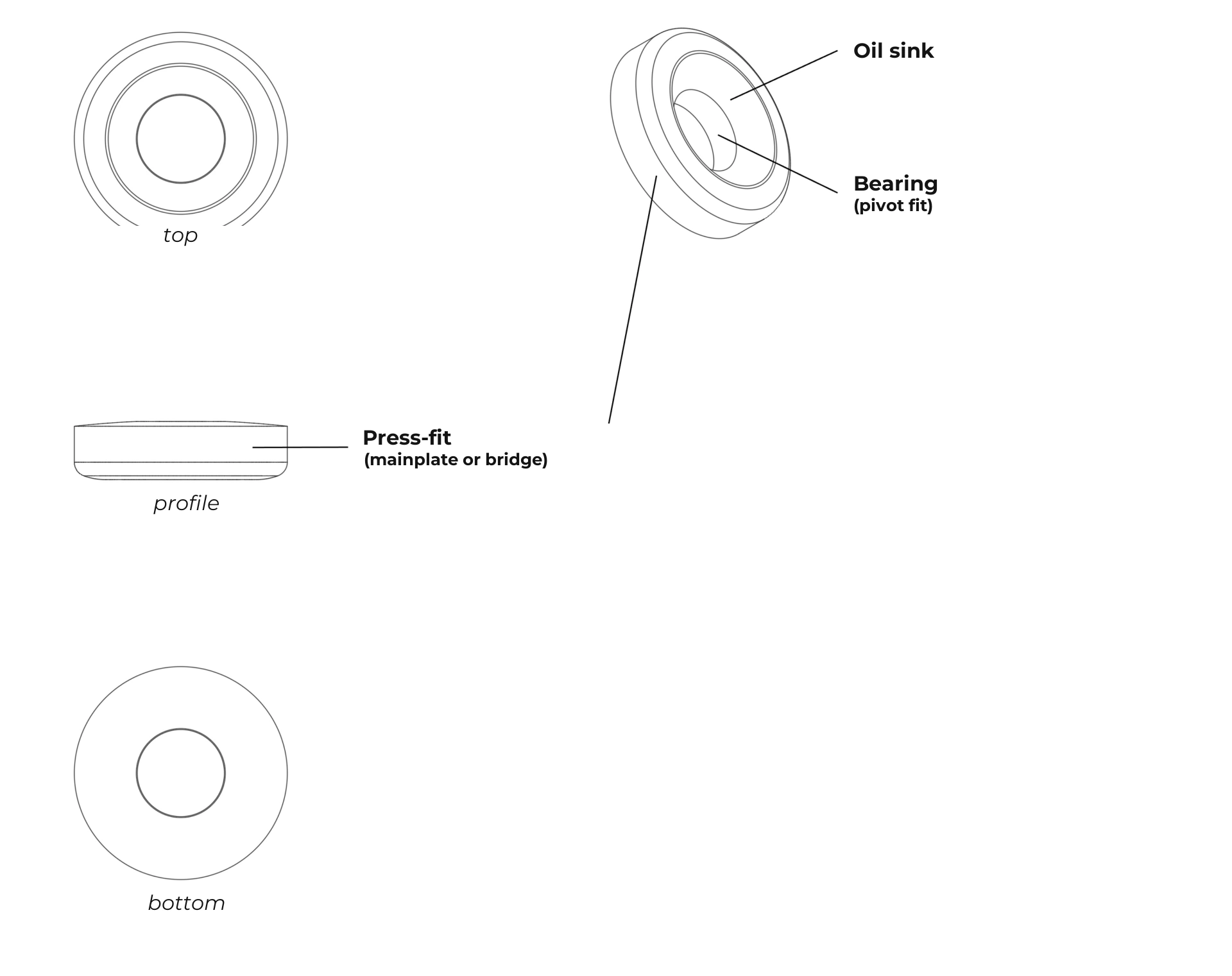
Figure 1
Diagram of a simple Bearing (synthetic Ruby / Jewel stone)
Click on the thumbnail to enlarge it
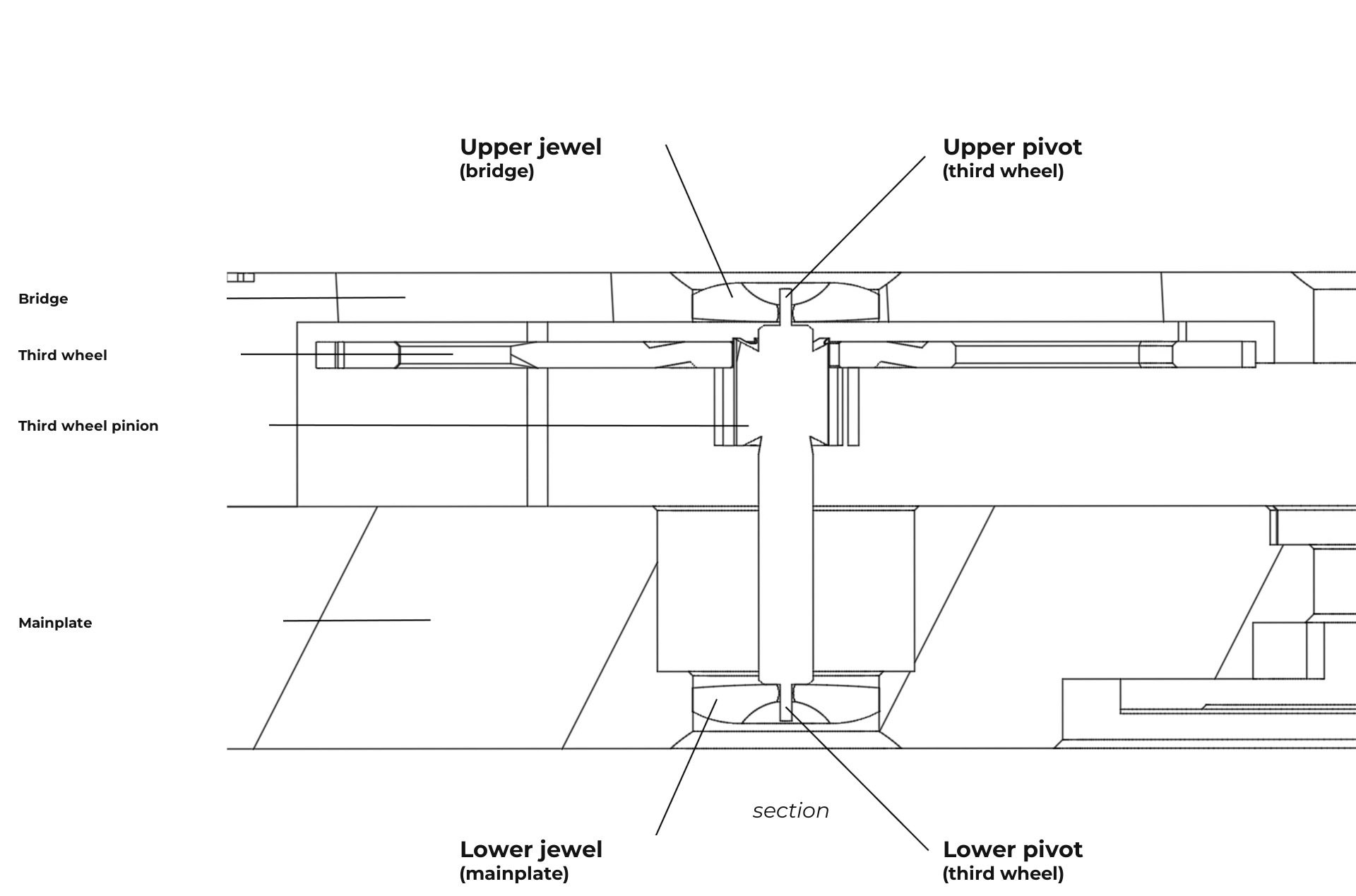
Figure 2
Cross-section of the simple Bearings of the Third wheel
Click on the thumbnail to enlarge it
This page has been automatically translated from the French reference version using an artificial intelligence tool. Errors or inaccuracies may remain. If you notice any, especially if French is your native language, please feel free to report them to info@horopedia.org. Your contribution helps us improve the quality of the encyclopedia.
Pending their translation, images and videos remain temporarily displayed in French.
Thank you for your understanding.