
THE ROLLING MILL
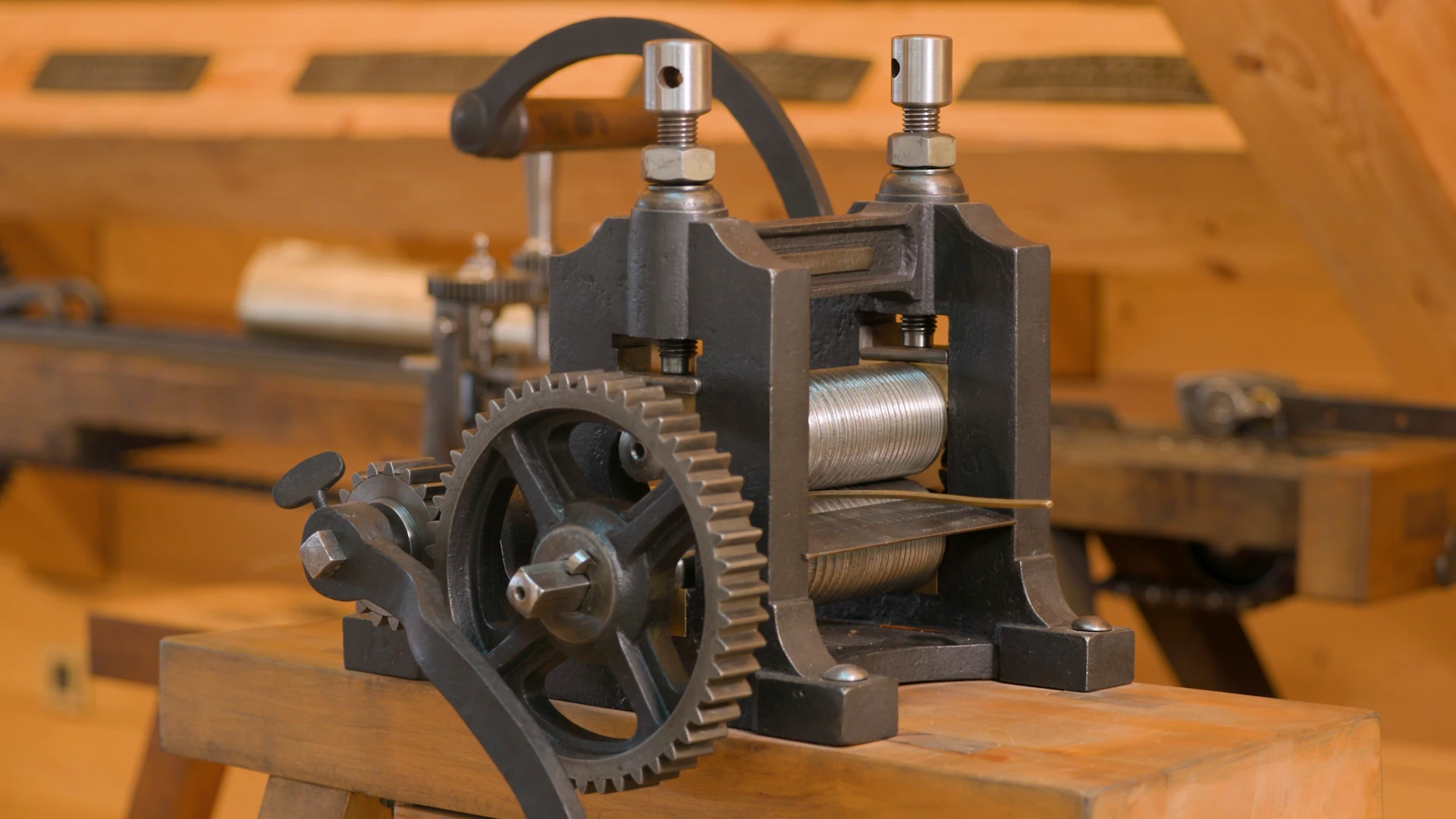
Figure 1
Rolling mill for wires and profiles
Click on the thumbnail to enlarge it
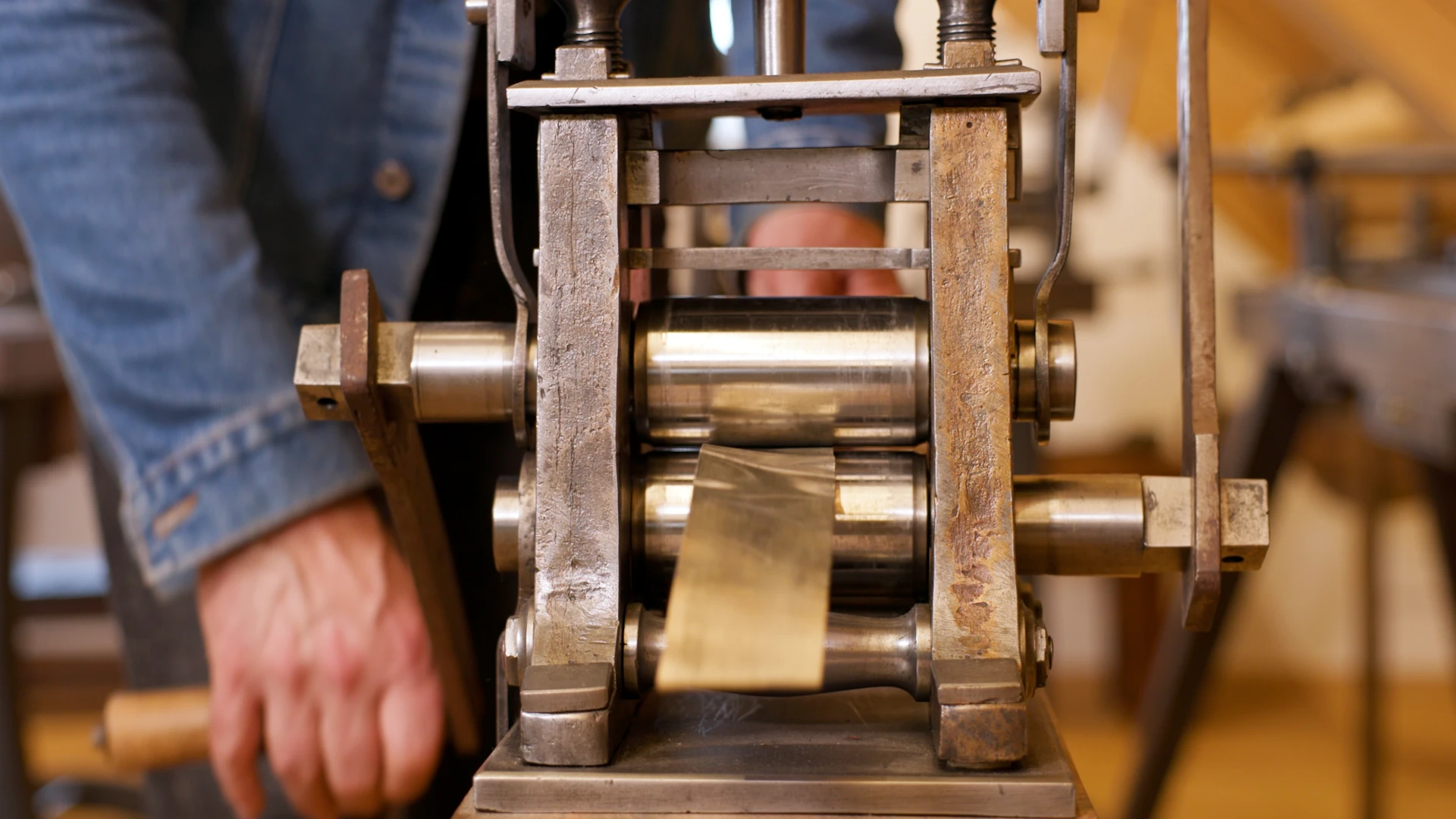
Figure 2
Rolling mill for strips
Click on the thumbnail to enlarge it
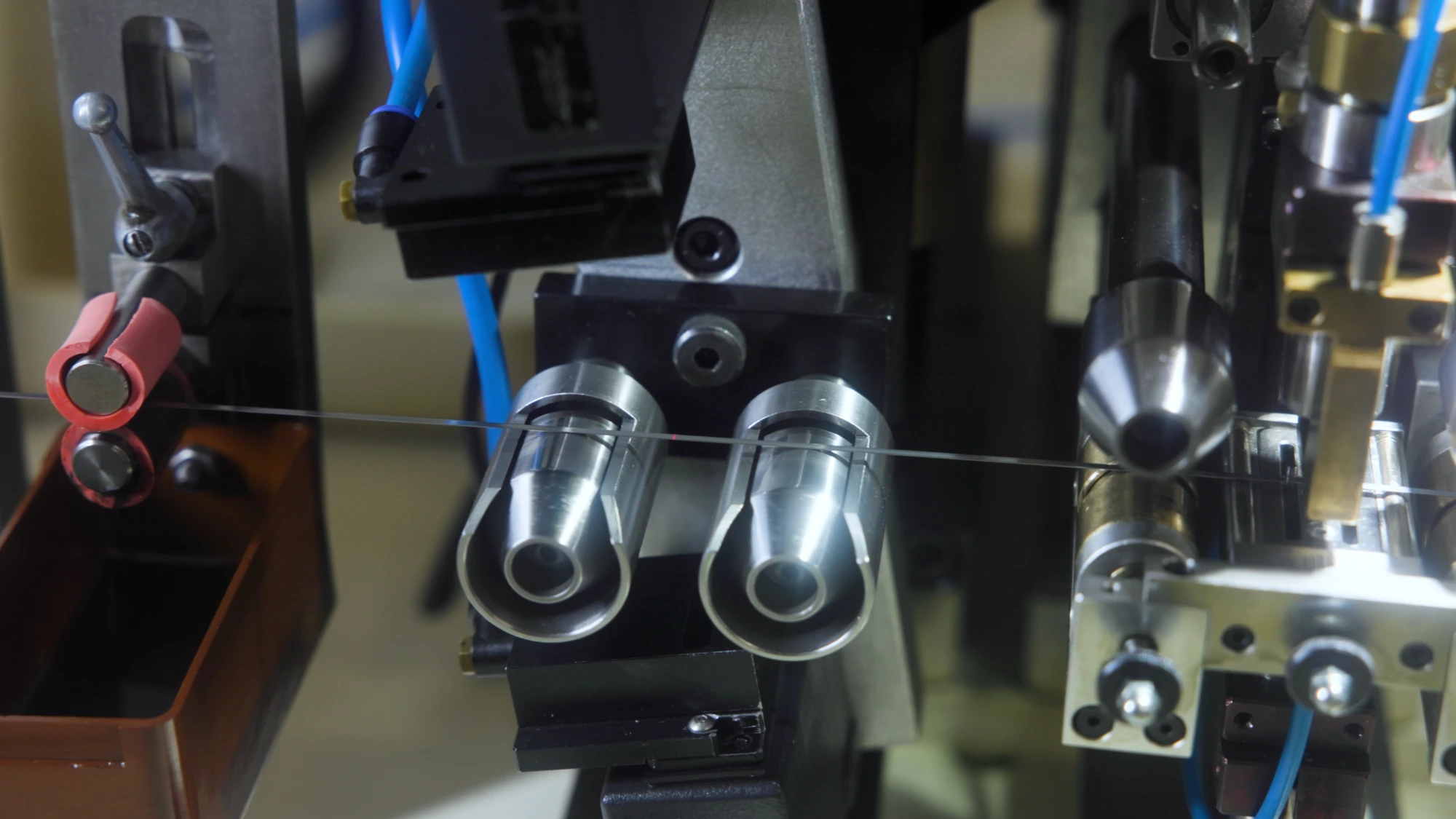
Figure 3
Rolling mill for mainsprings
Click on the thumbnail to enlarge it
Definition
The rolling mill is a machine that reduces the thickness or cross-section of a metal by passing it, one or more times, between two rotating cylinders whose spacing is adjustable. The pressure exerted by the cylinders plastically deforms the metal, which elongates in the direction of passage while its cross-section decreases accordingly.
Strips, wires and profiles
Depending on the shape of the cylinders used, the rolling mill produces three families of semi-finished products. Smooth, parallel cylinders produce strips or flat sheets, used in particular as blanks for cutting components on stamping presses. Cylinders with progressive grooves reduce the diameter of a round wire, in addition to or as an alternative to wire drawing through the screw plate. Cylinders bearing a negative imprint machined onto their circumference finally produce profiles whose cross-section reproduces this imprint, which makes it possible to obtain directly, in one or more passes, a shape close to the final part and to reduce subsequent machining accordingly.
Eligible materials
Cold rolling, generally practiced in watchmaking, concerns metals that are sufficiently ductile to deform without breaking: brass, gold and its alloys, silver, german silver, as well as certain steels and copper-based alloys. Materials already hardened by a quench heat treatment, or intrinsically low in ductility, cannot be cold rolled without risk of cracking.
Cold working and annealing
Each pass between the cylinders causes cold working of the metal: its hardness increases, but its ductility decreases accordingly. Beyond a certain reduction rate, the material becomes brittle and risks cracking if rolling continues without intermediate treatment. Annealing, which consists of heating the material to a temperature sufficient to cause its recrystallization and then cooling it, restores its ductility and allows rolling to resume. Heavily reduced semi-finished products, such as fine wires, thus alternate several cycles of rolling and annealing before reaching their final dimension.
Applications in watchmaking
The rolling mill prepares the raw material for numerous components: strips intended for stamping presses for cutting mainplates, bridges, hands or case components; wires intended for springs, pins or rivets; profiles whose cross-section pre-forms certain components before machining. The hairspring (balance spring) wire, drawn round, is itself rolled between profiled cylinders in order to obtain its characteristic rectangular cross-section, before final shaping.
Good to know
As with wire drawing, rolling orients the grains of the metal’s crystalline structure in the direction of passage, which can influence certain mechanical properties of the finished product depending on the direction of its subsequent stress.
This page was automatically translated from the reference French version using an artificial intelligence tool. Errors or inaccuracies may remain. If you notice any, especially if this is your native language, please feel free to report them to us at info@horopedia.org. Your contribution helps us improve the quality of the encyclopedia.
Pending their translation, images and videos remain temporarily displayed in French.
Thank you for your understanding.