
MENU
1. Table of the main properties of steels
| Property | Typical value | Remarks |
|---|---|---|
| Density | ~7.8 g/cm³ | High |
| Elastic modulus (E) | ~200–210 GPa | Very high |
| Tensile strength | ~400–2000 MPa | Depends on treatment |
| Hardness (HV) | ~150–800 HV | Highly variable |
| Thermal conductivity | ~15–50 W/m·K | Moderate |
| Electrical conductivity | ~1–10 MS/m | Low to moderate |
| Thermal expansion | ~10–17 ×10⁻⁶ /K | Variable |
| Melting point | ~1370–1510 °C | Depends on the alloy |
| Magnetism | Yes (generally) | |
| Corrosion resistance | Variable | Stainless steel: excellent |
| Machinability | Good to moderate |
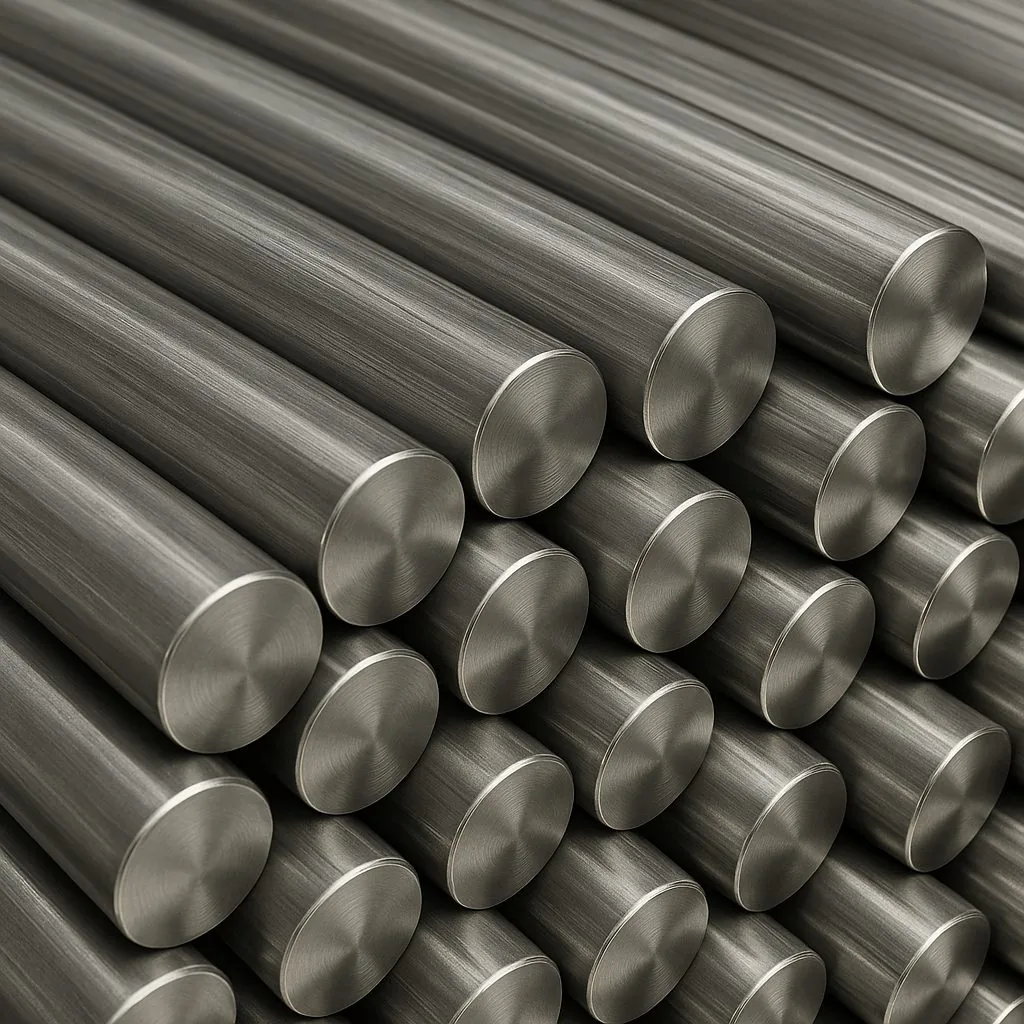
2. General description
Steels form a family of alloys characterized by the addition of a variable proportion of carbon and iron. Other elements can complement the alloy to give steel a very wide range of mechanical and physical properties. The carbon content determines the hardness of the alloy. We speak of mild or extra-mild steels for low carbon content (-0.20 to 0.40%) and of hard or extra-hard steels for high carbon content (-0.40 to 0.70%). Although steel is an alloy, it is called unalloyed steel when it contains only iron and carbon.
A large number of elements can be added to iron and carbon. Chromium, nickel, Tungsten, Titanium, Aluminium, vanadium, phosphorus or Silicon are the main ones. Some, depending on their content, will improve corrosion resistance, others will promote machinability or hardenability, etc. In watchmaking, they occupy a central place due to their excellent balance between mechanical resistance, elasticity, machinability and dimensional stability.
3. History
We can consider that there are three ferrous products: iron, cast iron and steel. Historically, the Iron Age begins (depending on the culture) around the year -1200. The Chinese made the first castings of cast iron around the year -500. They thus produced the first steels, iron being recarburized in contact with charcoal. In Antiquity, combustion gases were added to charcoal to recarburize iron and improve its hardness (particularly that of the cutting edge of tools and weapons).
The theorization of alloys began in the 18th century, but it was not until the middle of the 19th century for science to allow understanding of them and producing quality steels. In 1855, Henry Bessemer filed the patent for a low-cost steel production process that would mark the industrial revolution. From the early 20th century, the air converter of the Bessemer process was replaced by liquid gas (oxygen) converters that were much more precise, efficient and economical.
Materials science has continued to evolve since then. The nature and composition of alloys, as well as steel production processes, are constantly evolving to produce ever more suitable and high-performing materials.
4. Types of Steel used in watchmaking
Carbon Steels
These are the traditional steels used for:
- Axes (Balance axes, pivots)
- Springs (old barrel springs)
- Watchmaking tools
Characteristics:
- Very good Hardness after quenching
- Excellent finish possible (mirror polishing)
- Sensitive to corrosion
Stainless Steels
Stainless steels contain at least 10.5% chromium, which forms a protective layer against corrosion.
Use:
- Watch cases
- Crowns, screws, external parts components
Examples:
- 316L (horological standard)
- 904L (better corrosion resistance, more expensive)
Steels for springs
Used for balance springs (historically) and various springs.
Examples:
- Improved carbon steels
- Alloys of the Elinvar type (low thermal coefficient)
Special alloy steels
Steels enriched with alloying elements to improve certain properties:
- Chromium, molybdenum → wear resistance
- Nickel → toughness
- Silicon → elasticity
Used for:
- Wheel trains
- Pinions
- Components subject to fatigue
5. Watchmaking applications
Steel is used for many components:
- Shafts and pivots → strength + precision
- Screw → mechanical strength
- Springs → elasticity
- Watchmaking tools → hardness
- Cases → corrosion resistance (stainless steel)
6. Heat treatments and surface treatments
The properties of steels are strongly dependent on the treatments applied:
- Quenching → increased hardness
- Tempering → improved resilience
- Nitriding → high surface hardness
- Polishing → reduced friction
7. Advantages and limitations
Advantages
- Excellent mechanical resistance
- High rigidity (high modulus)
- Very good wear resistance after treatment
- Good suitability for heat treatments
- Controlled machinability
- Versatility (wide range of alloys)
- Controlled cost
- Possibility of very high quality finishes (mirror polishing)
Limitations
- Sensitivity to magnetism
- Risk of corrosion (except stainless steel)
- Relatively high mass
- Higher friction than some modern materials
This page was automatically translated from the French reference version using an artificial intelligence tool. Errors or inaccuracies may remain. If you notice any, especially if this is your native language, please feel free to report them to info@horopedia.org. Your contribution helps us improve the quality of the encyclopedia.
While awaiting translation, images and videos remain temporarily displayed in French.
Thank you for your understanding.