
MENU
1. Table of main properties of wood
| Property | Typical value | Remarks |
|---|---|---|
| Density | ~0.3–1.0 g/cm³ | Varies by species |
| Modulus of elasticity (E) | ~5–15 GPa | Low to moderate |
| Tensile strength | ~40–100 MPa | Variable |
| Hardness | Low to moderate | Depends on species |
| Thermal conductivity | Low | Insulator |
| Electrical conductivity | None | Insulator |
| Expansion coefficient | Variable | Sensitive to humidity |
| Magnetism | No | Non-magnetic |
| Corrosion resistance | Good | Sensitive to water |
| Machinability | Excellent | Very easy |
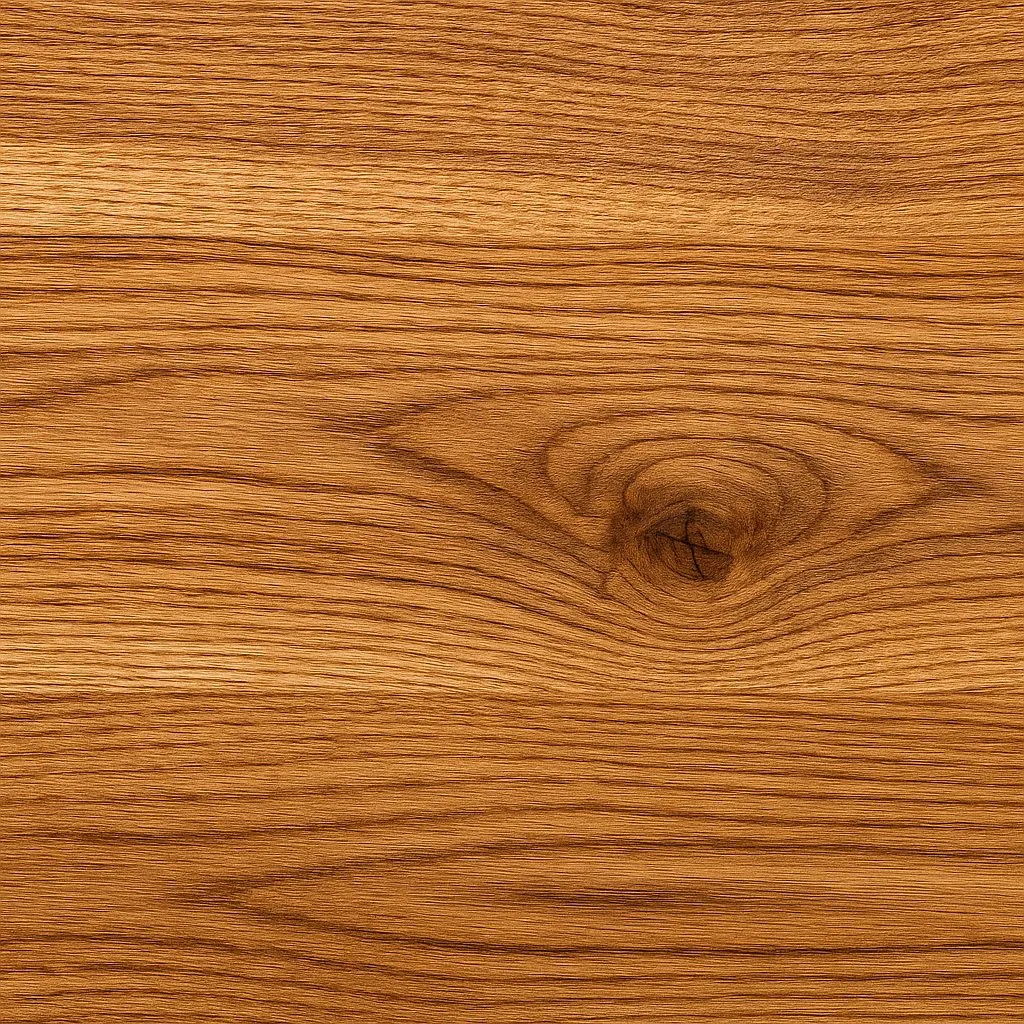
2. General Description
Wood is a natural organic material used in watchmaking since its origins, mainly for peripheral applications such as making clock cases, thetooling and certain finishing operations.
Although its structural use in movements is nonexistent today, it retains an important role in craft processes, particularly for polishing and the handling of delicate components.
Its flexible, non-abrasive, and easily machinable nature makes it an indispensable complementary material in certain traditional techniques.
3. Types of wood used in watchmaking
Wood for polishing (major technical use)
Certain specific woods are used for very precise finishing operations:
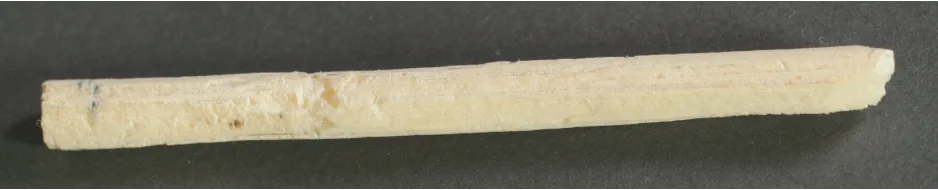
Boxwood
- Very dense and homogeneous wood
- Fine grain
- Excellent durability
👉 Used for:
- beveling / Angling
- polishing manual
- abrasive paste holders
Boxwood peg

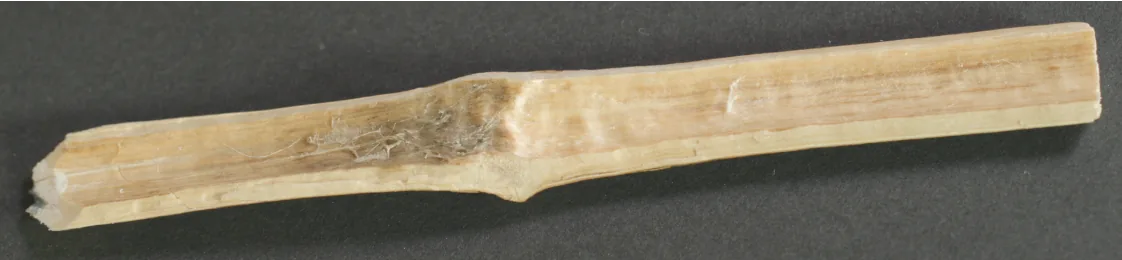
Elder pith
- Very soft and fibrous structure
- Very low abrasiveness
👉 Used for:
- cleaning pivots
- polishing very fine
- removal of impurities
Wood for tooling
Wood is used for the manufacture of:
- Tool handles
- Part supports
- holding elements
Hardwood species are generally used (boxwood, beech, and formerly ebony).
Advantages:
- Good grip
- Thermal insulation
- Vibration absorption
Wood in external parts (case, dial, hands) (historical use)
Clock cabinets
- Noble woods (oak, walnut, mahogany)
- Manufacture of clock cases
- Both an aesthetic and structural function
Wood in contemporary watchmaking (anecdotal use)
- Dials in marquetry
- Cases
Hard wood species with different colors and shades are generally used.
👉 Rare and mainly decorative use.
4. Watchmaking applications
Wood is used for:
Finishing and polishing
- Beveling / Angling by hand
- Polishing of pivots
- Component cleaning
Tooling
- Handles
- Supports / holders
- Tweezers
- Auxiliary tools
External parts (case, dial, hands) (historical and decorative)
- Clock cases
- Dials in marquetry (rare)
5. Advantages and limitations
Advantages
- Soft, non-abrasive material
- Ease of shaping
- Low cost
- Vibration absorption
- Versatility
- Natural material
Limitations
- Sensitivity to moisture
- Rapid wear
- Properties varying by species
- Low mechanical strength
- Use limited to non-structural functions
This page was automatically translated from the French reference version using an artificial intelligence tool. Errors or inaccuracies may remain. If you notice any, especially if this is your native language, please feel free to report them to us at info@horopedia.org. Your contribution helps us improve the quality of the encyclopedia.
While awaiting their translation, images and videos remain temporarily displayed in French.
Thank you for your understanding.