
THE TAPESTRY ROSE ENGINE (GUILLOCHÉ LATHE)
1. General description
The tapestry rose engine (guilloché lathe) is a mechanical Guilloché (engine-turning) machine, mainly used for reproducing complex geometric or figurative patterns. This tool stands out for its unique ability to faithfully reproduce figurative patterns engraved on a die, known as tapestry patterns, which give the technique its name.
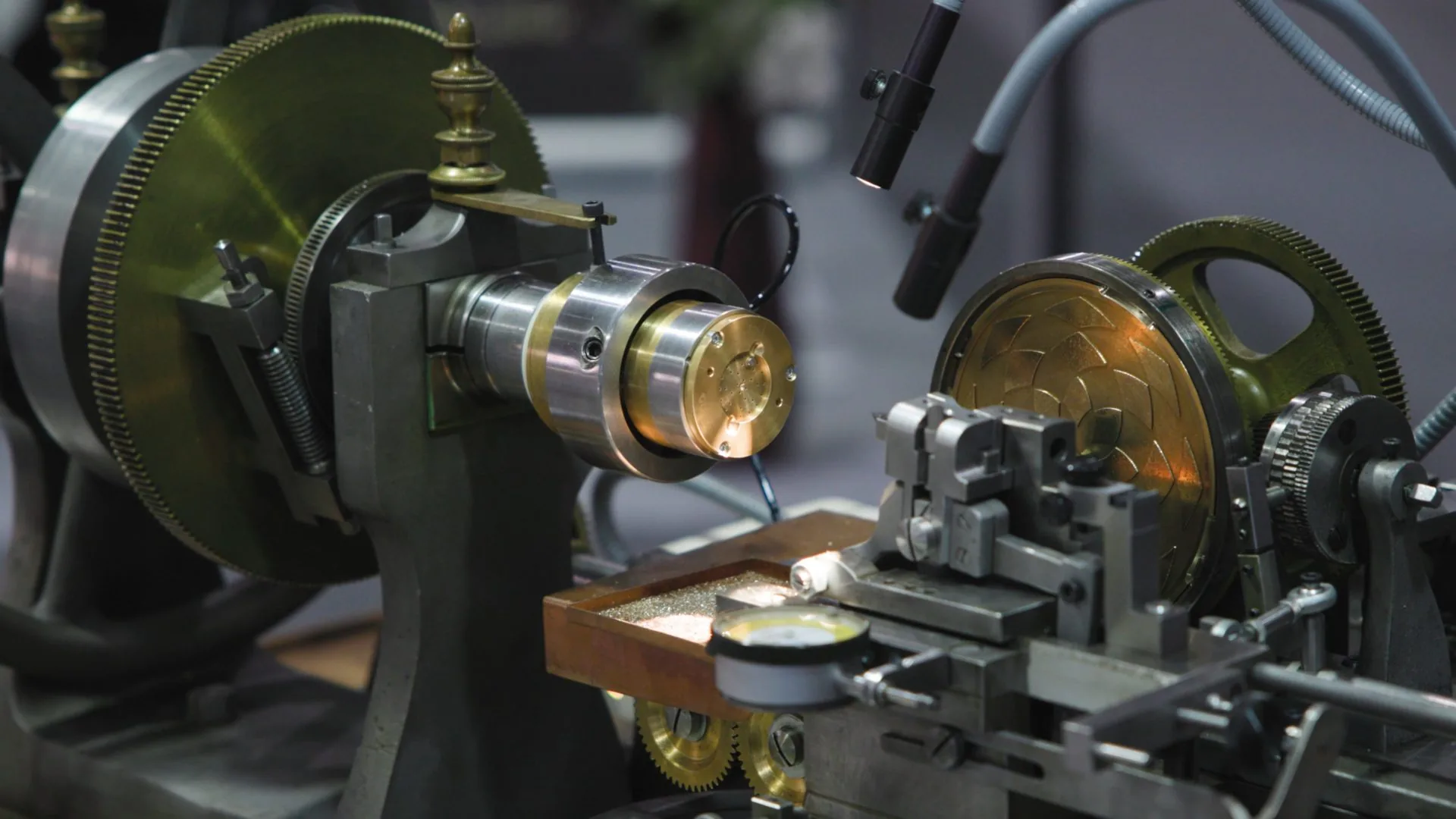
Figure 1
Tapestry rose engine (guilloché lathe)
Click on the thumbnail to enlarge it
2. Operating Principle
Unlike the Rose engine (guilloché lathe), which generates patterns through the action of cams (also called rosettes) controlling oscillating movements, the tapestry lathe works by the mechanical reproduction of a molded or machined bronze Die, also called master or pattern. This Die contains, in recessed form, the pattern one wishes to reproduce on the Dial.
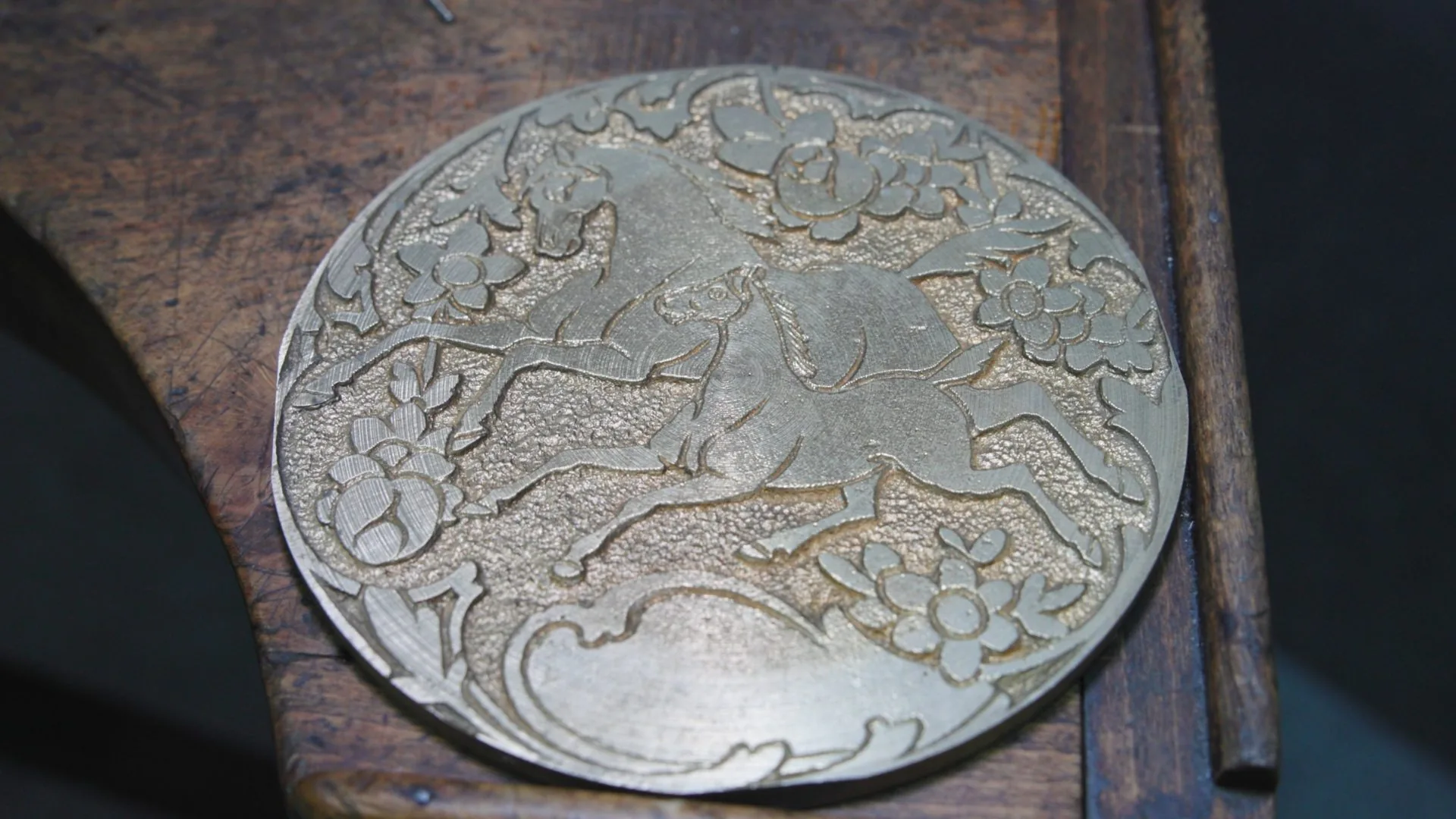
Figure 2
Die for tapestry lathe
Click on the thumbnail to enlarge it
A Finger (also called a stylus) faithfully follows the reliefs of the pattern on the Die, while a synchronized Graver engraves it in reduced scale onto the surface of the Dial or Case back, also taking into account the depth of the Engraving, in order to create three-dimensional patterns.
The reduction ratio between the Die and the engraved piece is adjustable and allows the design to be adapted to various sizes of Dials or Case backs, while maintaining an exceptional level of detail.
3. Artisanal Mastery
The operation of the Rose engine (guilloché lathe) requires perfect technical mastery: the palpation of the Die and the Engraving must be perfectly synchronized, without error or slippage.
The entire process, although mechanized, remains deeply artisanal. Each guilloché Dial made using this method is the result of extensive Regulation / Adjustment, monitoring, and expert craftsmanship.
4. Preservation of a craftsmanship tradition
The use of the straight-line engine, now limited to a few Swiss manufactures, reflects a deep attachment to watchmaking tradition. In an era of automated or laser engraving techniques, maintaining this method demonstrates a commitment to authenticity, quality, and the transmission of a unique technical heritage.
This page has been automatically translated from the reference French version using an artificial intelligence tool. Errors or inaccuracies may remain. If you notice any, especially if this is your native language, please feel free to report them to us at info@horopedia.org. Your contribution helps us improve the quality of the encyclopedia.
Pending their translation, images and videos remain temporarily displayed in French.
Thank you for your understanding.