
THE ROSE ENGINE (GUILLOCHÉ LATHE)
1. History
Guilloché (engine-turning), as we know it in watchmaking, appeared during the 18th century with the arrival of the first machines: the “straight lines” and the rose engines (guilloché lathes). Both are used to engrave a repeated pattern (linear for the straight-line machine and circular for the rose engine). Guilloché (engine-turning) emerged while the art of enamelling was at its peak. The two arts were then frequently combined in decorations flanked adorning jewellery boxes, snuff boxes and, of course, the case backs and dials.
2. Description and operation
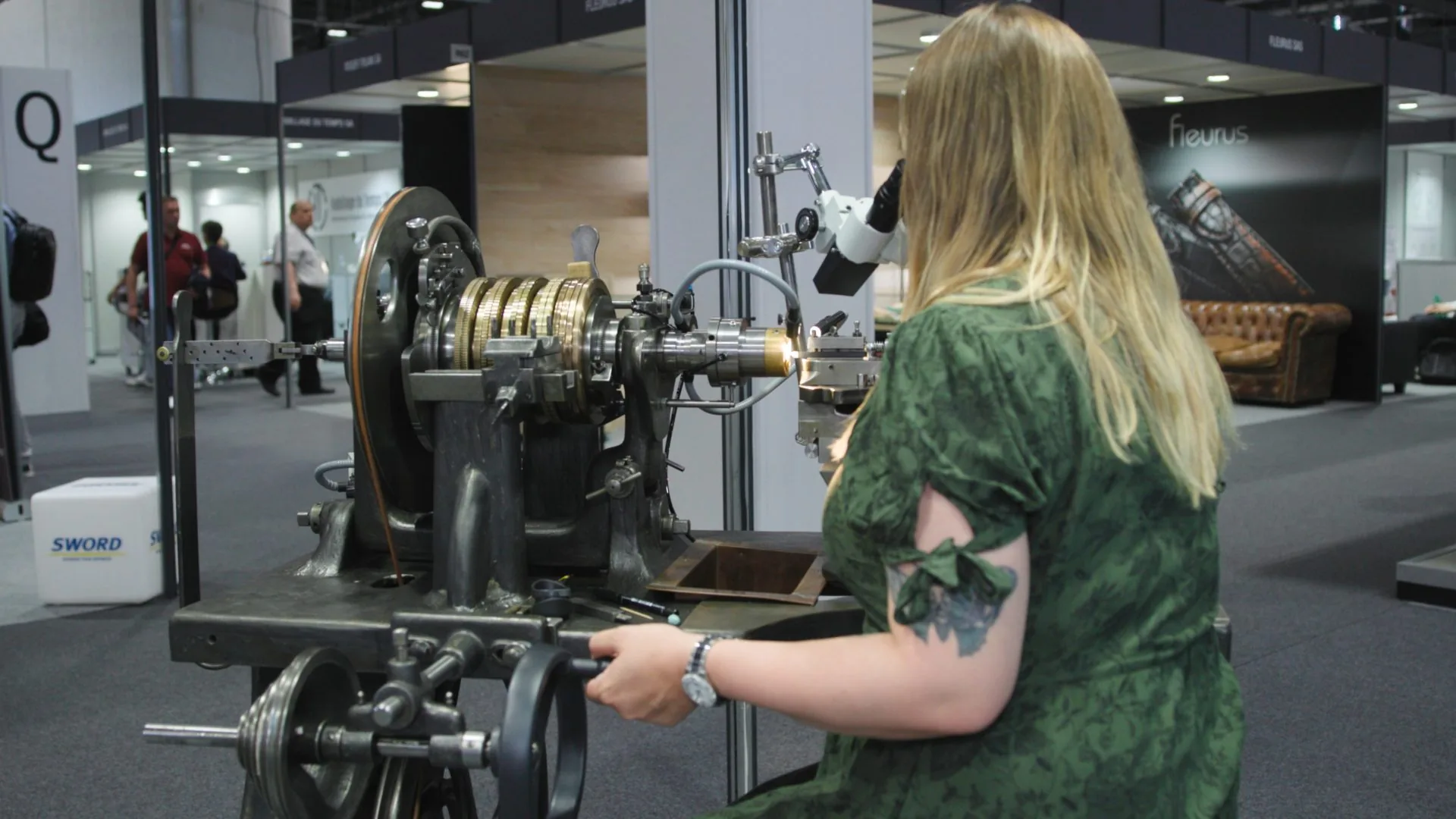
Figure 1
Rose engine (guilloché lathe)
Click on the thumbnail to enlarge it
The Rose engine (guilloché lathe) is an engraving machine manually operated by the Guilloché engraver. By turning a pulley or a toothed wheel with a crank or a pedal, it drives the Arbor on which the object to be engraved is firmly fixed and centred, as well as the cams (or rosettes), in a rotary motion. Mastering the optimal rotation speed is essential to ensure a regular and brilliant groove. The craftsman’s other hand pushes the Carriage that carries the Graverin order to control its pressure on the material. The Arbor moves transversally. The rosette is kept in permanent contact with a Finger (called the feeler), the movable Arbor being constrained by an adjustable tension spring. When the Arbor is set in rotation by the Guilloché engraver, the hollows and bumps of the rosette translate into an oscillating lateral movement on the Arbor. It is the number of bumps on the rosette, their Amplitude, and the possible angular offset of each engraved groove that will determine the appearance of the pattern.
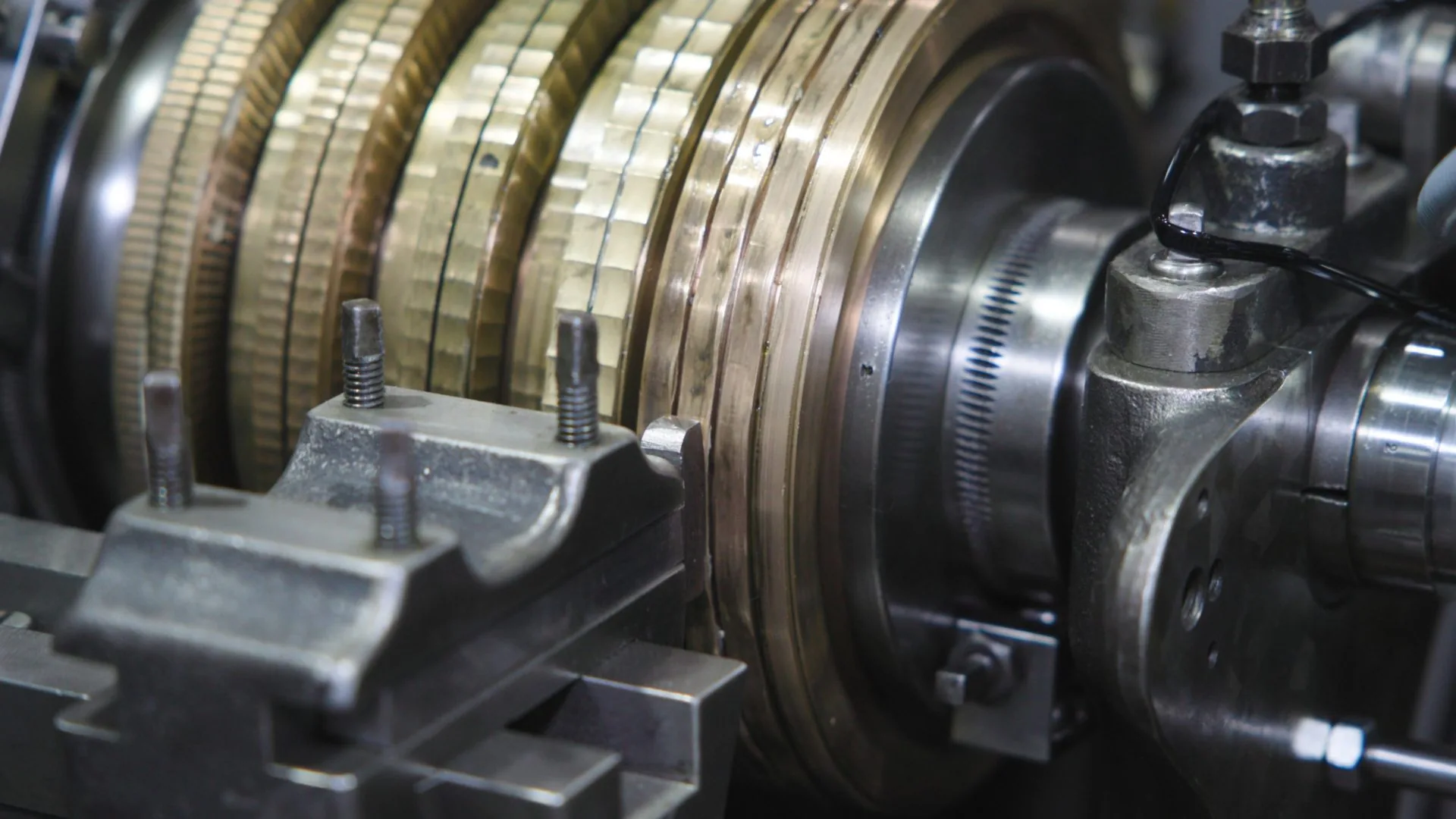
Figure 2
Rosettes of a Rose engine (guilloché lathe)
Click on the thumbnail to enlarge it
Although the Rose engine (guilloché lathe) is considered a machine, the Guilloché (engine-turning) as described here is a manual craft engraving that requires great dexterity and experience. As with hand engraving, the shape of the Graver will influence the visual effect of the decoration. The Gravers are thus chosen and shaped according to the specific decoration to be guilloché.
3. Preferred Materials for Guilloché (engine-turning)
Most Metals can be guillochéd, as well as Mother of pearl. Malleable metals with a beautiful shine are preferred. Silver and Gold are thus the most sought-after materials.
Nowadays, patterns similar to Guilloché (engine-turning) can be created by Milling or by Stamping. In both cases, the shine of the groove is incomparable to that of hand-guillochéd work. These latter techniques are often, mistakenly, referred to as Guilloché (engine-turning).
While the activity of guilloché (engine-turning) is experiencing a new surge and seems to be lastingly sustainable, rose engines (guilloché lathes) are, so to speak, no longer manufactured nowadays.
This page has been automatically translated from the French reference version using an artificial intelligence tool. Errors or inaccuracies may remain. If you notice any, especially if this is your native language, please feel free to report them to us at info@horopedia.org. Your contribution helps us improve the quality of the encyclopedia.
While awaiting their translation, images and videos remain temporarily displayed in French.
Thank you for your understanding.