
LEARN MORE ABOUT THE OPERATION OF ONE OF THE OLDEST STRIKING MECHANISMS
New content dedicated to the passing strike mechanism enriches Horopedia’s collection of educational videos. Produced in collaboration with the École Technique de la Vallée de Joux (ETVJ), this film uses the example of the comtoise clock to present its origin, main components, and operation.
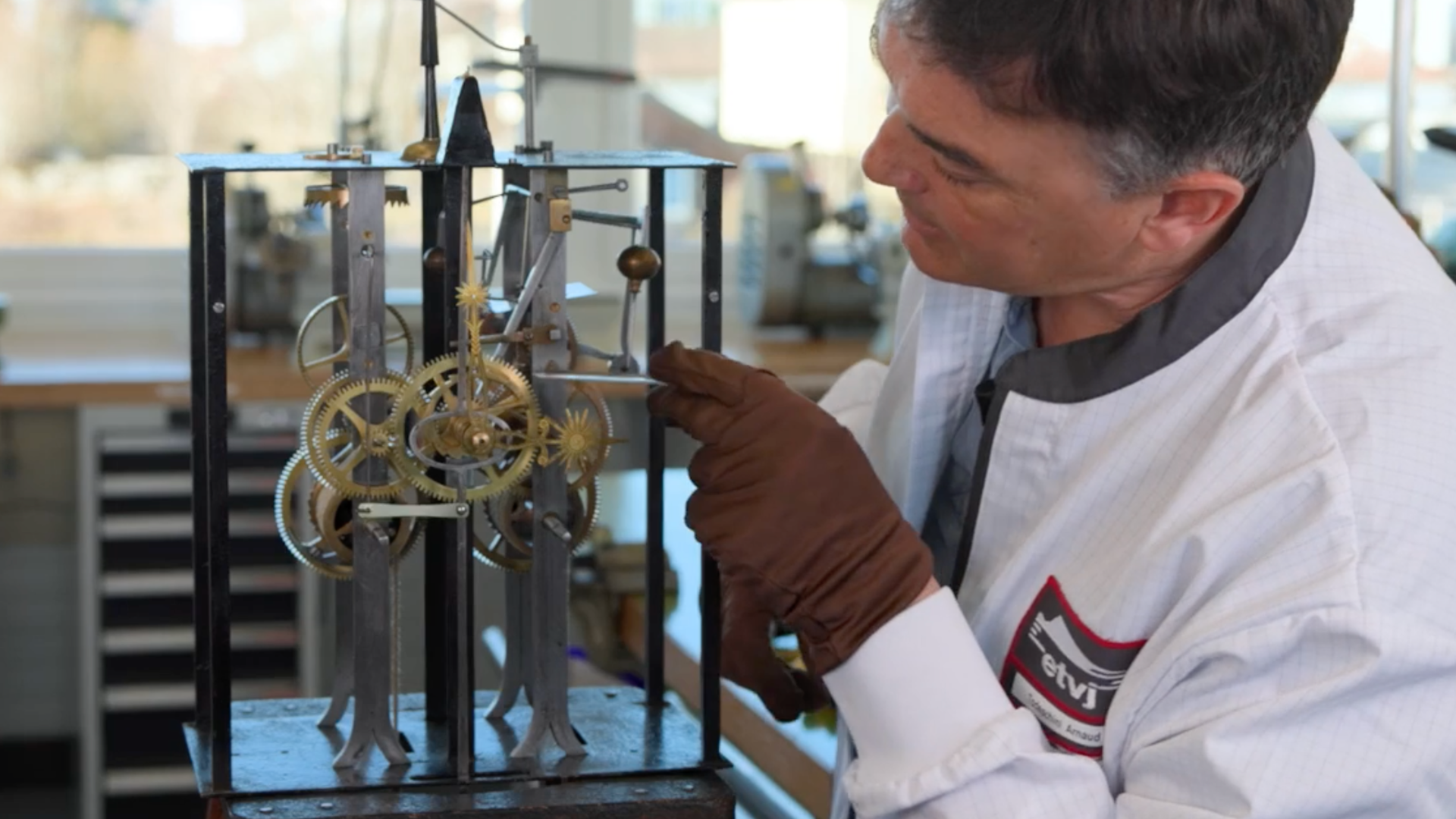
Horopedia continues to develop its educational content with a new video dedicated to the passing strike mechanism, produced in collaboration with the École Technique de la Vallée de Joux (ETVJ).
Through the example of the Comtoise clock, this film presents the oldest and simplest of the three striking systems. The trip-strike mechanism without delay precedes the more elaborate rack-and-snail systems developed during the 17th century. The video allows you to discover its main components and understand how it works: on the hour, the mechanism directly releases the striking train, with no preparation phase or delay. Simple and robust, this principle was notably used in Comtoise clocks.
This new film is part of the Horopedia Foundation’s mission to preserve, document, and pass on horological knowledge and know-how to as many people as possible.
►► Browse Horopedia.org now, discover this new film and learn without limits about the world of horology!
►► To support our educational initiatives and help promote an exceptional expertise, become a patron! More information here.
ABOUT HOROPEDIA
The Horopedia Foundation was established in February 2023 and has been granted public interest status. The Foundation’s Board is composed of Philippe Dufour (Chairman), Dr Helmut Crott, André Colard and Marc André Deschoux.
The Foundation manages Horopedia.org, the first online video encyclopedia on horology. The platform was launched in 2022 and quickly received unanimous support within the community.
To this day, more than 100 multilingual documentary films on Museums, horology schools, watchmaking tools and components, and the mechanical principles behind their operation can be found on Horopedia.org. To reinforce its educational mission, the platform also incorporates visual teaching aids to facilitate a better understanding of the information provided. The site offers nearly 1000 pages with detailed definitions of horological terms and historical anecdotes about significant horological inventions.
Horopedia.org meticulously covers all aspects of the fascinating watchmaking industry in French, English and German. It offers detailed definitions of tools and complications, 3D images of movements, and in-depth video explanations on the production of components, their history and their functions in a watch. A dedicated section of the site lists horological institutions, including schools and museums in Switzerland and around the world.
More recently, the Foundation unveiled its ambitious project: the Maison des Arts & de la Culture Horlogère (MACH). More than a museum, the MACH will be a living space for exhibition, transmission and exchange around the art of watchmaking. Located in the heart of the Banking District, this house of 1,250 m² will span four floors, offering didactic, thematic, and chronological exhibitions, complemented by a space dedicated to temporary exhibitions. Visitors will also be able to enjoy a shop, an auditorium, and various interactive spaces designed to spark curiosity and encourage discovery. Open and lively, the MACH aims to become the crossroads of watchmaking in Geneva.
This page has been automatically translated from the French reference version using an artificial intelligence tool. Errors or inaccuracies may remain. If you notice any, especially if this is your native language, please feel free to report them to us at info@horopedia.org. Your contribution helps us improve the quality of the encyclopedia.
Until they are translated, images and videos will temporarily remain displayed in French.
Thank you for your understanding.