
THE METAL RULE (RULER)
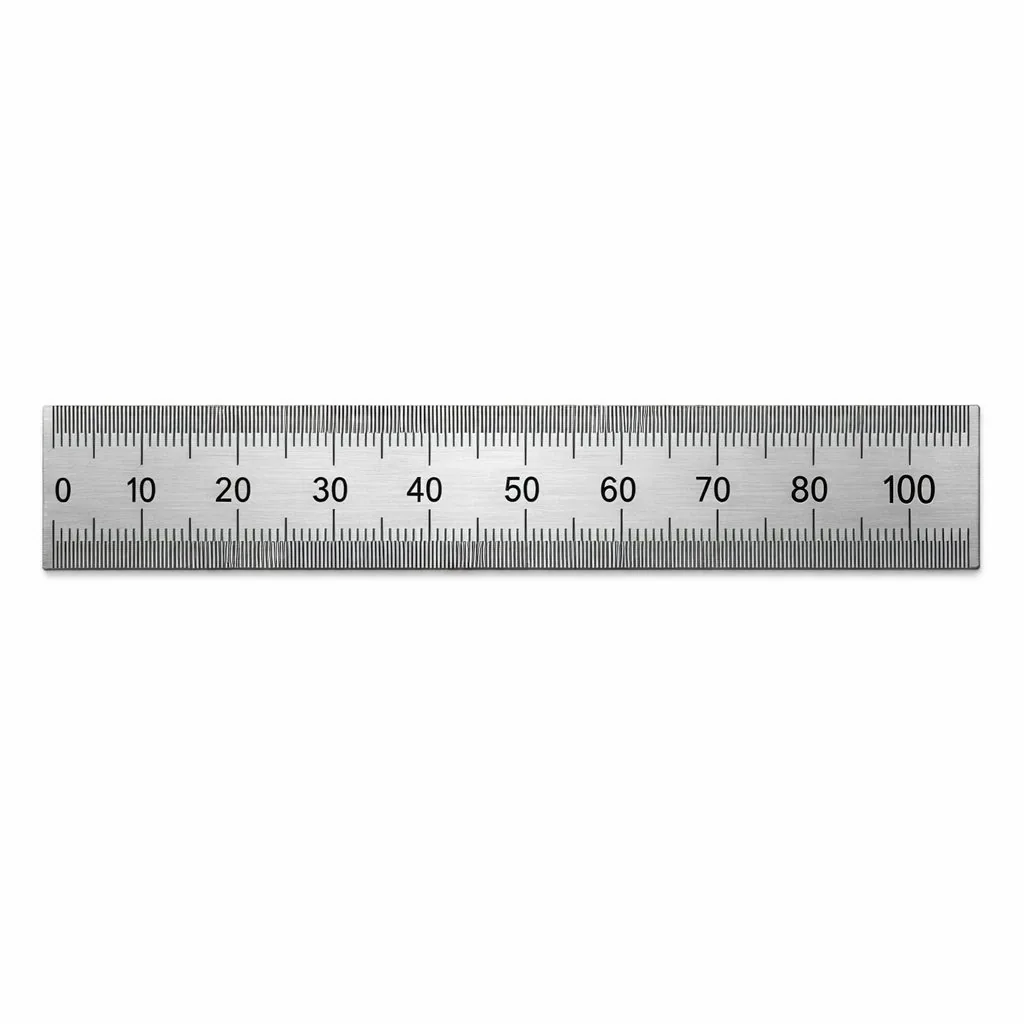
The metal rule (ruler) is an essential measuring tool in horology, allowing quick and relatively precise measurements of the dimensions of small parts and horological components. It generally takes the form of a thin metal strip, often made of stainless steel, graduated with great precision.
Function and use
In horology, precision is paramount. The metal rule is used to measure the length, width or thickness of many parts with a relative accuracy of about 0.5 mm. These measurements are essential when designing, manufacturing, repairing or adjusting horological mechanisms.
Characteristics
- Material : Metal guarantees robustness and resistance to wear, while ensuring dimensional stability, preventing deformation due to thermal variations or mechanical stress.
- Graduations : The markings are precise, often to the nearest half-millimetre.
- Dimensions : Rules generally range from 10 to 30 cm in length, tailored to the specific needs of the watchmaker and the components to be measured.
- Design : The rule is flat and thin, which allows it to easily adapt to small-sized components.
Importance in horology
This rule is one of the many precision tools that guarantee the quality and reliability of mechanical watches. It complements other instruments such as the Micrometre or the Caliper (vernier caliper), allowing for simple and quick measurements in the workshop.
This page has been automatically translated from the French reference version using an artificial intelligence tool. Errors or inaccuracies may remain. If you notice any, especially if French is your native language, please feel free to report them to info@horopedia.org. Your contribution helps us improve the quality of the encyclopedia.
While awaiting translation, images and videos remain temporarily displayed in French.
Thank you for your understanding.