
AMPLITUDE
Amplitude expresses the difference between the extreme values of a quantity (of a wave).
Amplitude in the movement
In measurements of a mechanical watch’s rate and precision, amplitude expresses the angle travelled by the balance between the dead point (equilibrium position) and its extreme position, i.e. the angle travelled during a half-vibration (Figure 1).
Figure 1
Measurement methods
It is measured using a timing machine (acoustic measurement; Figure 2) or, more rarely, by optical means.
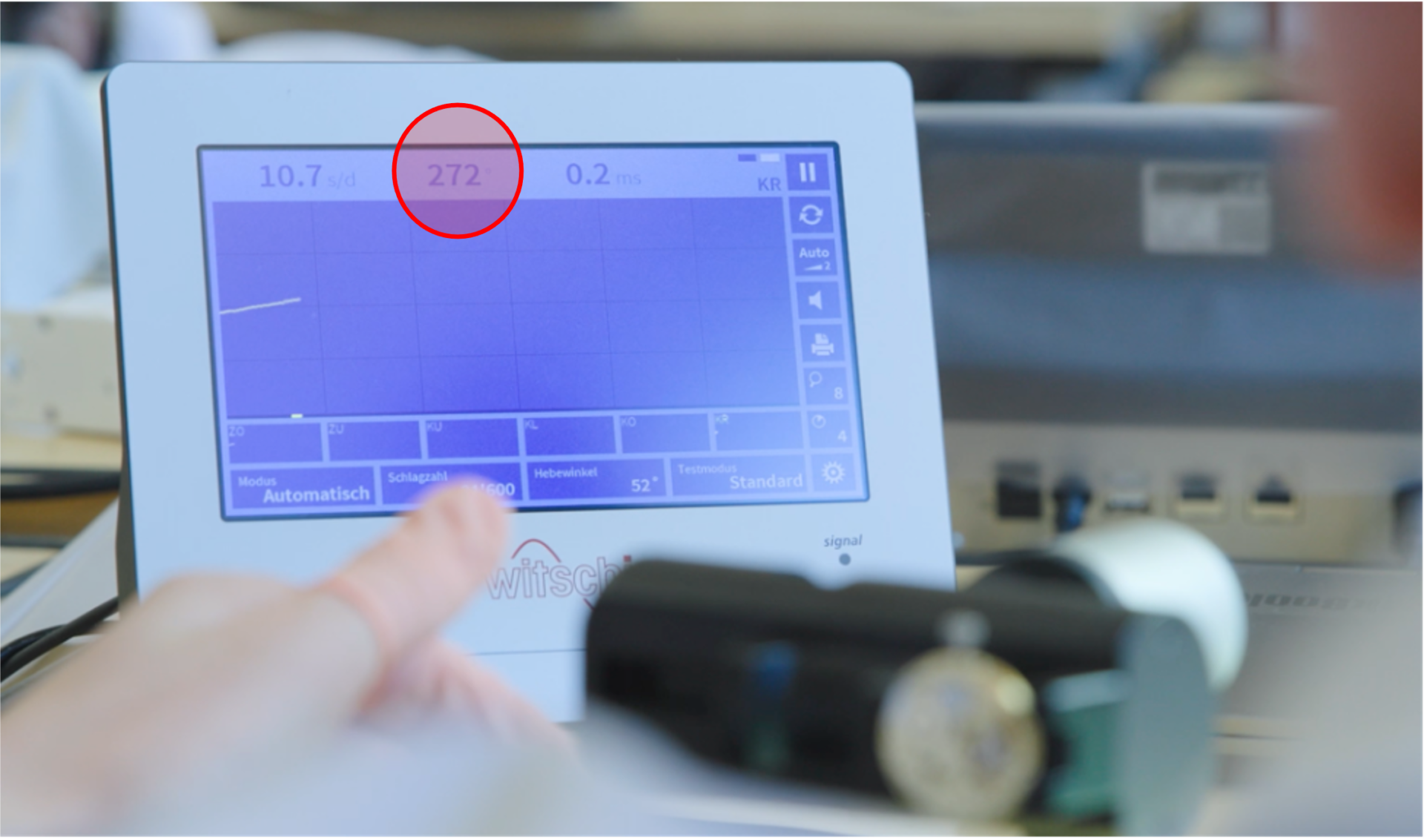
Figure 2 – Amplitude measured on a timing machine (272°)
Values
The amplitude of the balance is directly dependent on the energy transmitted by the motor organ (power source): it decreases as this energy diminishes.
A high amplitude is a decisive quality criterion, insofar as it reduces the sensitivity of the balance-hairspring (balance spring) to external disturbances — shocks, accelerations and gravitational forces — and thus contributes to the timekeeping accuracy of the watch.
The amplitude of a balance-hairspring (balance spring) is however limited by its construction (maximum 280°-300° depending on the lift angle). Beyond these values, a knock (rebate) phenomenon causes the oscillator to run away and results in an exaggerated advance.
This page was automatically translated from the French reference version using an artificial intelligence tool. Errors or inaccuracies may remain. If you notice any, especially if this is your native language, please feel free to report them to us at info@horopedia.org. Your contribution helps us improve the quality of the encyclopedia.
While awaiting their translation, images and videos remain temporarily displayed in French.
Thank you for your understanding.