
MENU
1. Table of the main properties of Titanium
| Property | Grade 2 (pure Titanium) | Grade 5 (Ti-6Al-4V) | Notes |
|---|---|---|---|
| Density | ~4.5 g/cm³ | ~4.4 g/cm³ | Low for both |
| Modulus of Elasticity (E) | ~100–105 GPa | ~110–120 GPa | Higher for grade 5 |
| Tensile strength | ~300–500 MPa | ~900–1100 MPa | Significantly higher for grade 5 |
| Hardness (HV) | ~120–200 HV | ~300–350 HV | Grade 5 harder |
| Thermal conductivity | ~16–20 W/m·K | ~6–7 W/m·K | Lower for grade 5 |
| Electrical conductivity | ~2–3 MS/m | ~1–2 MS/m | Low for both |
| Thermal Expansion | ~8.5–9 ×10⁻⁶ /K | ~8–9 ×10⁻⁶ /K | Similar |
| Melting point | ~1660–1668 °C | ~1600–1660 °C | Slightly lower for grade 5 |
| Magnetism | No | No | Non-magnetic |
| Corrosion resistance | Excellent | Excellent | Very high |
| Machinability | Moderate to difficult | Difficult | More demanding for grade 5 |
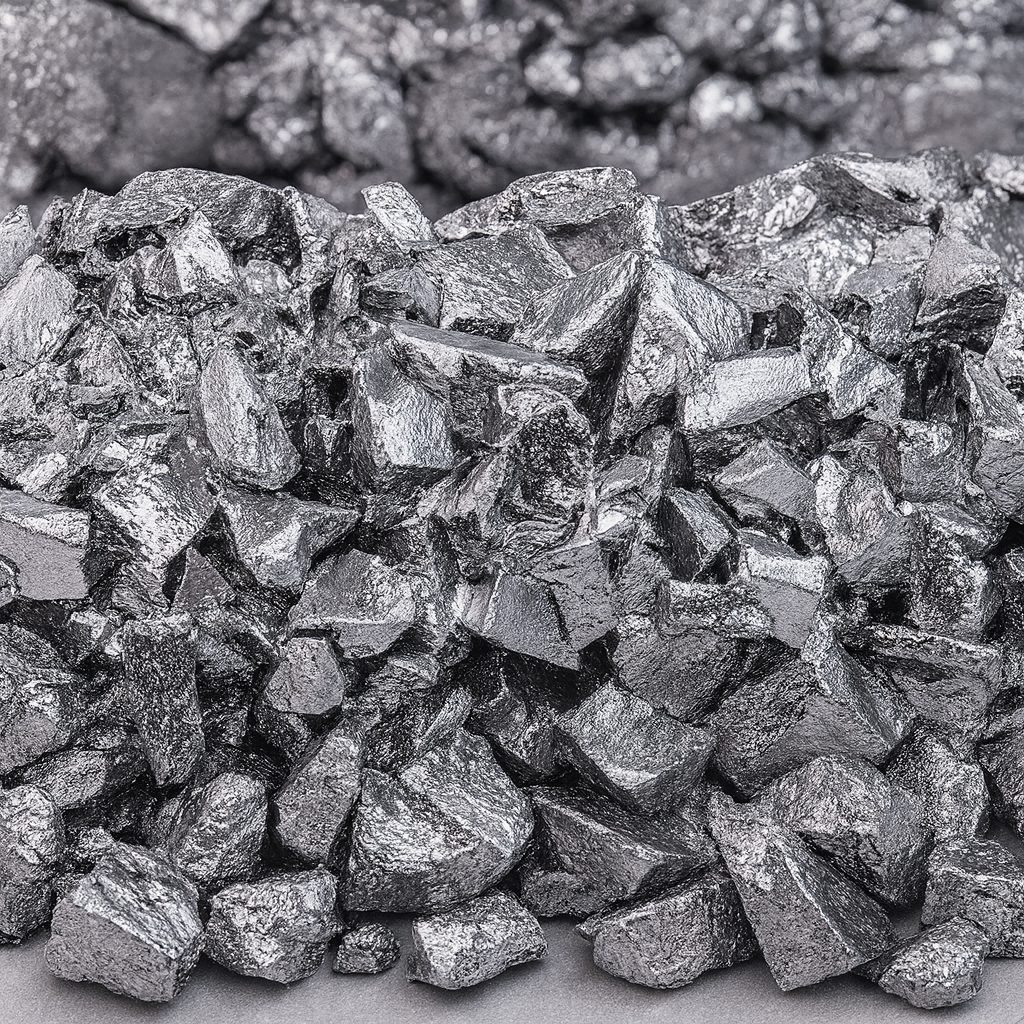
2. General description
Titanium is a transition metal used in watchmaking for its exceptional properties of lightness, mechanical strength, and corrosion resistance. Introduced relatively late in this field (at the end of the 20th century), it quickly established itself, particularly in technical and sports watches.
Its low density, combined with high resistance, makes it a material particularly suited to applications where the reduction of Mass and robustness are sought after. Titanium is also non-magnetic and biocompatible, which reinforces its appeal in contemporary watchmaking.
3. Titanium grades in watchmaking
Titanium is classified into different grades, defined according to its composition and mechanical properties. In watchmaking, two grades are particularly used:
Titanium grade 2 (industrial pure titanium)
Grade 2 is an almost pure titanium (≈ 99%). It contains iron (0.30%), oxygen (0.25%), carbon (0.08%) and nitrogen (0.03%)
Characteristics:
- Very good corrosion resistance
- Excellent ductility
- Relative ease of machining (fire hazards)
- Moderate mechanical strength
Use in watchmaking:
- Cases
- Straps
- Movement components Movement requiring high mechanical resistance and low inertia (balance rims, tourbillonTourbillon cages)
👉 Appreciated for its comfort (lightness) and its corrosion resistance.
Grade 2 Titanium does not allow for beautiful polished finishes. It is therefore generally shot blasted (micro bead blasted) or Satin-finished.
Titanium grade 5 (Ti-6Al-4V)
Grade 5 is a Titanium Alloy containing:
- 6% aluminium
- 4% vanadium
Characteristics:
- Very high mechanical strength
- Excellent fatigue resistance
- High corrosion resistance
- More difficult machining (risk of ignition)
Use in watchmaking:
- Cases
- Bracelets
- Movement componentsMovement requiring high mechanical strength and low inertia (Balance springs, Tourbillon cages)
👉 This is the most widely used grade in high-end watchmaking and technical applications.
Unlike grade 2, grade 5 allows high-quality polished surfaces to be achieved.
Other grades
Although rare, or even non-existent in watchmaking:
- Grade 1 → very pure, very ductile
- Grade 3–4 → intermediate properties
- Specific alloys → proprietary developments
4. Surface treatments
Titanium is often treated to improve its properties:
- Shot blasting (micro bead blasting) → uniform matte appearance
- Satin finish / brushing
- Polishing (more difficult than Steel)
- Anodising → colouring by oxide variation
- PVD / CVD Vapour deposition → colouring and improved wear resistance
5. Watchmaking applications
Titanium is used for:
- Cases
- Straps
- Movement components requiring high mechanical resistance and low Inertia (Balance rims, Tourbillon cages)
6. Advantages and limitations
Advantages
- Very lightweight
- Corrosion resistant
- Non-magnetic
- Biocompatible
- Good mechanical strength (grade 5)
- Comfortable to wear
Limitations
- Difficult machining
- Susceptibility to scratches (grade 2)
- Low thermal conductivity
- More complex polished finish
This page has been automatically translated from the reference French version using an artificial intelligence tool. Errors or inaccuracies may remain. If you notice any, especially if this is your native language, please feel free to report them to info@horopedia.org. Your contribution helps us improve the quality of the encyclopedia.
While awaiting their translation, images and videos remain temporarily displayed in French.
Thank you for your understanding.