
UPDATES, JULY 2025
At Horopedia, we are dedicated to exploring and sharing the fascinating world of horology in all its dimensions. From ancestral decorative techniques to the most innovative surface treatments, from fundamental mechanical principles to the ever-evolving landscape of professional training.
We invite you to discover some of the topics we have recently covered:
-
True to our mission of providing horological knowledge that is both accurate and accessible, we have updated our renowned 3D video illustrating how a mechanical watch works. The video now highlights the different components of the movement through distinct colours, making it even easier to understand the interactions between wheels, springs and levers that bring these miniature marvels to life.
-
At first glance, a watch case may seem like a simple component. Yet, its manufacture requires the same level of precision, innovation and technical mastery as the smallest parts of a movement. Both an aesthetic and functional element, the watch case knows few limits in terms of shape, design, materials and colors. Discover our new video on the industrial production of watch cases and see for yourself that nothing is as simple as it seems.
-
Guilloché (engine-turning) is a decorative engraving technique which involves removing material to form precise and repetitive patterns on metal surfaces. Although it did not originate in horology, guilloché was adopted by horologists in the 18th century and has since become a distinctive mark of the most prestigious pieces. To illustrate the incredible variety of patterns that can be achieved on three different types of lathes, we have produced an introductory video that delves into the heart of this captivating art and its subtleties.
-
Among the recent technological advances in the field of horology are vapor-phase surface treatments, namely PVD (Physical Vapour Deposition) and CVD (Chemical Vapour Deposition). Initially designed for medical and industrial applications, these processes made their entry into watchmaking in 1995. Like electroplating treatments (galvanic treatments), PVD and CVD protect surfaces against oxidation, offer a wider range of colours and can increase hardness, modify the coefficient of friction or even alter electrical conductivity. Discover with us which substrates can benefit from these treatments, the advantages they provide, and the technical challenges they still pose today.
-
Don’t forget to check out our new detailed article on retrograde display, a unique complication where the hand travels along a segment of a circle instead of performing a full rotation. Once it reaches the end of its scale, the hand instantly returns to its starting point to begin its cycle again, whether indicating seconds, the date, or other measurements. Enriched with educational visual aids, this text decodes the construction and operation of this fascinating mechanism.
- Founded in 1937, the Employers’ Convention of the Swiss Watchmaking Industry (CP) plays an essential role in structuring vocational training. It oversees eight trades, various private training programmes, and represents watchmaking companies in negotiations with unions, thereby helping to maintain social balance within the industry. It also advises watchmaking schools on curriculum development and organises the Swiss Microtechnology Championships (SwissSkills). In our latest video, we explore the professions currently facing shortages and how the CP is actively working to promote these essential trades.
-
Finally, this year, the Geneva School of Horology celebrated its bicentennial by organizing a round table in its new premises in Plan-les-Ouates. This event highlighted the importance of vocational training in horology, bringing together former students and current students to share their experiences and their visions of the future of the craft. Among the participants were notably Rexhep Rexhepi (Atelier Akrivia), Florian Preziuso (Antoine Preziuso Genève), Jérôme Dunant (Weber & Cie), Kylian Thieulot (winner of the 2025 Patek Philippe competition and of the 2023 GPHG award for best young student) as well as micromechanics apprentice Romain Levrat.
🎥 You can watch the full discussion (in French) here.
To mark this historic moment, Horopedia has also produced a film dedicated to the school’s new premises. A second video explores how this move has transformed teaching and enriched student life at the heart of Geneva’s dynamic watchmaking ecosystem.
Stay connected on Horopedia.org, where horological knowledge keeps growing and remains open to all curiosities.
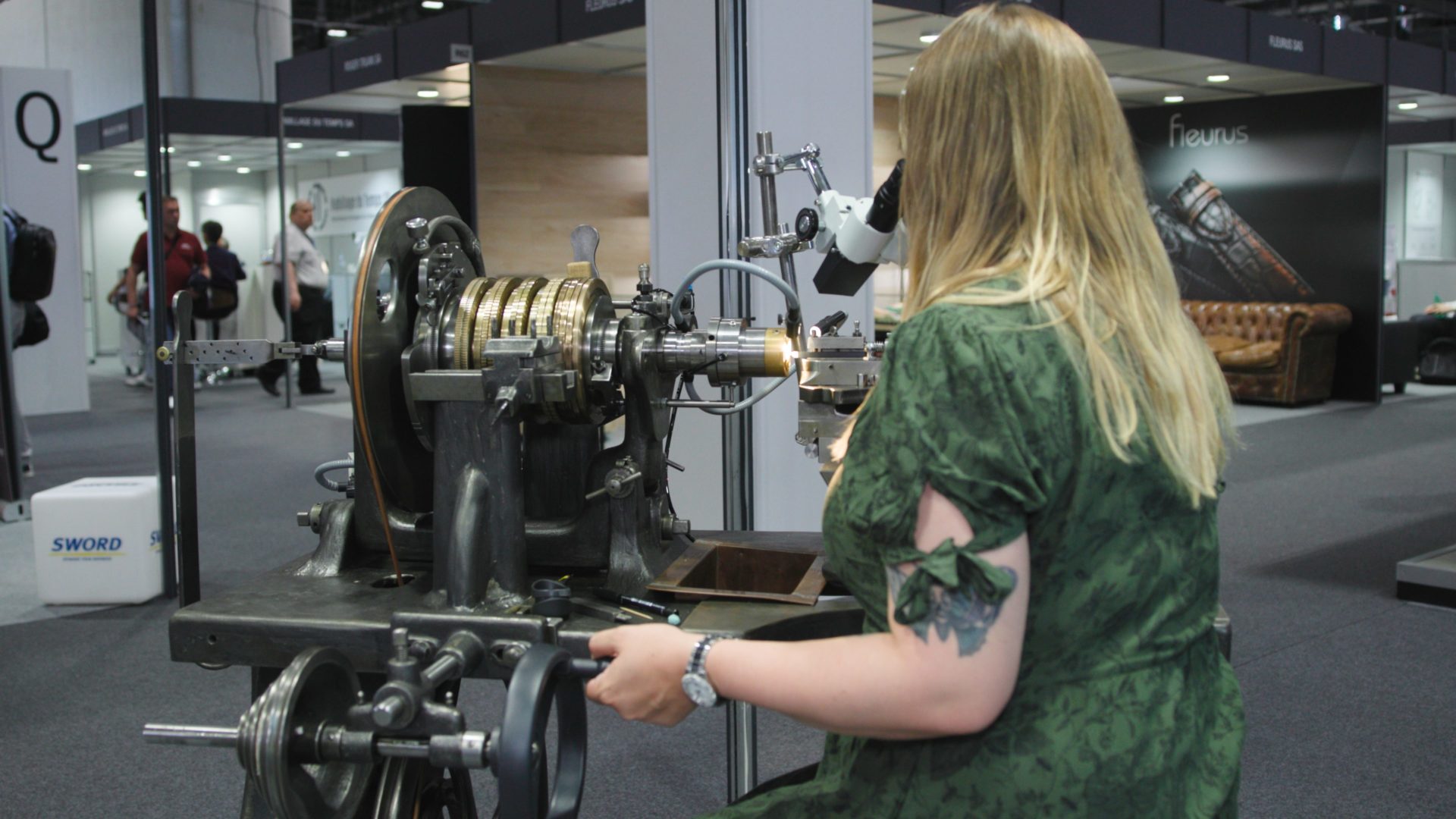
Guilloché (engine-turning)
Horopedia, 2025
ABOUT HOROPEDIA
The Horopedia Foundation was created in February 2023 and received public interest status. The Foundation’s Board is composed of Philippe Dufour (President), Dr Helmut Crott, André Colard and Marc André Deschoux. The Foundation manages Horopedia.org, the first online video encyclopedia dedicated to horology. The platform was launched in 2022 and quickly received unanimous support within the community.
To date, more than 100 multilingual documentary films on museums, horology schools, watchmaking tools and components, and the mechanical principles behind their operation can be found on Horopedia.org. To reinforce its educational mission, the platform also integrates visual teaching materials to facilitate a better understanding of the information provided. The site offers nearly 900 pages with detailed definitions of horological terms and historical anecdotes about significant horological inventions.
Horopedia.org meticulously covers every aspect of the fascinating watchmaking industry in French, English, and German. It offers detailed definitions of tools and complications, 3D images of movements, and in-depth video explanations on the production of components, their history, and their functions in a watch. A dedicated section of the site lists horological institutions, including schools and museums in Switzerland and around the world.
This page has been automatically translated from the French reference version using an artificial intelligence tool. Errors or inaccuracies may remain. If you notice any, especially if this is your native language, please do not hesitate to report them to info@horopedia.org. Your contribution helps us improve the quality of the encyclopedia.
Pending their translation, images and videos remain temporarily displayed in French.
Thank you for your understanding.