
MENU
1. General description
Closing element of the case, it protects the movement, the dial and the hands from the external environment (dust, humidity, etc.).
Fastening methods
- Snap-fit: The case back can be fixed by pressure by creating tension between the fitting diameter of the case middle and that of the case back.
- By screws engaging into the case middle: The most widely used method today consists of fixing the case back to the case middle with four screws or more. Elegant and easy to make, this fastening method provides excellent water resistance.
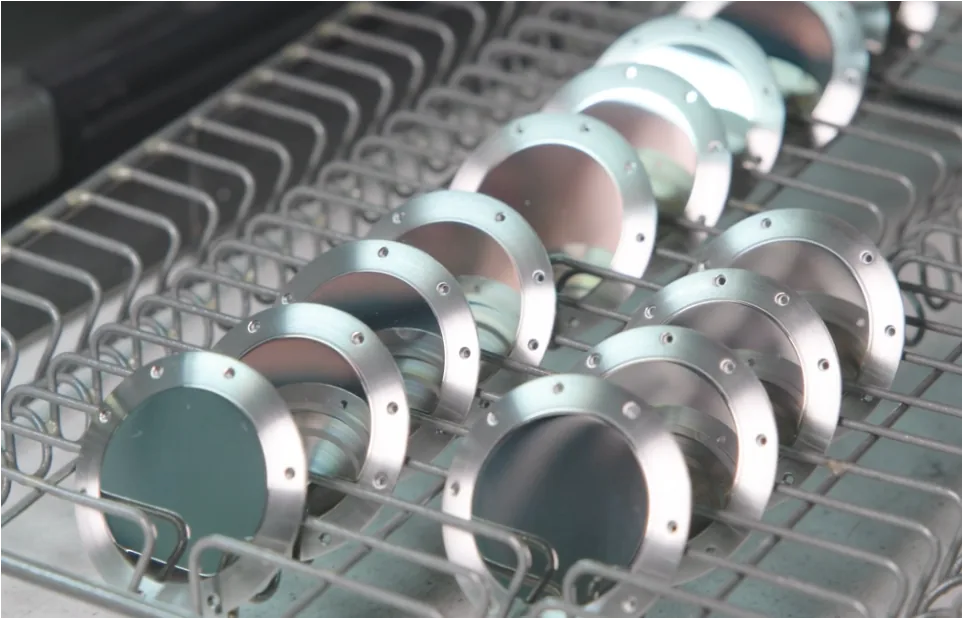
Figure 1
Case backs held by screws engaging directly into the case middle
Click on the thumbnail to enlarge it
- By screws engaging into the bezel: Sometimes, the screws pass all the way through the case middle and fasten to the bezel. Water resistance is even better with the case middle thus sandwiched between the case back and the bezel.
- By directly screwing the case back into the case middle: Threading can be made on the outer diameter of the case back and a tapping on the inner diameter of the case middle. In this case, the case back itself acts as a screw to close the case. Particularly effective in terms of water resistance, this construction is used for diving, sports, and technical watches.
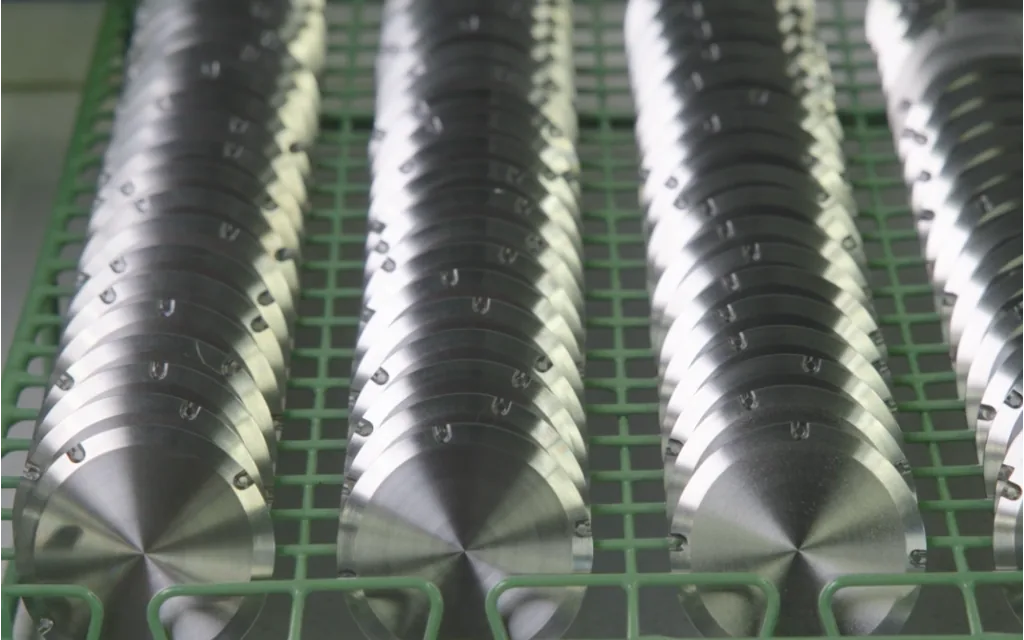
Figure 2
Case backs by direct screwing (in the process of manufacture)
Click on the thumbnail to enlarge it
2. History
Historically, pocket watches had two superimposed case backs. One was fastened to the case middle by press-fitting or was soldered to it. Until 1830, watches did not have a crown. Winding and time-setting were then carried out using a key (in the manner of a pendulum). This square key acted directly on the arbor of the barrel (winding) or on an extension of the centre wheel pivot (time-setting). For the key to access these two elements, two holes were drilled through this first case back. Even though watches were not water-resistant at the time, such openings were not acceptable to keep dust and moisture out of the watch case. A second case back (or cover) was connected to the first by a hinge and closed with slight pressure. A tab allowed it to be opened by pivoting it, providing access to the holes needed to wind and set the time on the watch.
In the era of the pocket watch, the outer case back, along with the dial, was the preferred field of expression for craftsmen and artists (many of whom held this dual status at the time). Engraving, the enamel or the combination of both is commonly expressed there. The setting (stone/jewel setting) is less common, but the case backs, like the bezels, are sometimes set with half-pearls or mother of pearl marquetry (18th and 19th centuries)
Art decoration is experiencing a resurgence of interest today. This enthusiasm helps to perpetuate techniques and knowledge, some of which seemed particularly destined to be lost at the end of the 20th century.
With the wristwatch, the case back became the preferred medium for informative inscriptions (engraving, printing, metallization, etc.) on the watch. Information such as the brand and/or model name, the watch’s reference, its individual number (limited or not), its water resistance, etc., can be found inscribed there.
Usually, watch case backs were solid (discs); however, from the early 19th century onwards, case backs sometimes opened up and became rings, bezels, in the center of which a crystal (watch glass) fixed allows the movement to be seen. Remaining anecdotal until the end of the 20th century, this practice now tends to become widespread.
The future of the case back already exists! Some brands insert an electronic chip that requires no power source. An external scanner can query the chip, retrieve its history and service record, and simply authenticate it.
3. Artisanal manufacturing of a case back
Depending on its design or its technical specifics (water resistance, function, etc.), the case back of a case may require ingenuity and know-how. However, the case back is often relatively simple to manufacture and does not require major resources. A lathe bench will, in many cases, be enough to machine a round-shaped case back, whereas a milling machine will make it possible to produce shaped case backs (square, tonneau, etc.).
A case back made using this method often deserves an engraving (indicative or decorative) by hand, but mechanical engraving remains a craft process.
4. Semi-industrial production of a case back
Semi-industrial production is characterized by small series. As with the industrial method, machining centres (CNC) are already predominantly used for such production volumes. What mainly differentiates the two case back production methods are the finishing and decoration steps. For small series of watches of a certain level of range, hand engraving is still often preferred over mechanical or chemical engraving. The placement of the stones of a setting (stone/jewel setting) will be done by hand rather than by machine.
5. Industrial production of a case back
Industrially, the use of machining centres (CNC) is often the most suitable, and therefore the most common, for producing case backs. A single machine is often enough here to carry out all the manufacturing steps of the case back. Moreover, this same machine can, quite often, carry out the engraving and decoration steps at high quality levels for watches from industrial production. Many industrial processes can, depending on the case, complement the work of the machining centers (laser engraving, metallization, surface treatments, etc.).
6. High-tech production of a case back
Here again, cutting-edge technologies stand out from artisanal, semi-industrial, and industrial methods through the materials used rather than through their production volumes. Injection and sintering are mainly used to shape materials such as plastics and composites, even though usual machining and/or polishing operations may sometimes prove necessary later on. The manufacturing process for sapphire (watch glass) cases (synthetic corundum and its derivatives) is similar to the industrial method, which includes machining and polishing. However, the hardness of sapphire (watch glass) requires the use of high-technology diamond-tipped machines and tools.
This page was automatically translated from the reference French version using an artificial intelligence tool. Errors or inaccuracies may remain. If you notice any, especially if this is your native language, please feel free to report them to us at info@horopedia.org. Your contribution helps us improve the quality of the encyclopedia.
While awaiting translation, images and videos remain temporarily displayed in French.
Thank you for your understanding.