
MEASURING INSTRUMENTS AND THE QUARTZ MOVEMENT IN THE SPOTLIGHT ON HOROPEDIA.ORG
This month, Horopedia is enriching its online encyclopaedia with two major additions: a new section dedicated to watchmaking measuring instruments and an educational film devoted to the quartz movement. Two complementary contents designed to provide a deeper understanding of the techniques and expertise at the heart of horological precision.
A new section dedicated to measuring instruments
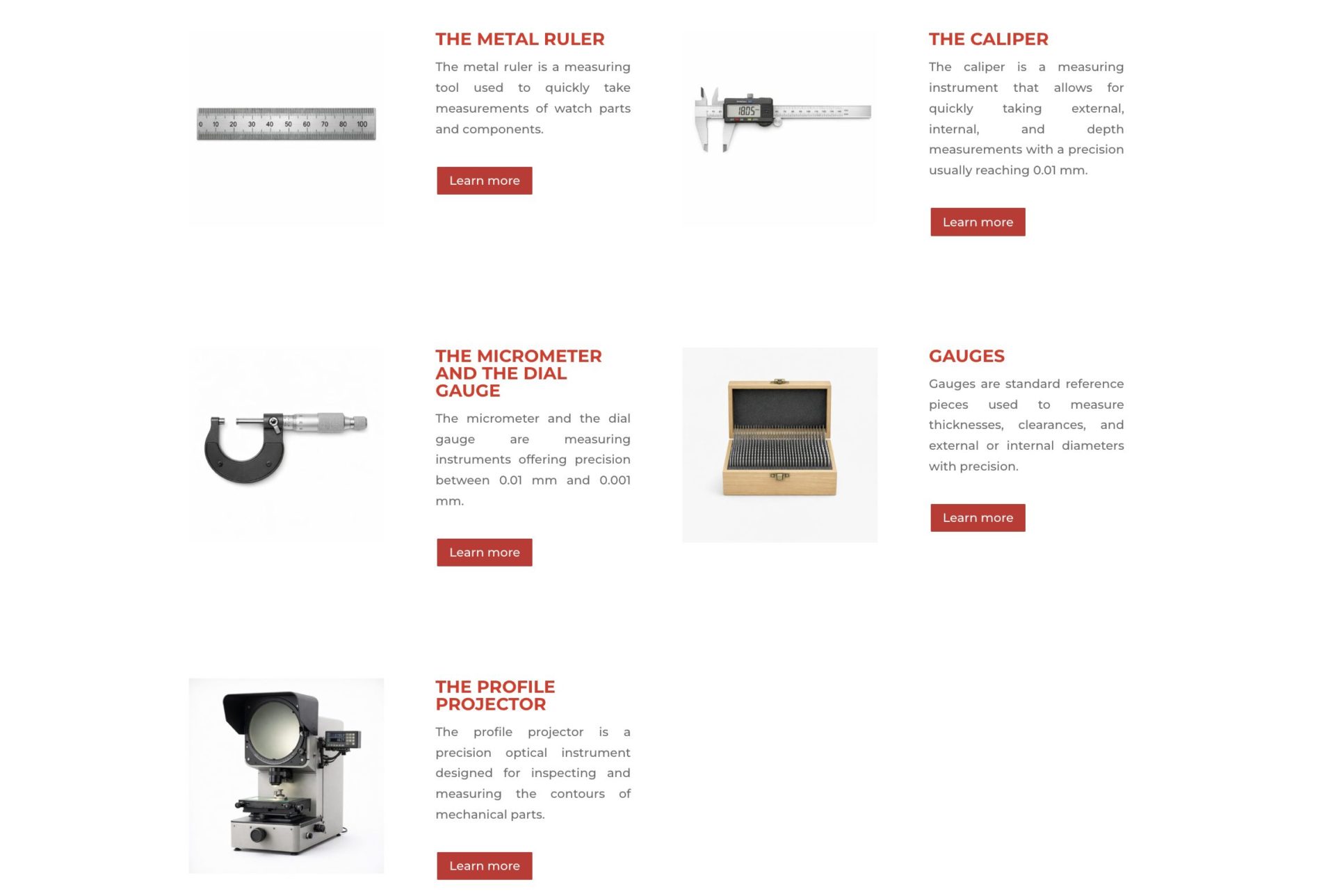
Accessible via the “Basic Elements” menu, this new section highlights the measuring instruments used during the manufacturing, assembly and inspection of watchmaking components. In watchmaking, every detail matters: dimensions, rate accuracy, surface finish and water resistance must be checked with extreme precision to ensure the performance and durability of timepieces.
New pages now allow visitors to discover various dimensional measuring tools, such as the metal ruler, caliper, micrometer and dial indicator, gauges, as well as the profile projector. The platform also offers contents dedicated to time measurement with the timegrapher and the quartz movement tester. Torque measurement, surface finish analysis, and the testing of a watch’s resistance to water and dust are likewise explored through the torque wrench, surface roughness tester, and water-resistance testing devices.
For each instrument, Horopedia provides a clear definition together with educational explanations of its operating principles and applications within the watchmaking industry.
A new film dedicated to the quartz movement
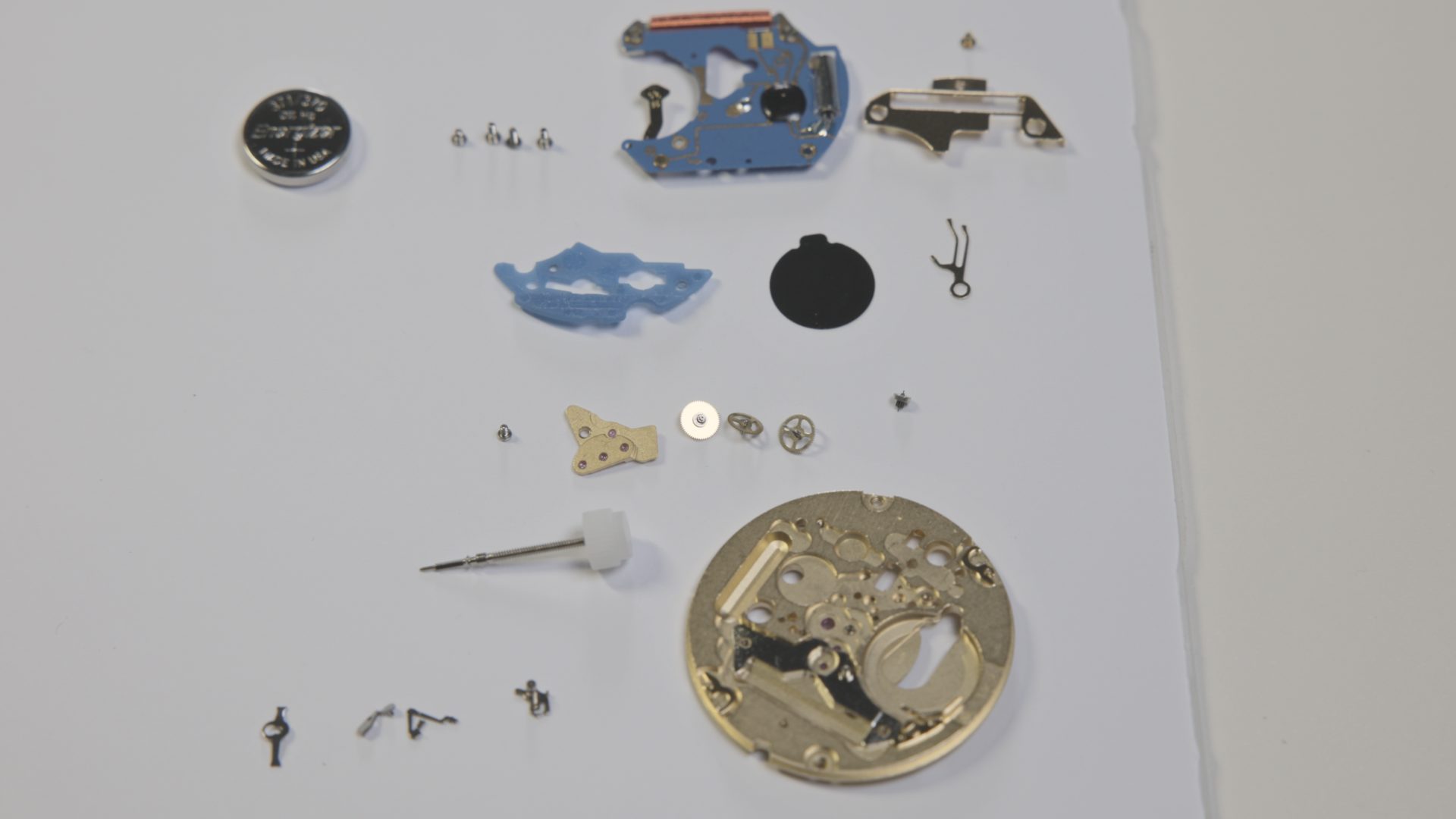
Produced in collaboration with the Technical School of CFP Biel/Bienne, a new educational film offers an immersion into the world of the quartz movement.
This content provides a better understanding of how this type of movement operates, particularly the role of the quartz crystal, the electronic circuit and the stepper motor that drives the watch hands.
The film also presents the main stages involved in assembling the movement, as well as the testing methods used to verify its precision and proper functioning.
With these new contents, Horopedia continues its mission of transmission by making the tools, techniques and principles behind horological precision more accessible to all.
►► Explore Horopedia.org now, discover these new contents and deepen your knowledge of watchmaking without limits!
►► To support our educational initiatives and contribute to the promotion of an exceptional craftsmanship, become a patron! More information at: https://horopedia.org/the-circle/
ABOUT HOROPEDIA
Horopedia Foundation was established in February 2023 and given the status of public interest. The Foundation Council is composed of Philippe Dufour (President), Dr. Helmut Crott, André Colard, and Marc André Deschoux.
The Foundation governs Horopedia.org, the first online video encyclopedia on watchmaking. The platform was launched in 2022 and quickly gathered unanimous support within the community.
To date, over 100 multilingual documentary films on museums, watchmaking schools, watch tools and components, and the mechanical principles behind their work can be found on Horopedia.org. To enhance its educational mission, the platform also incorporates visual pedagogic materials to facilitate a better understanding of the provided information. The website features nearly 1000 pages with detailed definitions of watchmaking terms and historical anecdotes about significant horological inventions.
Horopedia.org meticulously covers all facets of the fascinating horological industry in French, English, and German. It offers detailed definitions of tools and complications, 3D images of movements, and thorough video explanations of component production, their history, and functions in a watch. A dedicated section of the website lists horological institutions, including schools and museums in Switzerland and worldwide.
More recently, the Foundation unveiled its ambitious project: the Maison des Arts & de la Culture Horlogère (MACH). More than just a museum, the MACH will be a dynamic venue for exhibitions, knowledge-sharing and dialogue around the art of watchmaking. Located in the heart of the Quartier des Banques, this 1,250 m² house will span four floors, offering didactic, thematic and chronological exhibitions, complemented by a space dedicated to temporary exhibitions. Visitors will also be able to enjoy a boutique, an auditorium and a variety of interactive areas designed to spark curiosity and encourage discovery. Open and vibrant, the MACH is intended to become the crossroads of watchmaking in Geneva.