
MATERIALS
Many criteria determine the choice of a material: the component it is intended for, its price, its appearance, its mechanical, physical, chemical or optical properties are all considerations that lead to choosing the right material.
The new alloys, plastics, carbon composites or ceramics that have emerged over the past few decades are stimulating watchmaking creation and pushing back the boundaries of the technicality of our watches. Interest in new materials is not limited to our watches; it also contributes to the technological evolution of the tools and machines that make them.
Many standards, conventions and laws govern the use of materials at the national and international level. We will also discuss them in this chapter.
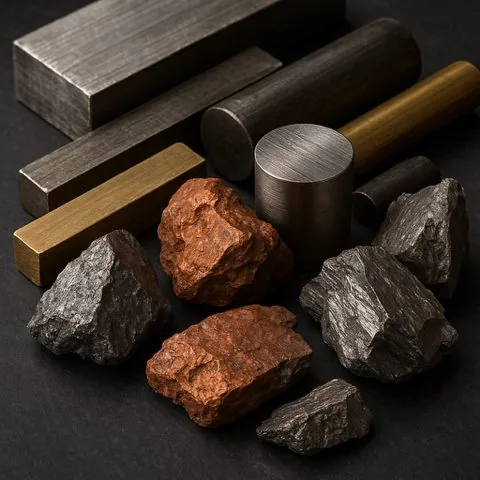
METALS
Overall, metal is the most widely used material in a watch. Today, many composite materials can be substituted for metal. However, in certain fields of application, metals still remain irreplaceable. The main metals and alloys used in watchmaking are listed in this section.
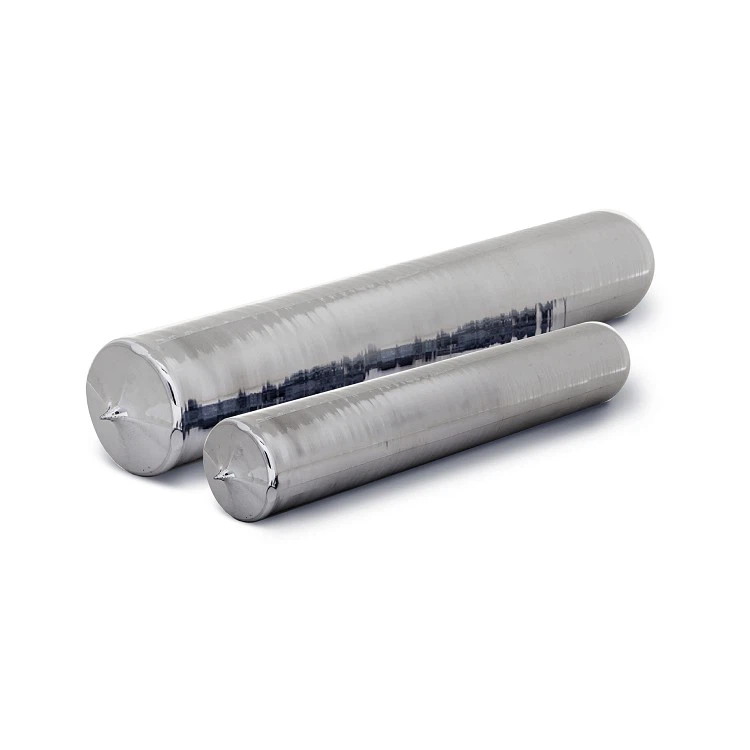
SILICON
Silicon has unique properties (hardness, elasticity, non-magnetism, etc.). The manufacturing technology for Silicon components, photolithography, a method used for the production of integrated circuits, opens up new horizons. It makes it possible to produce, in large series, components of very small dimensions, with some of the most complex profiles (often escapements and hairsprings). This process guarantees absolute precision and consistency of dimensions throughout the production cycles.
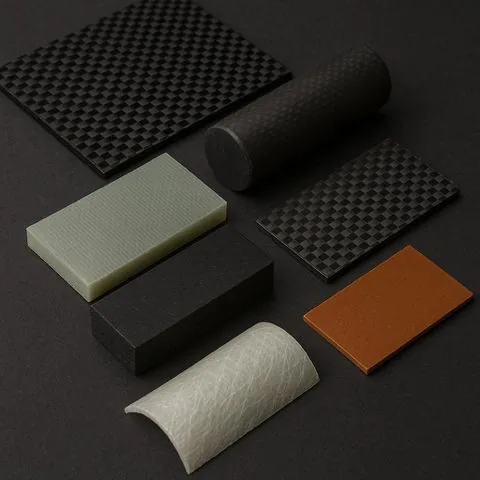
COMPOSITE MATERIALS
Composite materials consist of a mixture of several elements whose combination improves their characteristics. The carbon family and the hi-tech ceramics family are certainly the most widely used by the watchmaking industry. They are mainly used for External parts (case, dial, hands) components (cases, straps, dials), and more rarely for movement components. Composite materials can also be found in certain specific tools.
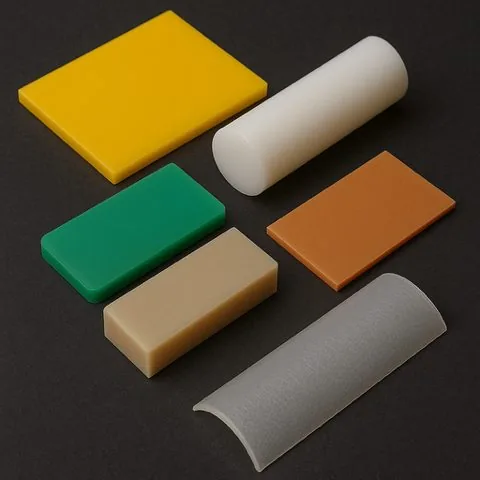
PLASTICS AND POLYMERS
Whether fortools, external parts (case, dial, hands) or components, polymers have been used sporadically in horology for nearly a century. It was from 1980 onwards that the precision of plastic injection machines made it possible to broaden the scope of plastics use in horology.
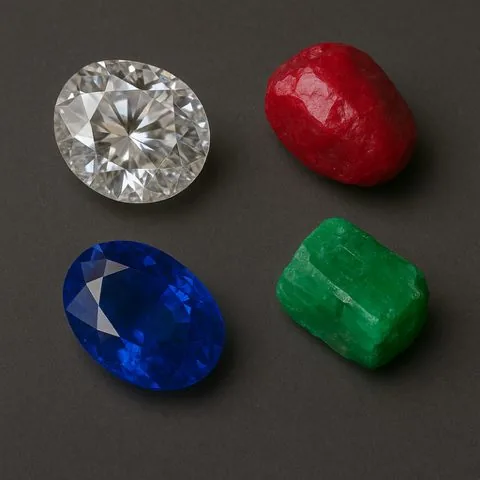
MINERALS (and synthetic corundums)
Minerals are chemical substances with a crystalline structure generally formed by geological phenomena (high pressures, high temperatures, chemical exchanges). Rocks and crystals make up the majority of materials of mineral origin.
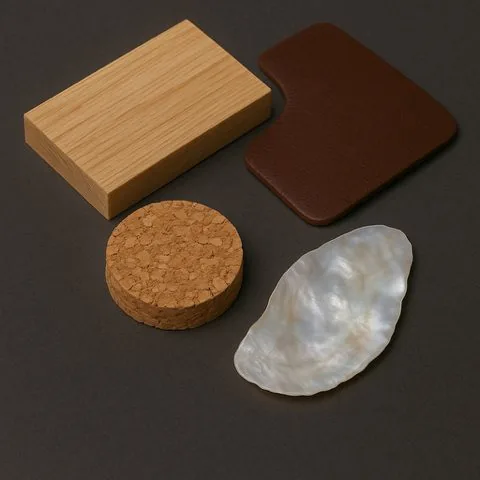
ORGANIC MATERIALS
Of plant or animal origin, organic materials find various applications in watchmaking. In a watch, they are mainly used to manufacture straps and dials. The use of organic materials is also common in tools and lubricants.
This page has been automatically translated from the reference French version using an artificial intelligence tool. Errors or inaccuracies may remain. If you notice any, especially if this is your native language, please feel free to report them to info@horopedia.org. Your contribution helps us improve the quality of the encyclopedia.
Pending their translation, images and videos remain temporarily displayed in French.
Thank you for your understanding.